Sasshū Izumi-jū Fujiwara Masayoshi Katana
薩州出水住藤原正良 刀
Item TK027
Period: Shinto Period - 1700s
Mei (Signature): 薩州出水住藤原正良 Sasshū Izumi-jū Fujiwara Masayoshi
Designation: Tokubetsu Hozon
Nakago - 19.2cm - Ubu - One Mekugi-ana
Nagasa - 70.7cm
Sori: - 1.6cmcm
Motohaba - 3.0cm
Sakihaba - 2.1cm
Kissaki - 4.3cm
Motokasane - 0.84cm
SOLD
Sasshū Izumi-jū Fujiwara Masayoshi
The first-generation Sasshū Masayoshi (正良) was an early-Edo period Satsuma smith whose work represents the foundational stage of what later became the well-known Satsuma sword tradition. Born Uehara Jūzaemon (上原十左衛門), he served as a samurai of Izumi in Satsuma Province. Izumi bordered Higo Province and functioned as a strategically important area where many of the domain’s strongest and most capable warriors were stationed.
Masayoshi is recorded to have trained under two respected local masters - Izu no Kami Masafusa (伊豆守正房) and Naminohira Yasuchika (波平安周).
These influences can be seen in the characteristics of his workmanship and in the early Satsuma style that developed around this period.
Later in life, Masayoshi entered the priesthood and adopted the priest name Enren (円蓮), although some sources record it as Entatsu (円達)—a variation likely caused by the similar appearance of the character when written in cursive or semi-cursive script. He is said to have moved to the castle town of Kagoshima, the political center of the Shimazu clan, in his later years.
Masayoshi passed away on the 13th day of the tenth month of Hōreki 10 (1760).
His lineage continued through later generations, including the third-generation Masayoshi, later known as Masayuki, one of the most famous Shinshinto Satsuma Swordsmiths.
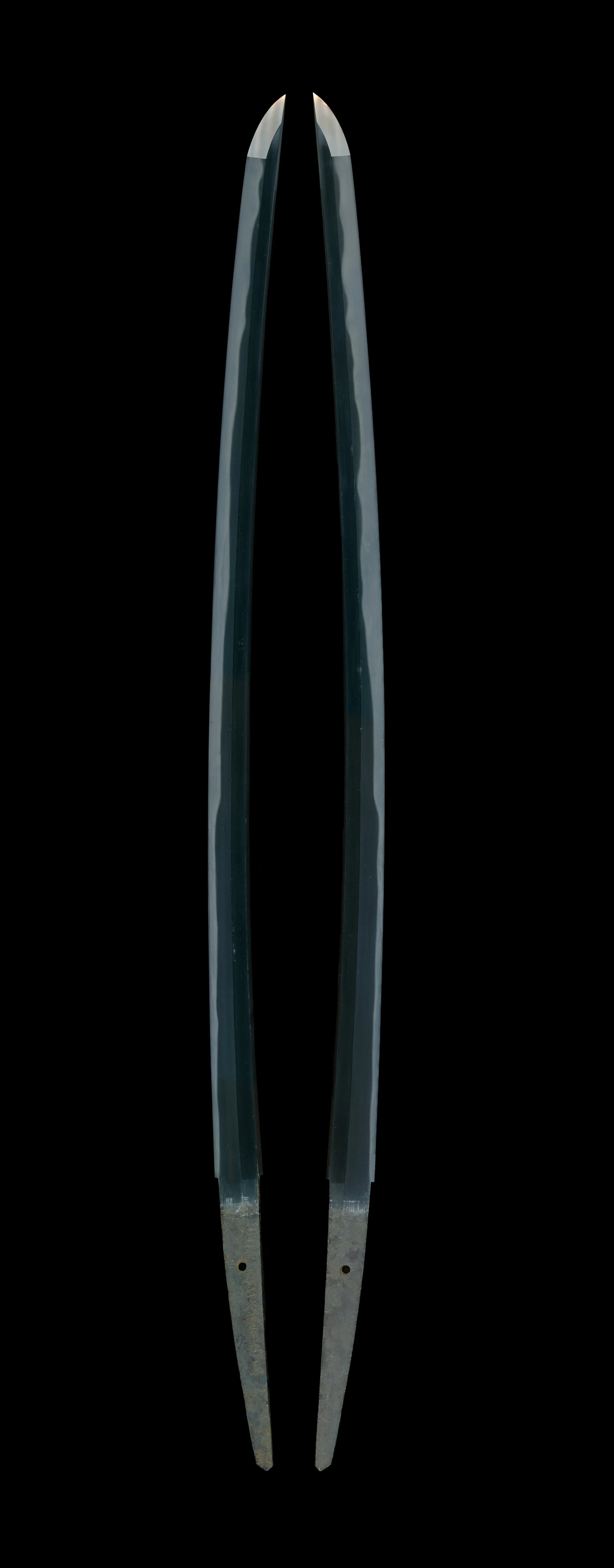
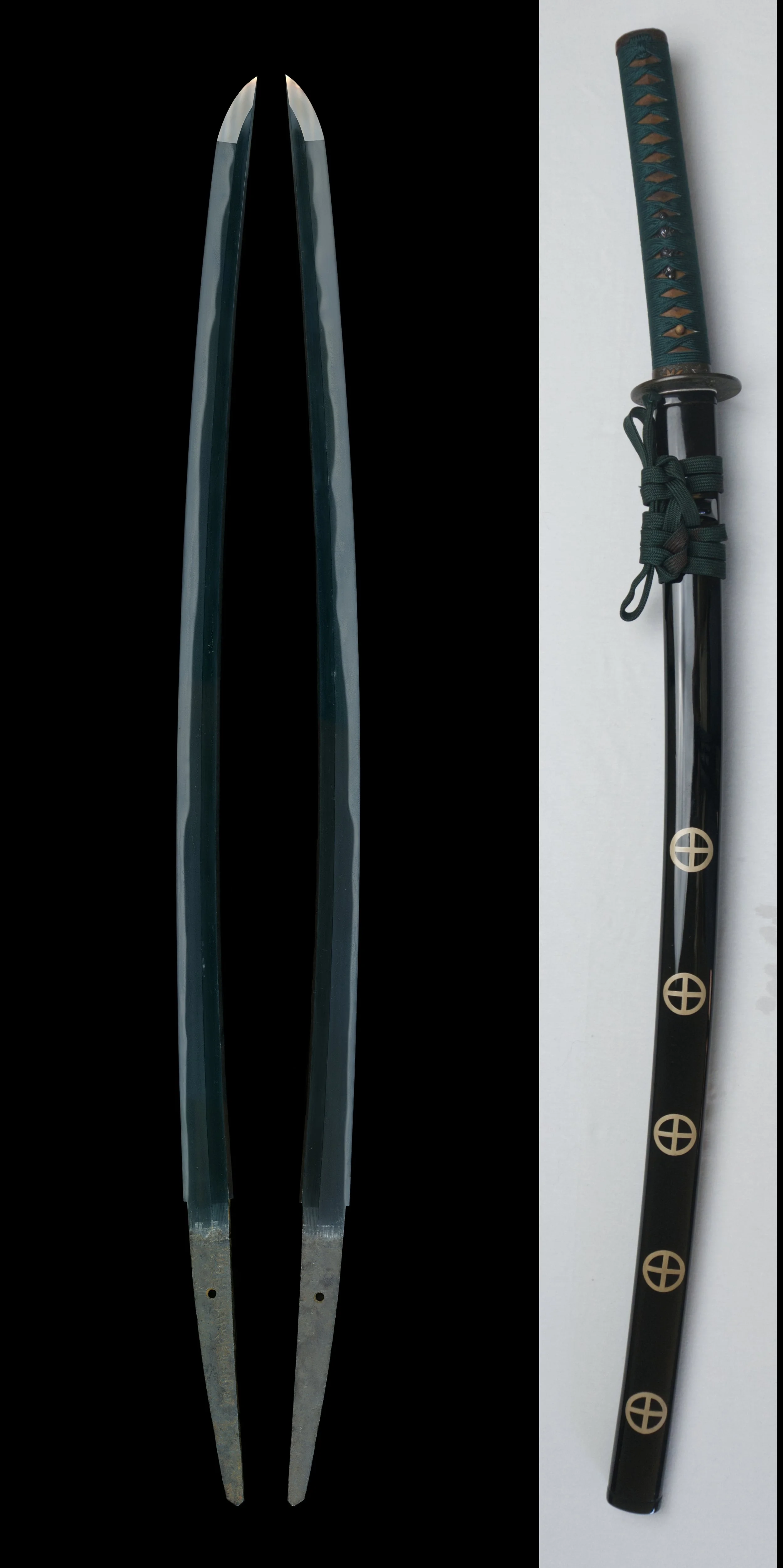
This blade is an excellent and representative example of the workmanship of the First Generation Sasshū Masayoshi (正良). It displays a wide mihaba and a substantial kasane, giving the blade a powerful and robust presence typical of early Satsuma swords. The elongated chū-kissaki further emphasises its bold sugata. The jigane is a well-forged itame-hada.
The hamon begins with a narrow sugu-yakidashi in nie-deki, exhibiting excellent control at the yakiba’s starting point. As the hamon rises along the blade, the jiba becomes heavily laden with abundant nie, which remains clearly visible throughout the temper line. This refined but active nie structure as well as the sugu-yakidashi are hallmark features of his work.
Overall, this blade shows the defining characteristics associated with the first-generation Masayoshi—strong sugata, well-textured jigane, and a lively hamon rich in nie. It stands as a highly representative example of his craftsmanship and of early Satsuma swordmaking.
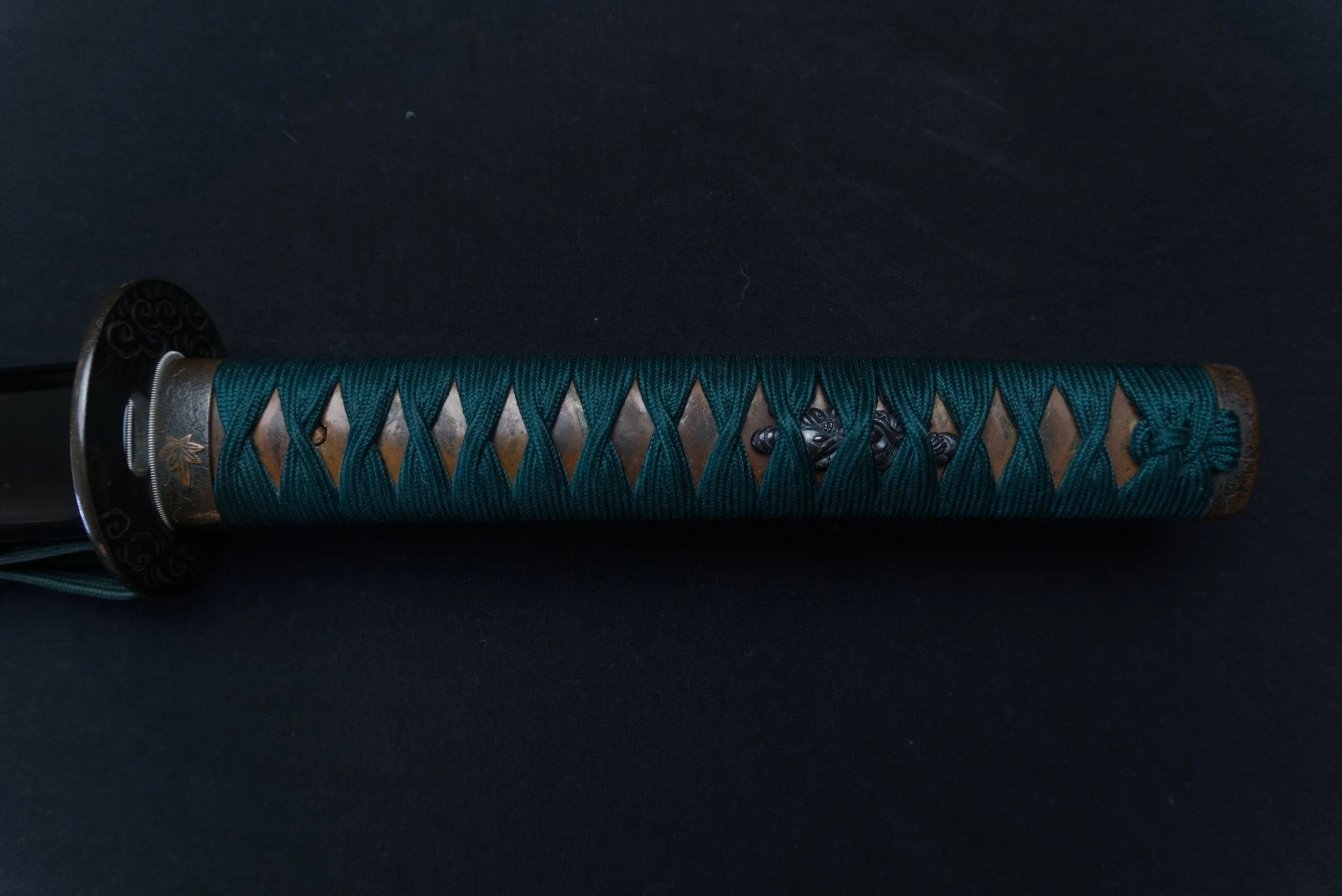
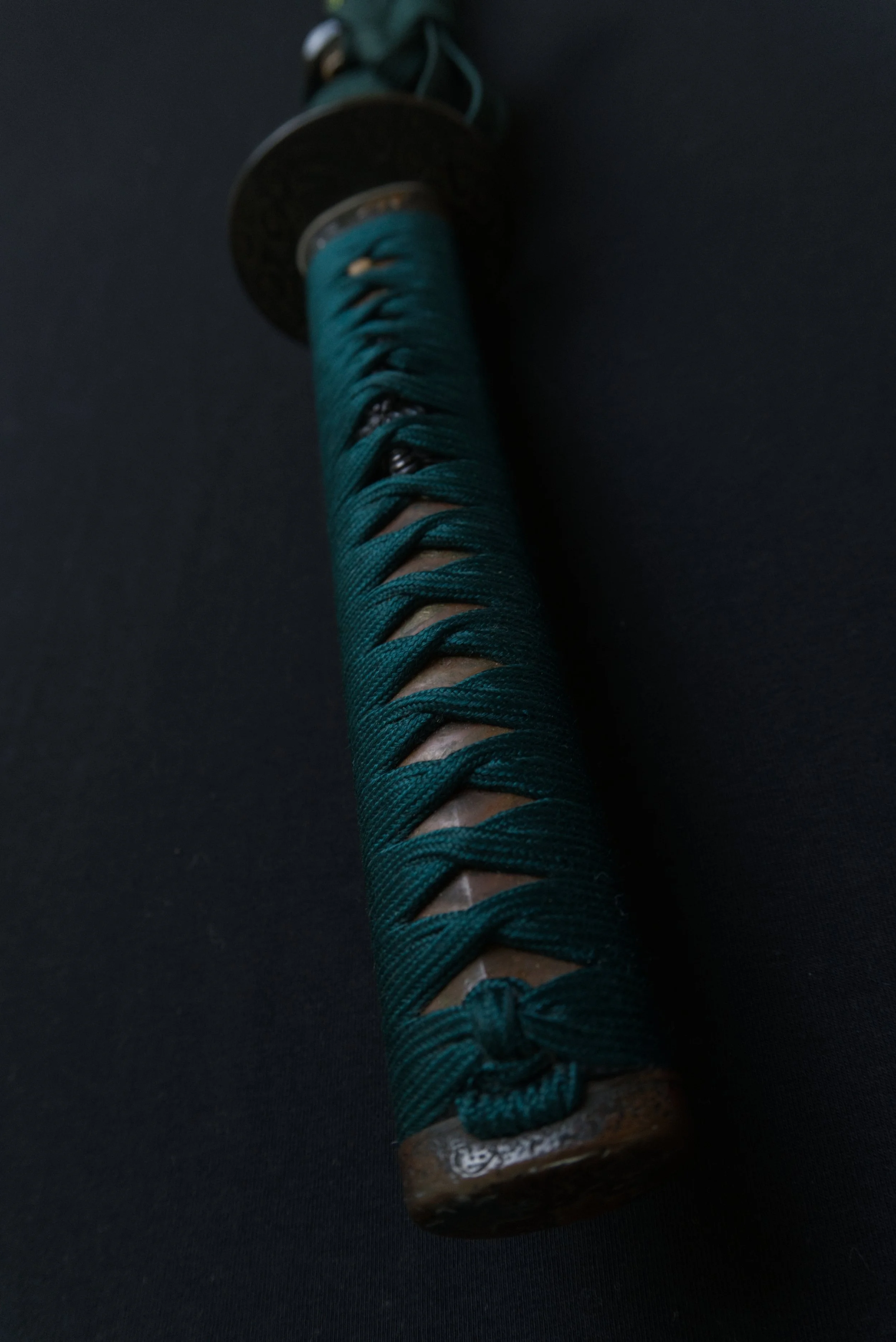
This sword is accompanied by its original Satsuma-style koshirae. The tsuka has been rewrapped, and the saya lacquer is newly made, while retaining the traditional Satsuma aesthetic. A distinctive feature is the yamagane (copper) plate base of the tsuka, rather than samegawa. This is historically consistent, as Satsuma koshirae frequently used lacquered cowhide, iron plate, or yamagane instead of same, giving the mounts a rugged and utilitarian character. It is also typical for Satsuma mounts to omit menuki, reflecting the practical and martial approach of the Satsuma samurai class. The saya is decorated with multiple Shimazu mon (family crests), identifying the governing family of the Satsuma Domain.