
Written by Nicholas Fu 15/05/2026
Collecting Nihonto -
Developing One’s Own Taste
Lately, we have had the honour of assisting and working with new collectors who have purchased their very first Nihonto. This is genuinely wonderful to see. It is encouraging to know that more people are becoming interested in this world and are stepping into the role of custodians of these remarkable pieces of art and history.
As someone who is deeply passionate about Nihonto, with around seven years of study behind me, I have naturally developed my own personal tastes and direction when it comes to collecting. Through my involvement in this field, I have had the pleasure of meeting a wide range of collectors, each with their own unique approach.
Some collectors choose to specialise, focusing on particular periods, schools, or regions of workmanship. I personally fall into this category. Others prefer to collect strong examples across a broad range of styles, periods, and traditions. Some are drawn to the provenance and personal history of a swordsmith, while others prioritise the intrinsic quality of the work itself. As a few of my teachers have often said, a good sword is a good sword. Both approaches are equally valid and can lead to very different but equally rewarding journeys.
Whenever I meet another Nihonto enthusiast, I am always curious. What is their favourite sword? Which of the Gokaden speaks to them the most? Who is their favourite swordsmith? These preferences often reveal not just knowledge, but the direction their collecting journey has taken.
From my experience, many new collectors tend to buy first and study what they have acquired afterwards. That was certainly the case for me. However, after years of study, I now find myself in a very different place compared to where I started. My current tastes, preferences, and acquisition decisions have evolved significantly over time, even though I still appreciate the pieces that first drew me into this field.
This brings me to the purpose of this article.
I would like to offer a practical guide for new collectors, not just on what to buy, but on how to approach studying Nihonto in a way that helps develop personal taste and direction over time. More than anything, I am interested in how a collector’s eye evolves and where that journey ultimately leads when guided by a structured and thoughtful approach to learning.
In the following sections, I will outline how I personally recommend beginning your study and how to progress step by step in a way that builds both knowledge and confidence.
For those beginning their journey, I believe the study of Nihonto can be approached in the following order:
The History and Evolution of the Japanese Sword’s Shape
The Gokaden
Shintō Swords and New Regional Styles
Shinshintō Swords and the Kotō Revival
Modern Swords
The History and Evolution of the Japanese Sword
When beginning the study of Nihonto, one of the most important things to learn is the evolution of the Japanese sword’s shape, or sugata. Nihonto exist in a remarkable variety of shapes and sizes, each reflecting not only the artistic preferences of the time, but also the practical realities of warfare, combat methods, social change, and technological development.
In many ways, the sugata of a blade is the first conversation the sword has with the viewer. Before examining the jigane, hamon, or finer details of workmanship, the overall form of the blade already reveals a tremendous amount of information.
The shape of a Japanese sword was never random. Over centuries, swords evolved continuously in response to changing battlefield conditions, armour, fighting styles, and the needs of the warrior class. Because of this, studying sugata provides one of the clearest pathways toward understanding the historical context of a blade.
For new collectors, this area of study is incredibly valuable because it trains the eye to recognise broad characteristics before becoming overwhelmed by finer details. Many beginners understandably focus immediately on hamon or dramatic visual activity, as these are often the most eye-catching aspects of a sword. However, experienced collectors will almost always examine the sugata first.
A sword’s length, curvature, width, taper, kissaki shape, thickness, and proportions all provide clues regarding when it was made and what stylistic traditions influenced it. Over time, certain shapes became strongly associated with particular historical periods due to the changing nature of warfare itself.
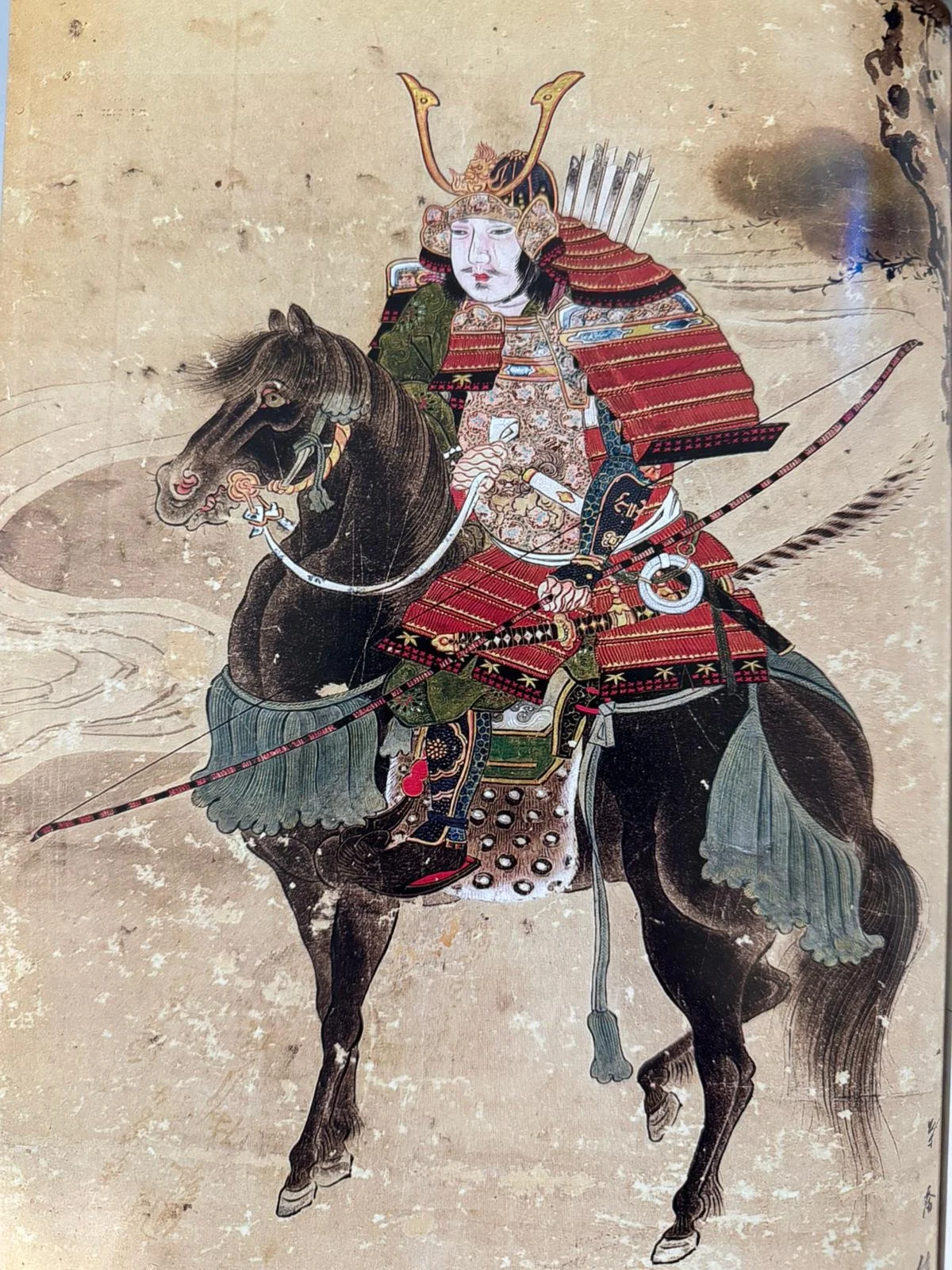
For example, many Heian and early Kamakura blades were designed primarily for mounted samurai combat. These swords often display elegant koshi-zori, where the deepest curvature sits closer to the base of the blade, making them particularly effective for drawing and ccutting from horseback. The graceful tapering shape and relatively smaller kissaki of many early tachi reflect both the aesthetics and combat requirements of the period.
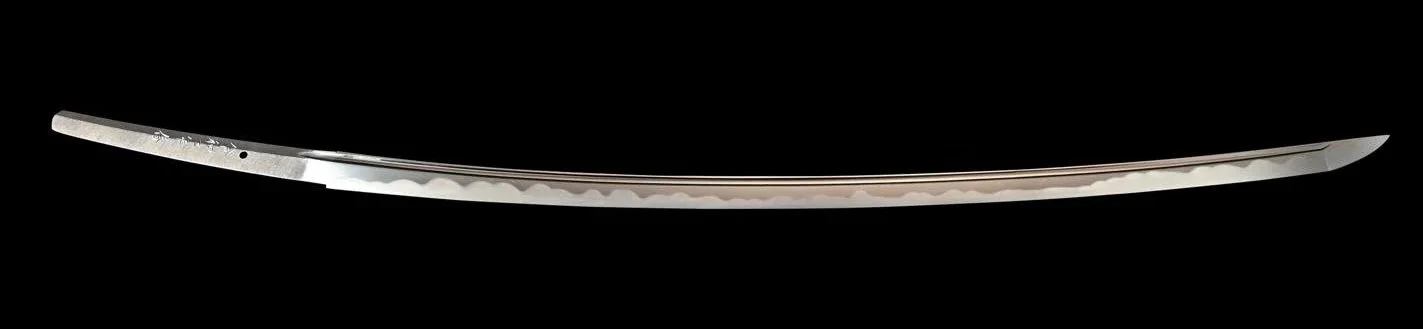
Modern Blade made in the Nanbokucho Period Shape
As Japan entered the turbulent Nanbokuchō period, warfare intensified dramatically. Large-scale conflicts became increasingly brutal, and swords evolved accordingly. Many blades from this era became significantly larger and more imposing, featuring extremely wide mihaba, little taper, extended ō-kissaki, and overall powerful proportions. These blades projected both battlefield effectiveness and visual intimidation.
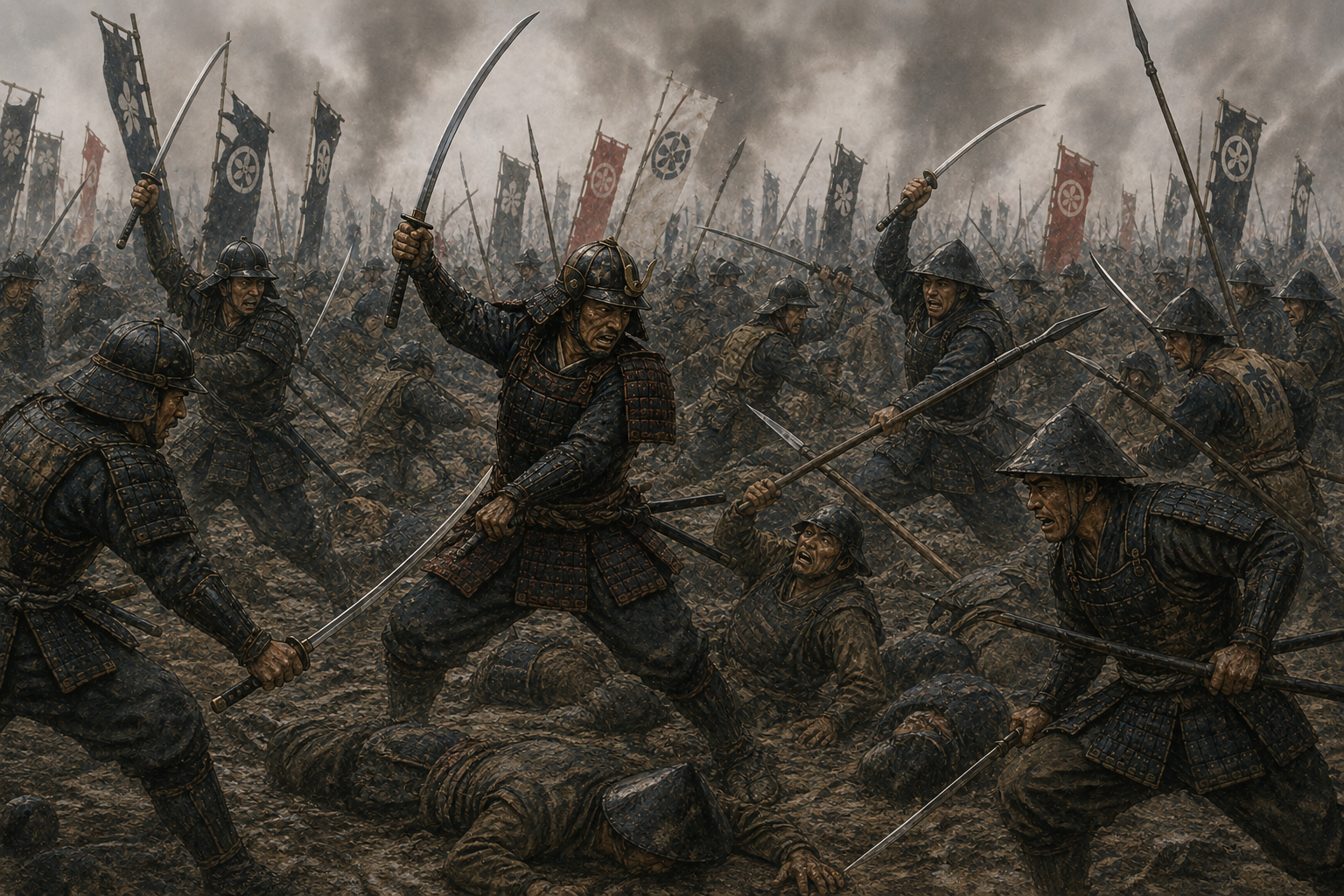
AI generated image to depict Muromachi infantry combat
By the Muromachi period, warfare and military organisation changed once again. Infantry combat became increasingly common, particularly with the rise of organised foot soldiers and mass battlefield engagements. As a result, swords often became more practical and efficient for close combat and rapid deployment. Many Muromachi blades exhibit comparatively shorter nagasa and shorter nakago, allowing for easier one-handed use and quicker handling in fast-moving combat situations. Uchigatana mounting styles also became increasingly prominent during this period, reflecting the growing preference for swords worn edge-up through the belt for faster drawing techniques compared to the older tachi style suspended edge-down.
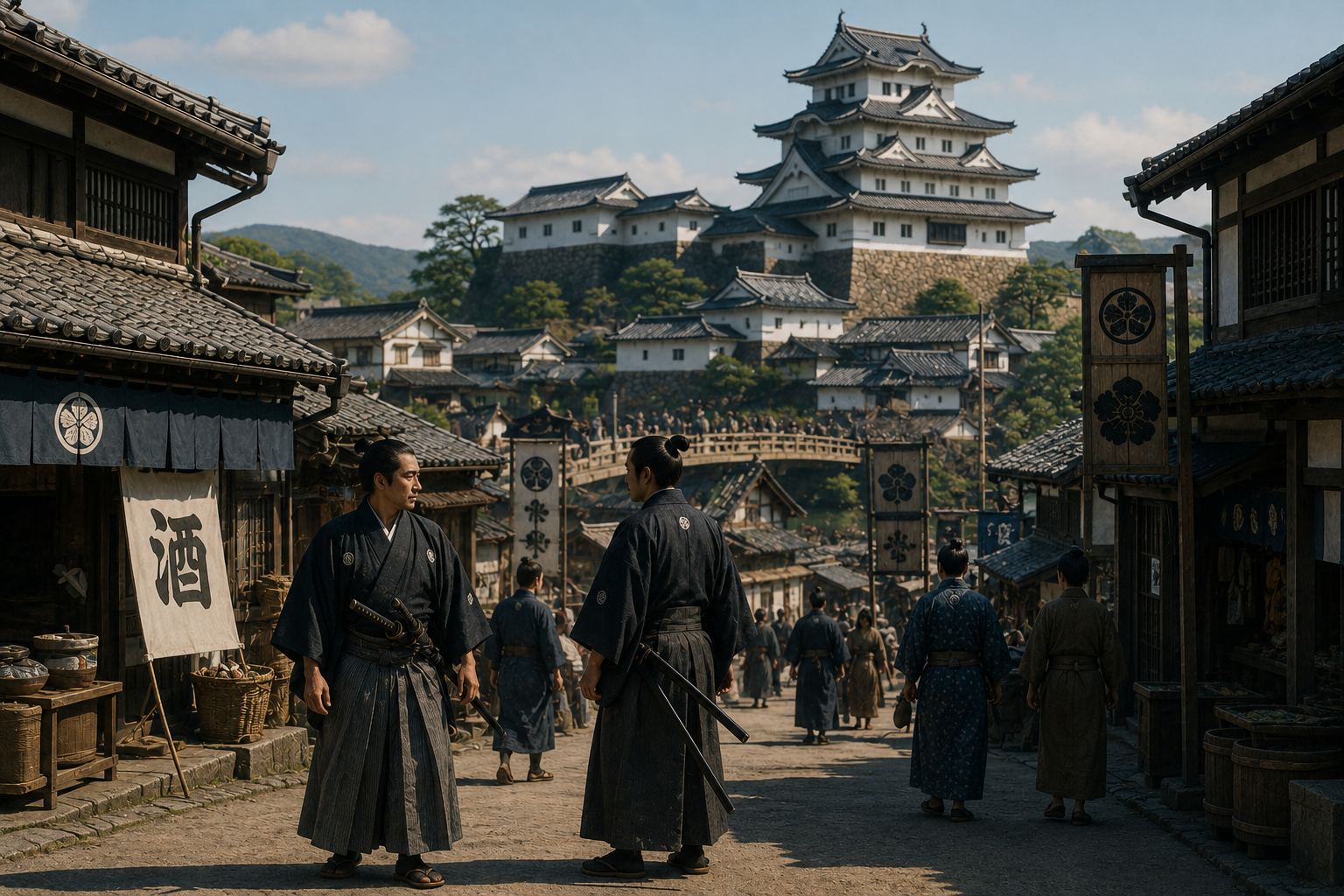
AI generated image - to depict the Edo period
Later, during the peaceful Edo period, the practical demands of warfare diminished significantly. This gave rise to more refined and controlled forms, particularly the Kanbun-shintō sugata commonly seen in early Edo swords. These blades often display shallower sori, narrower proportions, and a more dignified, compact appearance. While still functional weapons, many swords of this era also reflected the status, culture, and aesthetic sophistication of the samurai class during a prolonged period of peace.
As collectors continue studying, these distinctions gradually become intuitive. Eventually, one begins to estimate the age and tradition of a blade almost instinctively simply by observing its silhouette.
This is why I strongly encourage new collectors to spend time studying oshigata, reference books, museum examples, and dealer inventories with a specific focus on shape alone. At first, many swords may appear similar. However, with repeated exposure, patterns begin to emerge. The eye slowly develops an understanding of what makes a Kamakura tachi feel graceful, why Nanbokuchō blades appear powerful, or why certain Shinshintō works intentionally revive older styles.
In my opinion, this stage of study is absolutely foundational. Without a solid understanding of sugata and historical evolution, it becomes far more difficult to properly contextualise the workmanship of a blade. Conversely, once a collector develops an eye for shape, many other aspects of Nihonto study begin to fall naturally into place.
2. The Gokaden
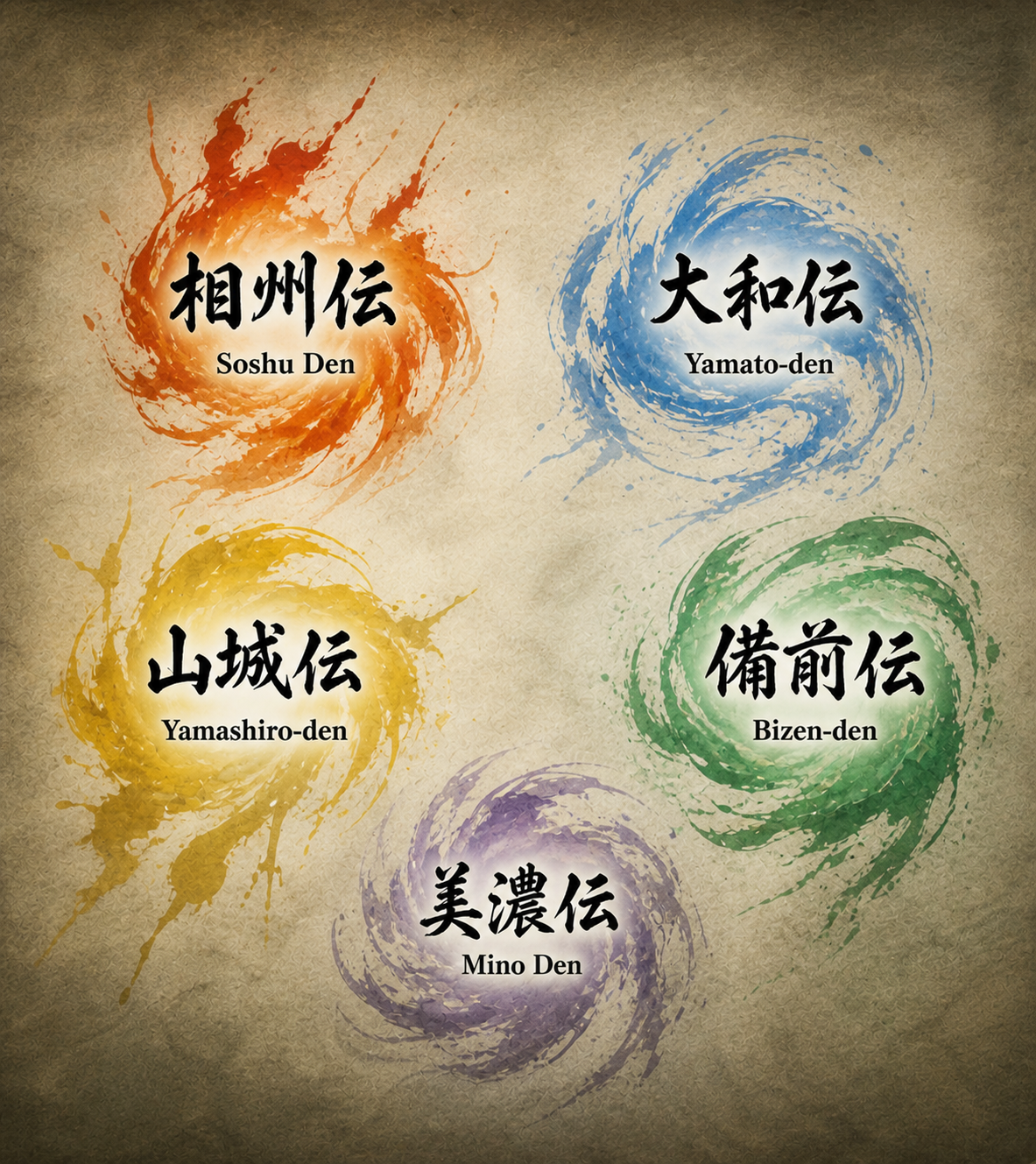
Once a collector begins developing an understanding of sugata and the historical evolution of Japanese swords, the next major step in Nihonto study is learning the Gokaden, or the Five Traditions.
The Gokaden form one of the central foundations of classical Nihonto appreciation. While the reality of Japanese sword-making history is often more complex and interconnected than a simple five-category system, the Gokaden provide an extremely useful framework for understanding how regional traditions developed and how differing approaches to sword-making emerged across Japan.
The five traditions are generally recognised as:
Yamashiro-den
Yamato-den
Bizen-den
Sōshū-den
Mino-den
Each tradition developed under different geographical, political, cultural, and military circumstances. As a result, each possesses its own characteristic approaches to jigane, hamon, sugata, boshi, and overall feeling.
For many new collectors, the study of Gokaden is the stage where Nihonto truly begins to open up beyond simply appreciating swords visually. One gradually begins to recognise that different schools and traditions possess entirely different philosophies and aesthetics.
Some traditions pursued elegance and refinement. Others emphasised strength and functionality. Some focused on highly controlled workmanship, while others embraced dramatic activity and complexity.
Bizen-den, for example, is often considered one of the easiest entry points for new collectors due to its beauty and visual accessibility. Many Bizen works feature graceful choji-midare hamon, active utsuri, and elegant sugata that immediately attract the eye. It is not difficult to understand why Bizen became enormously influential and widely appreciated throughout Japanese history.
In contrast, Yamato-den often feels considerably more restrained and austere. Strong masame tendencies, functional workmanship, and connections to temple traditions give many Yamato blades a distinctly disciplined character. At first, some newer collectors may find Yamato less visually exciting compared to flamboyant Bizen or Sōshū works. However, many collectors grow to deeply appreciate its quiet strength and sophistication over time.
Sōshū-den meanwhile represents one of the most technically dramatic traditions in Nihonto. Under smiths such as Masamune and his lineage, swords developed highly active nie-based workmanship filled with kinsuji, sunagashi, chikei, and dynamic hamon structures. Sōshū works often leave an immediate impression even on beginners due to their intensity and visual complexity.
Yamashiro-den tends to emphasise refinement, elegance, and precision. Fine ko-itame hada, graceful sugata, and soft, sophisticated workmanship are hallmarks of many Yamashiro traditions, particularly within schools such as Rai. Many collectors describe high-level Yamashiro work as possessing a certain nobility or courtly elegance.
Mino-den, which rose to prominence later, often displays practical and highly functional workmanship suited to the realities of widespread warfare during the Muromachi period. Distinctive togari-ba, gunome-midare, and durable construction made Mino traditions enormously influential, particularly as sword production expanded throughout Japan.
One of the most fascinating aspects of studying the Gokaden is discovering which traditions naturally resonate with you personally. Almost every experienced collector eventually develops preferences. Some become captivated by the powerful and dramatic nature of Sōshū-den. Others are drawn toward the refined elegance of Yamashiro or the disciplined strength of Yamato. Some appreciate the balanced beauty and historical significance of Bizen, while others prefer the practicality and sharpness associated with Mino traditions.
One of the most valuable aspects of studying the Gokaden is that it also provides the foundation for understanding many later periods of sword-making, particularly Shinshintō and modern swords.
As collectors progress further into Nihonto study, they quickly realise that many later swordsmiths were not simply creating swords in isolation. Rather, many were consciously studying, admiring, and attempting to recreate the great masterpieces of the Kotō period.
This becomes especially important when studying Shinshintō swords. Many Shinshintō smiths looked back toward the Kamakura and Nanbokuchō periods as the golden age of Japanese sword-making and actively sought to revive older traditions and techniques. Some attempted to recreate the powerful nie-based intensity of Sōshū-den, while others pursued the refined elegance of Yamashiro, the graceful choji of Bizen, or the disciplined workmanship of Yamato traditions.
Without a solid understanding of the Gokaden, it becomes far more difficult to fully appreciate what these later smiths were trying to achieve.
For example, when viewing a Shinshintō blade with massive Nanbokuchō-inspired sugata and highly active nie-deki hamon, the collector who understands Sōshū-den immediately recognises the historical inspiration behind the work. Likewise, when studying modern Mukansa or Ningen Kokuhō swordsmiths, one often sees deliberate attempts to preserve and continue the great traditions established centuries earlier.
In many ways, the study of Nihonto is not simply the study of isolated historical periods, but an ongoing conversation between generations of swordsmiths across time.
The Gokaden therefore serve not only as a framework for understanding Kotō swords, but also as the foundation for understanding how later smiths interpreted, revived, and paid homage to the masterpieces that came before them.
For beginners, I strongly recommend approaching the Gokaden not as something to memorise mechanically, but as a gradual process of exposure and comparison. Study oshigata. Compare examples side by side. Observe how the feeling of a Rai blade differs from a Tegai blade, or how an Osafune work contrasts against Sōshū workmanship.
Over time, patterns begin to emerge naturally.
Eventually, a collector begins to look at a blade and instinctively feel whether it carries the elegance of Yamashiro, the strength of Yamato, the beauty of Bizen, the intensity of Sōshū, or the practicality of Mino. Developing this intuition is one of the major milestones in the study of Nihonto.
3.Shinto Period and Regional Styles
During the Edo period, Japan entered a prolonged era of peace under the Tokugawa shogunate. With the end of large-scale civil warfare, the role of the sword gradually began to change. While swords remained an important weapon and symbol of the samurai class, the practical demands of battlefield combat were no longer the primary driving force behind sword production. This period of stability allowed swordsmiths to focus more deeply on refinement, aesthetics, experimentation, and craftsmanship.
The Edo government also introduced regulations that reflected this changing environment. During the early Edo period, restrictions were placed on the length of swords carried by the warrior class, contributing to the gradual standardisation of katana around what is now considered a typical length of approximately 70 cm. Extremely long battlefield blades of the Nanbokuchō and Sengoku periods gradually fell out of fashion as the realities of warfare changed and swords increasingly became sidearms worn in daily life within castle towns and urban environments.
One of the most important developments of the Edo period was the establishment of a far more organised and stable national infrastructure. Roads such as the Tōkaidō and Nakasendō connected major regions of Japan, while castle towns grew into thriving political and economic centres. As transportation networks improved, high-quality raw materials, including tamahagane and other forms of steel, could be transported more reliably across the country. This had a significant impact on sword production.
In earlier periods, many schools and traditions were strongly tied to their local regions. Differences in available iron, geography, warfare, and local culture contributed heavily to the distinct characteristics of each tradition. During the Shintō period, however, swordsmiths increasingly gathered in major castle towns and urban centres such as Edo, Osaka, and Kyoto. As smiths from different traditions interacted more frequently, the exchange of techniques and ideas accelerated dramatically, leading to the emergence of entirely new styles of workmanship unlike those seen during the Kotō period.
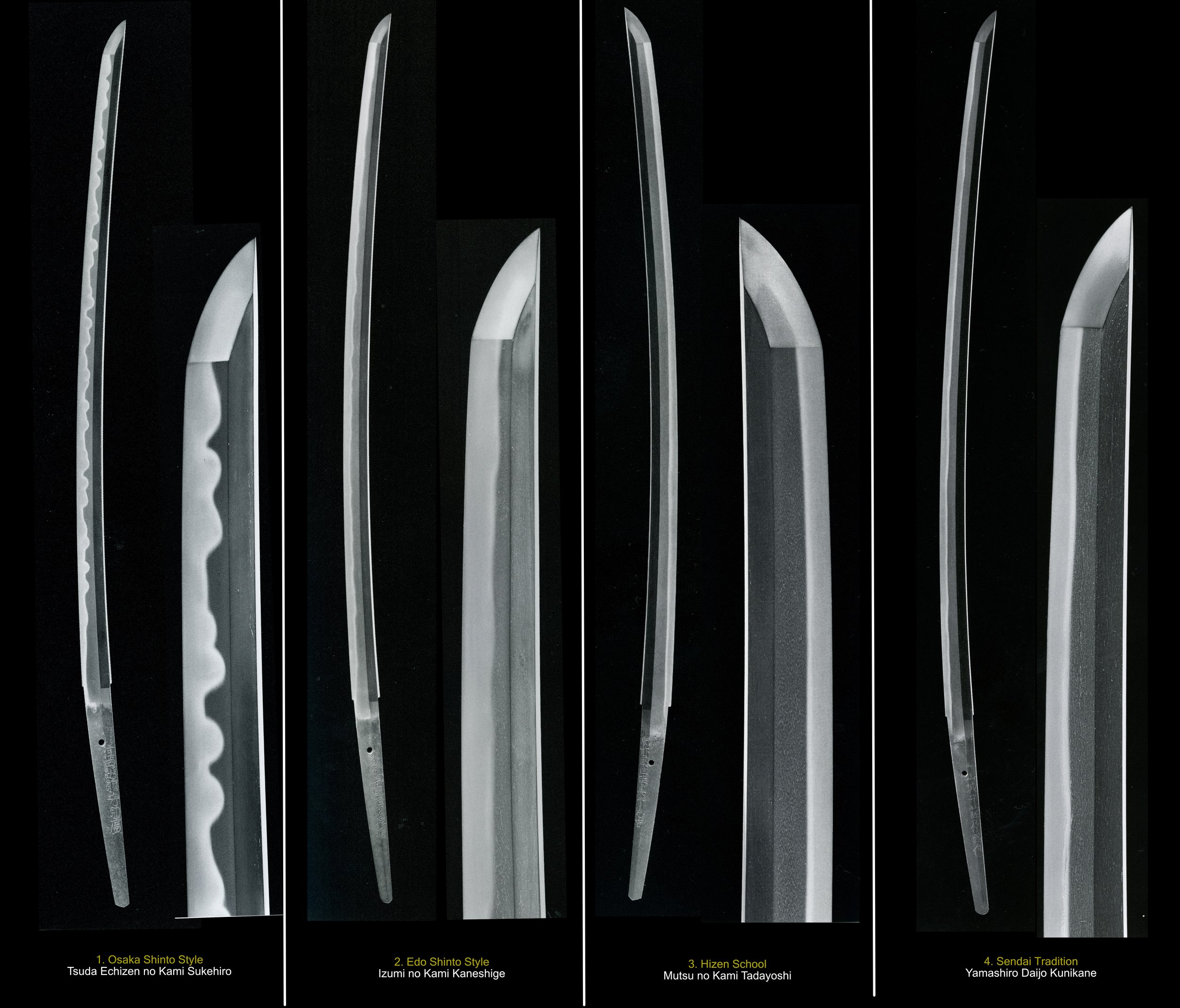
One of the defining characteristics of the Shintō period was the development of highly original and flamboyant hamon. Swordsmiths increasingly experimented with bold and visually striking temper patterns that emphasised technical brilliance and artistic individuality. Famous examples include the dramatic toran-ba of Tsuda Echizen no Kami Sukehiro, the powerful juzuba associated with Nagasone Kotetsu, and the various ornamental and representational hamon later developed by smiths such as Tanba no Kami Yoshimichi. These innovations represented a major shift from earlier traditions and contributed to what later became recognised as the Shintō Tokuden style.
Toranba Hamon by Sukehiro
Sudareba (Folding Screen) Hamon by Tanba no Kami Yoshimichi
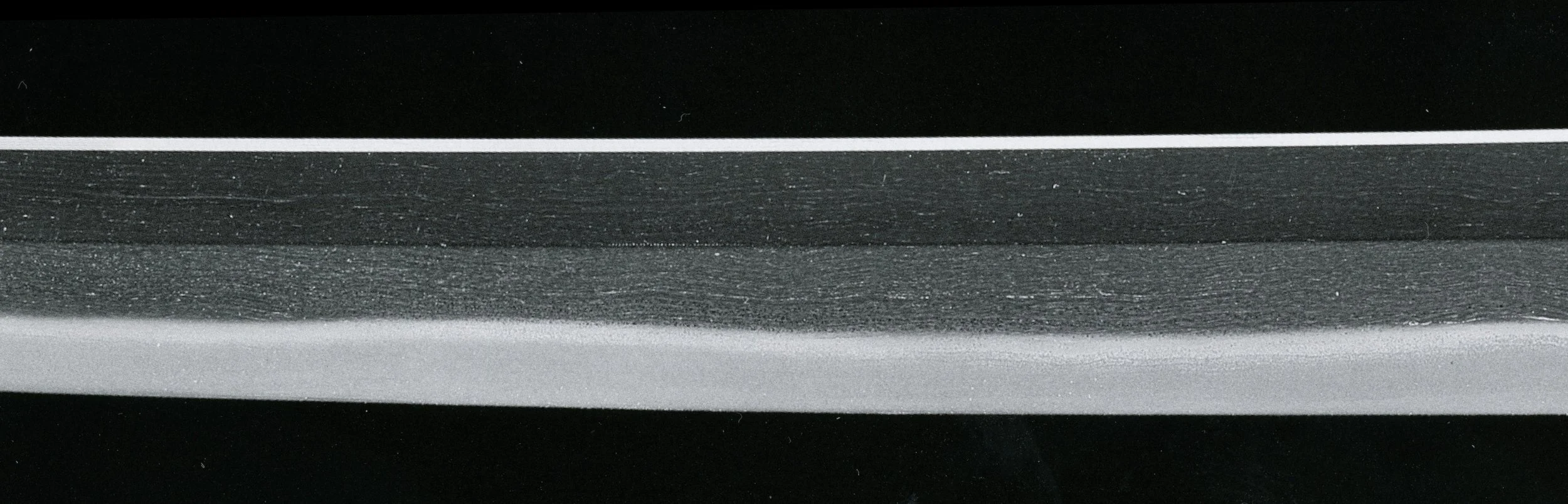
Masame Hada of the Sendai Kunikane School
Konuka (Rice Grain) Hada of the Hizen School
Among the various regional traditions that emerged during this period, Osaka Shintō became especially famous. Osaka was one of the great commercial and cultural centres of Edo-period Japan, and the swordsmiths working there became known for highly refined and sophisticated workmanship. Masters such as Tsuda Echizen no Kami Sukehiro and Inoue Shinkai produced blades with extraordinarily bright nioiguchi, elegant sugata, and flamboyant hamon filled with movement and refinement. In many ways, Osaka Shintō reflects the prosperous and cultured atmosphere of Genroku-era urban society.
In contrast, the style associated with Edo developed a rather different character. Edo was fundamentally a city of warriors, shaped by the values and discipline of the Tokugawa samurai class. Swordsmiths such as Nagasone Kotetsu, Izumi no Kami Kaneshige, and the Yasutsugu lineage became known for producing robust, practical, and highly functional blades. Compared to the elegance and sophistication often associated with Osaka Shintō, Edo Shintō frequently possesses a more powerful and martial feeling, emphasising strength, cutting ability, and durability.
This distinction between Osaka Shintō and Edo Shintō is particularly fascinating because it reflects the differing character of each city itself. Osaka, long associated with commerce, wealth, and culture, produced blades of extraordinary refinement and flamboyance. Edo, as the political and military centre of the shogunate, produced works that often appear more restrained, practical, and battle-oriented.
At the same time, traditions such as Hizen developed their own unmistakable identity. The Hizen school became famous for extraordinarily refined jigane known as konuka-hada, often compared to finely textured rice bran. Smiths such as the first-generation Tadayoshi produced blades of exceptional precision and consistency, combining Yamashiro influence with a distinctly Hizen elegance that remains instantly recognisable even today.
The culture surrounding swords also evolved considerably during the Edo period. Many swordsmiths began adopting honorary court titles such as “Echizen no Kami” or “Yamashiro Daijō” within their signatures. These titles served not only as marks of prestige, but also reflected the increasingly formal social structure of Edo-period society. By the late Edo period, acquiring such titles had become highly desirable, as they greatly enhanced a smith’s reputation and the value of his work.
At the same time, cutting tests, or tameshigiri, also became increasingly popular. Blades that performed exceptionally well during official cutting tests were sometimes inscribed with tameshi-mei describing the results, such as how many bodies could be cut through in a single stroke. Swords recognised for exceptional cutting performance became known as wazamono, and even during this long period of peace, many samurai took pride in carrying blades renowned for their sharpness and effectiveness.
The role of horimono also gradually changed during this period. In earlier centuries, engravings often carried strong Buddhist or religious significance. During the Shintō period, however, horimono increasingly became decorative and artistic in nature. Works by smiths such as Ikkanshi Tadatsuna, who produced elaborate engravings on flamboyant toran-ba blades, perfectly illustrate this growing emphasis on visual sophistication and artistic display.
For me, this diversity is what makes the Shintō period so enjoyable to study. Every region and every school seems to possess its own atmosphere and character, and the more one studies these differences, the more rewarding the journey becomes.
4.Shinshinto - Koto Revival
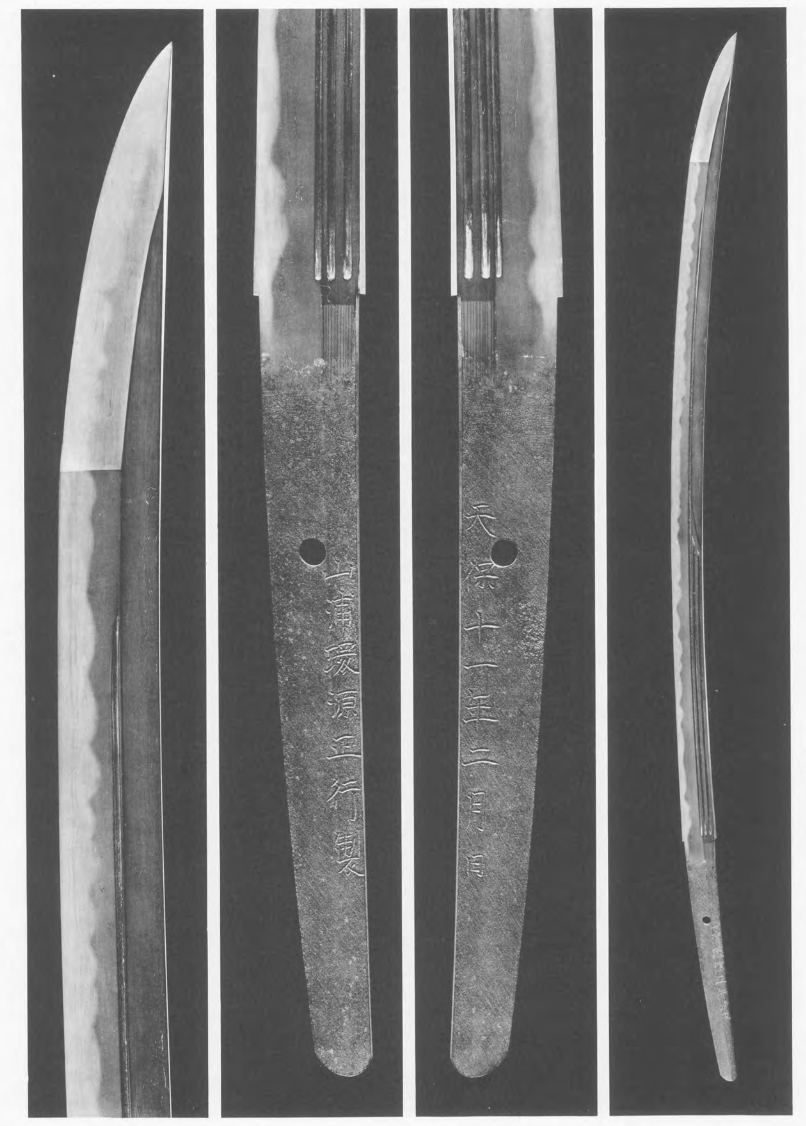
Blade made by Kiyomaro (Signed Masayuki) - Nanbokucho Style shape
Swords produced between 1781 and 1876 are generally classified as Shinshintō (新々刀), meaning “New New Swords.” This period came to an end with the Haitōrei Edict of 1876, when the Meiji government formally prohibited the public wearing of swords, marking the final collapse of the samurai class and bringing traditional sword production into severe decline. Shinshintō is also sometimes referred to as Fukkotō (復古刀), meaning “revival swords,” a name which reflects the central philosophy of the period itself.
By the late Edo period, sword production had already begun to stagnate. Many collectors and scholars felt that the craftsmanship of the Shintō period, while often technically brilliant, had drifted too far from the spirit and functional strength of the great Kotō masterpieces of the Kamakura and Nanbokuchō periods. In response to this growing sentiment, influential swordsmiths such as Kawabe Hachirō Masahide (better known as Suishinshi Masahide), a retainer of the Akimoto clan of Uzen Province, began advocating a return to older methods and ideals of sword-making. Alongside him, figures such as Nankai Tarō Tomotaka, who had moved to Kyoto from Tosa Province, also promoted the concept of “Fukkotō” — the revival of classical Kotō workmanship.
This movement would ultimately revitalise sword production throughout Japan. Many smiths enthusiastically embraced the challenge of studying and attempting to recreate the masterpieces of earlier periods, particularly those of the Kamakura and Nanbokuchō eras. Unlike the Shintō period, where originality and flamboyant experimentation often dominated, the Shinshintō movement placed tremendous emphasis on studying the old traditions and reproducing the styles of the great Kotō masters as faithfully as possible.
As a result, swords produced during the Shinshintō period often differ greatly from typical Shintō works. While Shintō blades are frequently associated with refined and sophisticated urban styles, Shinshintō blades tend to display larger sugata, wider mihaba, thicker kasane, and more dramatic shapes inspired directly by Nanbokuchō-period swords. In addition to katana and wakizashi, large numbers of tantō were also produced during this period, despite tantō having become relatively uncommon throughout much of the Shintō era.
The increasingly unstable political climate of the late Edo period also influenced sword production. As social unrest and violent conflict intensified leading into the Meiji Restoration, more practical and battle-oriented blades once again became desirable. Smiths such as Taikei Naotane and Minamoto Kiyomaro produced large ō-nagamaki and powerful blades inspired by the massive weapons of the Nanbokuchō period.
At the same time, certain sword forms also carried political symbolism. Smiths such as Saitō Kiyondo and Sa Yukihide produced what became known as kinnotō (勤皇刀), or “Imperial Loyalist swords.” These blades were associated with supporters of the Emperor who opposed the Tokugawa shogunate during the Bakumatsu period. Kinnotō were often made with unusually long blades, partially as a deliberate rejection of Tokugawa regulations that had previously standardised sword lengths during the Edo period. In this way, the sword itself became both a weapon and a political statement.
During the Shinshintō period, Edo (present-day Tokyo) emerged as the central hub of sword production. Swordsmiths from all over Japan travelled there to study under Suishinshi Masahide, who is said to have taught well over one hundred students. Through his influence, the study of Kotō traditions spread widely and shaped an entire generation of swordsmiths.
Among all Shinshintō smiths, Minamoto Kiyomaro is often regarded as the greatest. Originally from Shinano Province, he later moved to Edo where he achieved enormous fame through his powerful and highly skilled works inspired by the Sōshū tradition, particularly the style of Shizu Kaneuji. Kiyomaro’s blades are admired for their extraordinary forging, dramatic activity, and overwhelming presence, and today he is widely considered one of the finest swordsmiths of the entire Shinshintō movement.
Although the revival of Kotō traditions dominated the era, not all smiths abandoned the styles of the Shintō period. Some continued to study and reproduce the flamboyant workmanship associated with the Shintō Tokuden tradition. Smiths such as Ōzaki Suketaka, for example, attempted to recreate the famous toran-midare hamon of Tsuda Echizen no Kami Sukehiro, demonstrating that admiration for the great Shintō masters still remained strong even within the broader Kotō revival movement.
This period is particularly fascinating because it represents one of the most conscious and ambitious revival movements in the history of Japanese sword-making. Shinshintō smiths were not merely producing weapons for their own time; they were actively studying, analysing, and attempting to resurrect the greatness of earlier centuries. In many ways, the Shinshintō movement reflects the deep reverence later generations held for the masterpieces of the Kamakura and Nanbokuchō periods, and it remains one of the most rewarding areas of study for collectors today.
Much of the historical information regarding the Shinshintō and Fukkotō movements discussed in this section is based on explanations and classifications found within The Connoisseur’s Book of Japanese Swords. The work remains one of the most widely referenced English-language resources on Japanese sword history and appreciation.
5.Modern Japanese Swords – The Continuation of Tradition
Even today, Japanese swordsmiths continue to produce swords using traditional methods passed down through centuries in order to preserve and continue this remarkable cultural tradition. Although swords are no longer carried as weapons in everyday life, the art of Japanese sword-making remains alive through the dedication of modern smiths, polishers, habaki makers, lacquer craftsmen, and koshirae artisans who continue to uphold these highly specialised techniques.
At the same time, many modern swordsmiths are deeply inspired by the workmanship of earlier periods and actively aspire to recreate the masterpieces of Kotō, Shintō, and Shinshintō traditions. In many ways, this spirit closely resembles the Fukkotō movement of the Shinshintō era, where smiths sought to study and revive the greatness of earlier generations.
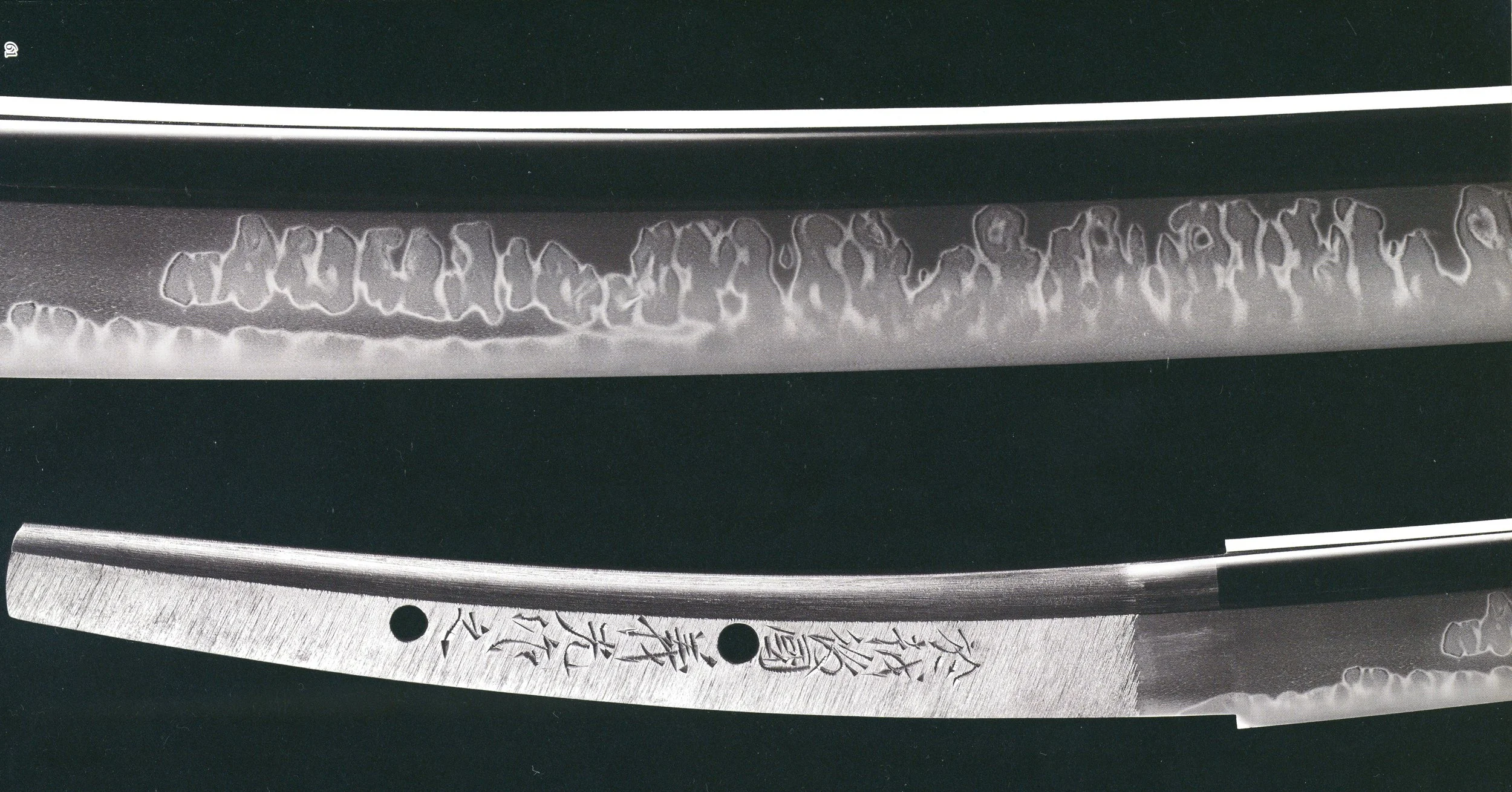
Sanchomo Utushi by Ono Yoshimitsu
One of the most famous examples of this dedication can be seen in the work of Ono Yoshimitsu, who is widely admired for devoting much of his life to producing faithful utsushi of the legendary Yamatorige, also known as Sanchōmō. Recreating Yamatorige is considered extraordinarily difficult due to its highly complex and dramatic chōji-midare hamon, powerful activity, and distinctive Bizen character. Many modern smiths have attempted Yamatorige utsushi, yet Ono Yoshimitsu’s work is often regarded as standing in a class of its own for the extraordinary level of faithfulness and technical mastery he achieves.

Sukehiro Utsushi by Kanekuni Ogawa
Other modern smiths draw inspiration from later traditions. Ogawa Kanekuni, for example, is particularly well known for his admiration of Tsuda Echizen no Kami Sukehiro and his pursuit of the famous toran-ba hamon of the Osaka Shintō tradition. Successfully reproducing true toran-ba remains one of the most technically demanding challenges in modern sword-making due to the highly controlled hardening process required to achieve its flowing wave-like form.
At the same time, modern swordsmiths are not limited solely to reproducing historical blades. Some are also experimenting with new ideas and collaborations that bridge traditional sword-making with contemporary popular culture. One particularly fascinating example is Ogawa Kanekuni’s creation of a real-life sakabatō, or reverse-edged blade, inspired by the famous weapon from the manga and anime series Rurouni Kenshin. Remarkably, the blade was still forged using traditional Japanese sword-making methods and even incorporated a toran-ba hamon inspired by Sukehiro. Works such as this demonstrate how modern swordsmiths continue to innovate while remaining deeply connected to traditional craftsmanship.

Similarly, Kawasaki Akihira is highly regarded for his work in the Sōshū tradition, producing blades heavily inspired by the great Kamakura masters such as Masamune and Sadamune. His blades often display strong nie activity, dynamic hataraki, and powerful workmanship that reflect the influence of classical Sōshū-den traditions.
Katana by Mukansa Swordsmith Kawasaki Akihira
Nanbokucho Period Style shape
Soshuden Tradition

Kiyomaro Utushi by Akamatsu Taro Kaneteru
Many modern swordsmiths also continue to study and produce utsushi of the great Shinshintō master Minamoto Kiyomaro. Kiyomaro’s blades remain immensely admired for their powerful sugata, dramatic activity, and overwhelming presence, and successfully reproducing his work is still regarded as an enormous challenge even among highly skilled modern smiths.
What makes modern Japanese sword-making especially fascinating is that it exists simultaneously as preservation, study, and innovation. Some smiths dedicate themselves to faithfully reproducing the masterpieces of the past, while others explore new artistic directions and modern interpretations using the same traditional techniques that have been handed down for centuries. In this way, the Japanese sword continues to evolve while still remaining deeply connected to its historical roots.
Personally, I believe this continuity is one of the most remarkable aspects of Nihontō. The traditions established by the great smiths of the Kamakura, Nanbokuchō, Shintō, and Shinshintō periods are not simply relics of the past. They are still actively studied, challenged, and carried forward today by modern craftsmen who dedicate their lives to preserving this extraordinary art form.
Final Thoughts
As you continue your journey into the world of Nihontō, you will naturally begin to develop your own tastes, preferences, and direction as a collector. Some may find themselves drawn to the powerful and dramatic works of the Sōshū tradition, while others may prefer the elegant refinement of Yamashiro, the rich traditions of Bizen, or the incredible stylistic diversity and innovation seen throughout the Shintō period. Over time, what initially appears overwhelming gradually becomes familiar, and each sword begins to tell its own story through its shape, steel, hamon, and workmanship.
One of the most rewarding aspects of studying Nihontō is that the learning never truly ends. Even experienced collectors and scholars continue to study, refine their understanding, and discover new perspectives throughout their lives. The deeper one goes, the more one begins to appreciate not only the technical craftsmanship of the sword itself, but also the history, culture, philosophy, and human stories connected to it.
Most importantly, collecting Nihontō should be an enjoyable and deeply personal journey. There is no single “correct” way to collect. Some pursue the highest levels of papered masterpieces, while others simply seek swords that personally resonate with them. Both approaches are equally valid. In the end, Nihontō are far more than weapons or collectibles. They are living pieces of Japanese history and craftsmanship that have survived across centuries into the modern day.
I hope this guide has helped provide a clearer introduction to the world of Japanese swords and encourages you to continue studying and exploring further. The world of Nihontō is vast, fascinating, and endlessly rewarding for those willing to dedicate time and passion to it.