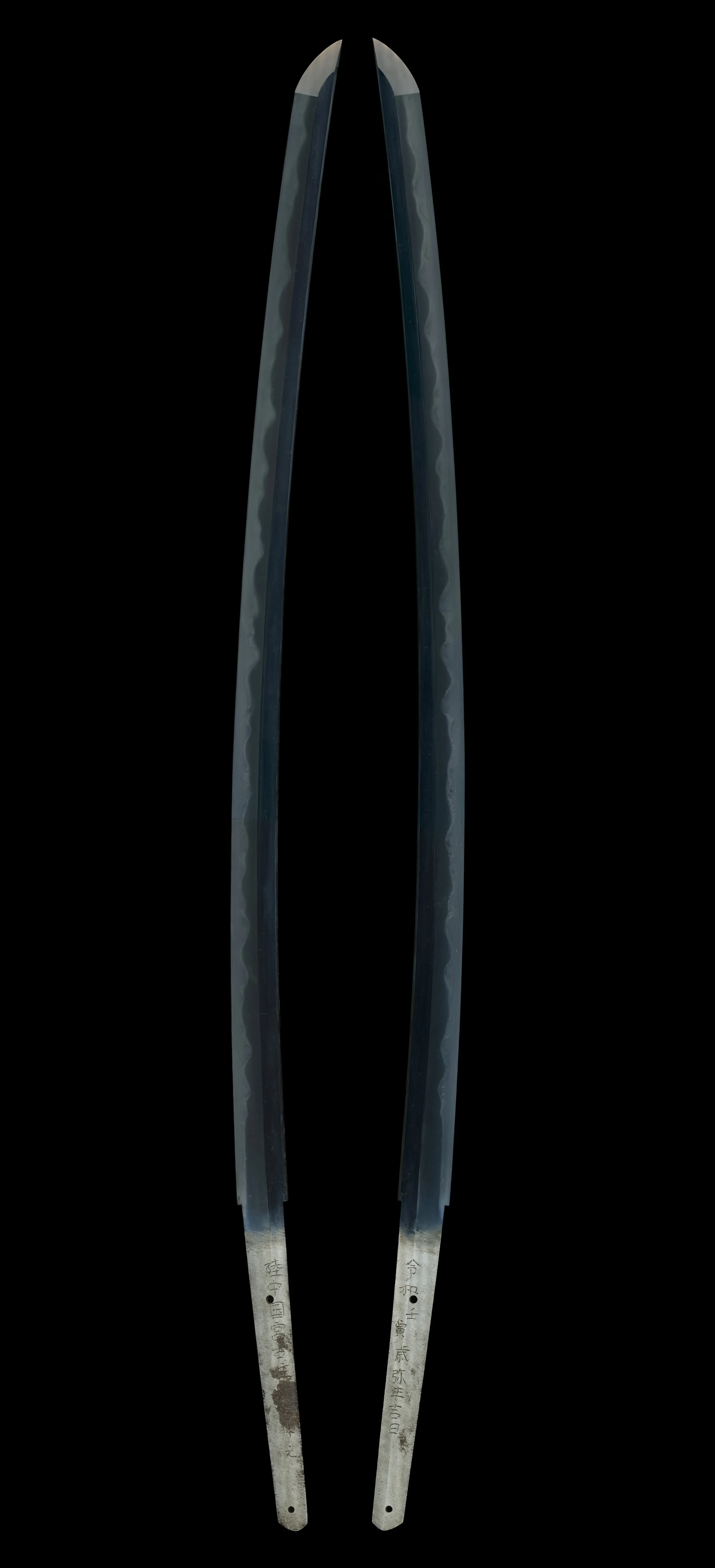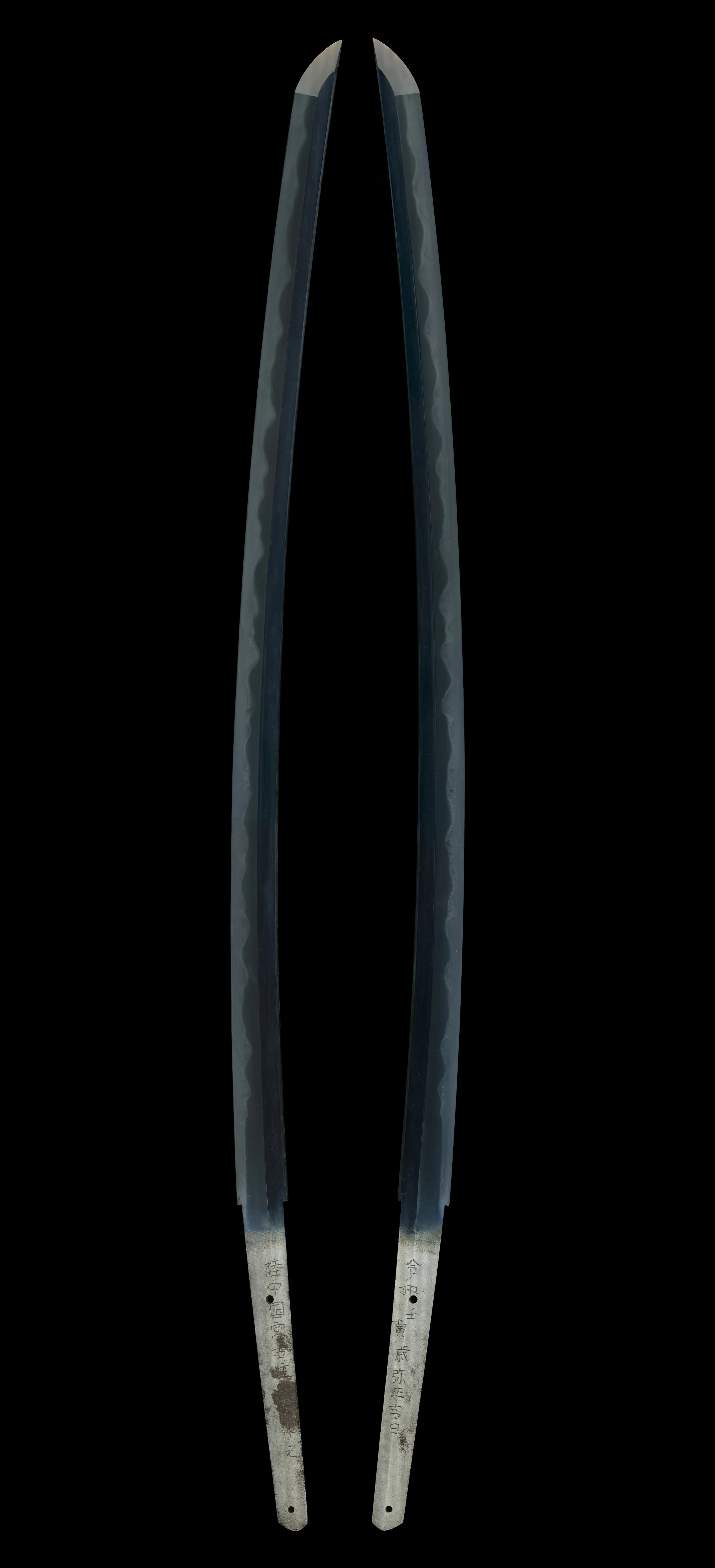
Rikuchunokuni Miyakoju Kazuyoshi Katana
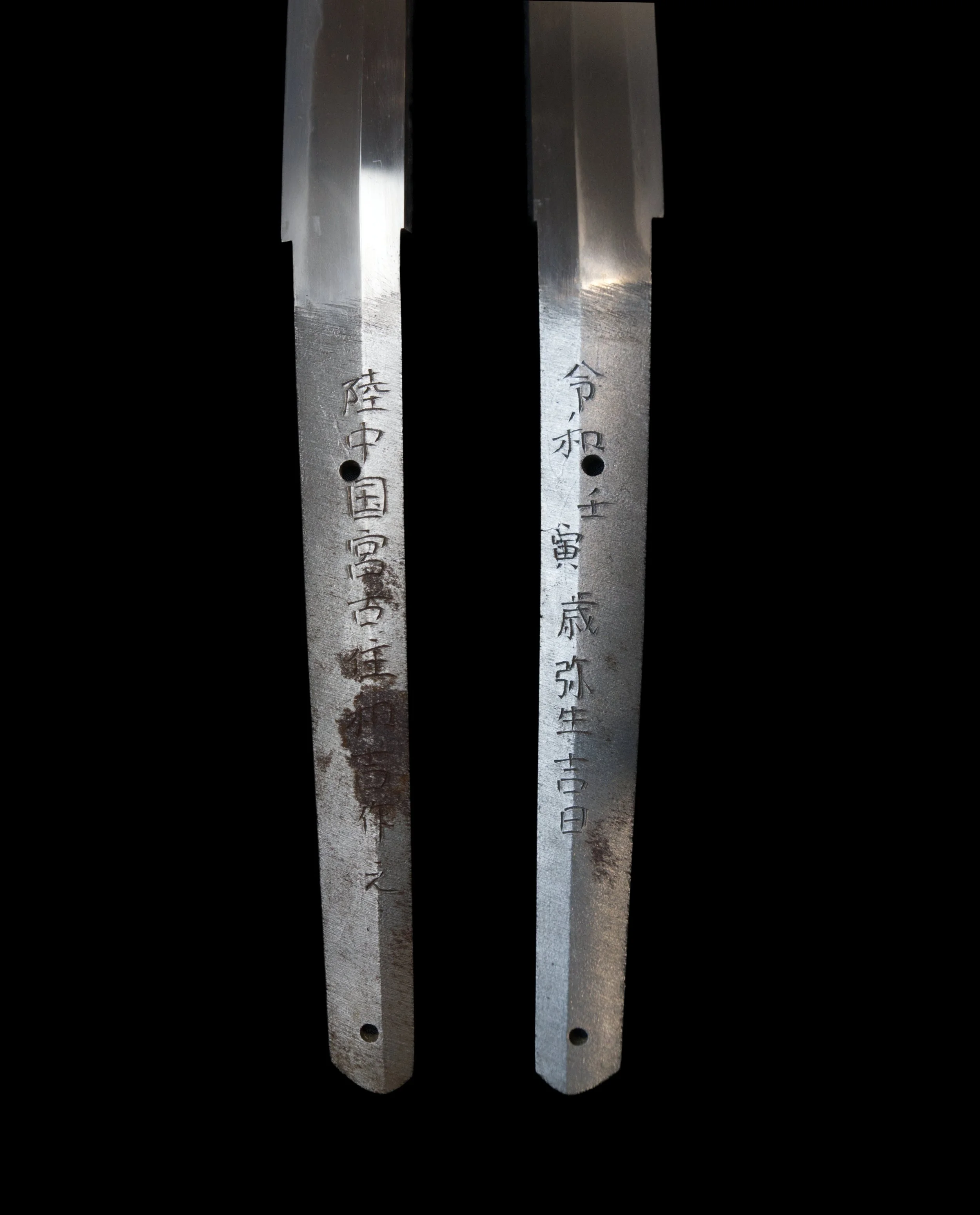
陸中国宮古住和吉作 刀
Item TK031
Period: Modern (2022)
Mei (Signature): Rikuchunokuni Miyakoju Kazuyoshi 陸中国宮古住和吉作
An auspicious day in March, Reiwa 4 (2022), Year of the Water Tiger 令和壬寅歲弥生吉日Nakago - 24cm - Ubu - 2 Mekugi ana
Nagasa - 84.8cm
Sori: - 2.2cm
Motohaba - 3.7cm
Sakihaba - 2.7cm
Kissaki - 4.4cm
Motokasane - 0.9cm
Price: ¥ 750,000
Extra-Large Contemporary Katana with Imposing Presence
Kazuyoshi resides in Takahama, Miyako City, in the former Rikuchū province (present-day Iwate Prefecture). His birth name is Tsuji Kazuhiro. He is an active member of the All Japan Swordsmiths Association and is regarded as one of the prominent contemporary smiths representing the Tōhoku region.
Throughout his career, he has been regularly invited to participate in major sword exhibitions, reflecting both technical recognition and peer respect within the modern swordmaking community. His work demonstrates a strong understanding of classical traditions, particularly in his study of Kamakura-period craftsmanship.
Kazuyoshi is known for his disciplined forging approach and his dedication to preserving historical aesthetics within the framework of modern sword production. His ability to interpret classical models while maintaining structural integrity has earned him a solid reputation among collectors and enthusiasts of contemporary Japanese swords.
This is an exceptionally large and imposing modern katana forged by Miyakojū Kazuyoshi in Reiwa 4 (2022).
The blade immediately commands attention through its remarkable scale and mass. With an extraordinarily wide motohaba and a notably thick spine, it possesses a powerful and muscular sugata rarely encountered in modern work. The proportions are bold and uncompromising, giving the sword a dense, authoritative presence in hand.
Rather than the elegance of a refined court blade, this piece conveys the impression of a weapon built for battlefield strength. It feels substantial and weighty, almost reminiscent of a heavy war axe in hand, or a sword intended for a very large and physically strong warrior. The deep curvature balances its great length, preventing the form from feeling unwieldy while preserving its overwhelming presence.
The hamon appears in a dramatic toranba style, with broad, rolling undulations flowing dynamically along the cutting edge. This energetic temper pattern complements the blade’s massive dimensions, reinforcing its character of controlled power and deliberate force.
Overall, this is a commanding modern work defined by scale, strength, and presence. It is a sword that does not aim for subtlety, but instead expresses raw authority in steel.