Mumei attributed to Takada Munekage Naginata
無名 高田統景 雞刀
Item TK046
Period: Koto - Sengoku Period/Azuchi-Momoyama (16th century)
Mei (Signature): Mumei
Designation: Hozon Token
Nakago - 53.4cm - One Mekugi-Ana
Nagasa - 66.8cm
Sori: - 4.2cm
Motohaba - 3.03cm
Motokasane - 1.0cm
Price: ¥ 900,000
Large Naginata from the Sengoku Period - Takada Munekage
Takada Munekage (統景) was a swordsmith of the Bungo Takada school who served the powerful Ōtomo clan of Bungo Province (modern-day Ōita Prefecture). Active during the late Sengoku period, Munekage worked at a time when Kyushu was frequently engulfed in warfare, creating strong demand for reliable weapons among the region's samurai.
The Bungo Takada school was renowned for producing practical fighting blades, earning a historical reputation for durability and cutting performance. Munekage's work reflects this tradition, representing the robust and functional craftsmanship for which the Takada smiths became known. Today, his works are appreciated not only for their connection to the Ōtomo clan and the turbulent Sengoku era, but also as examples of one of Japan's longest-lasting regional sword-making traditions.
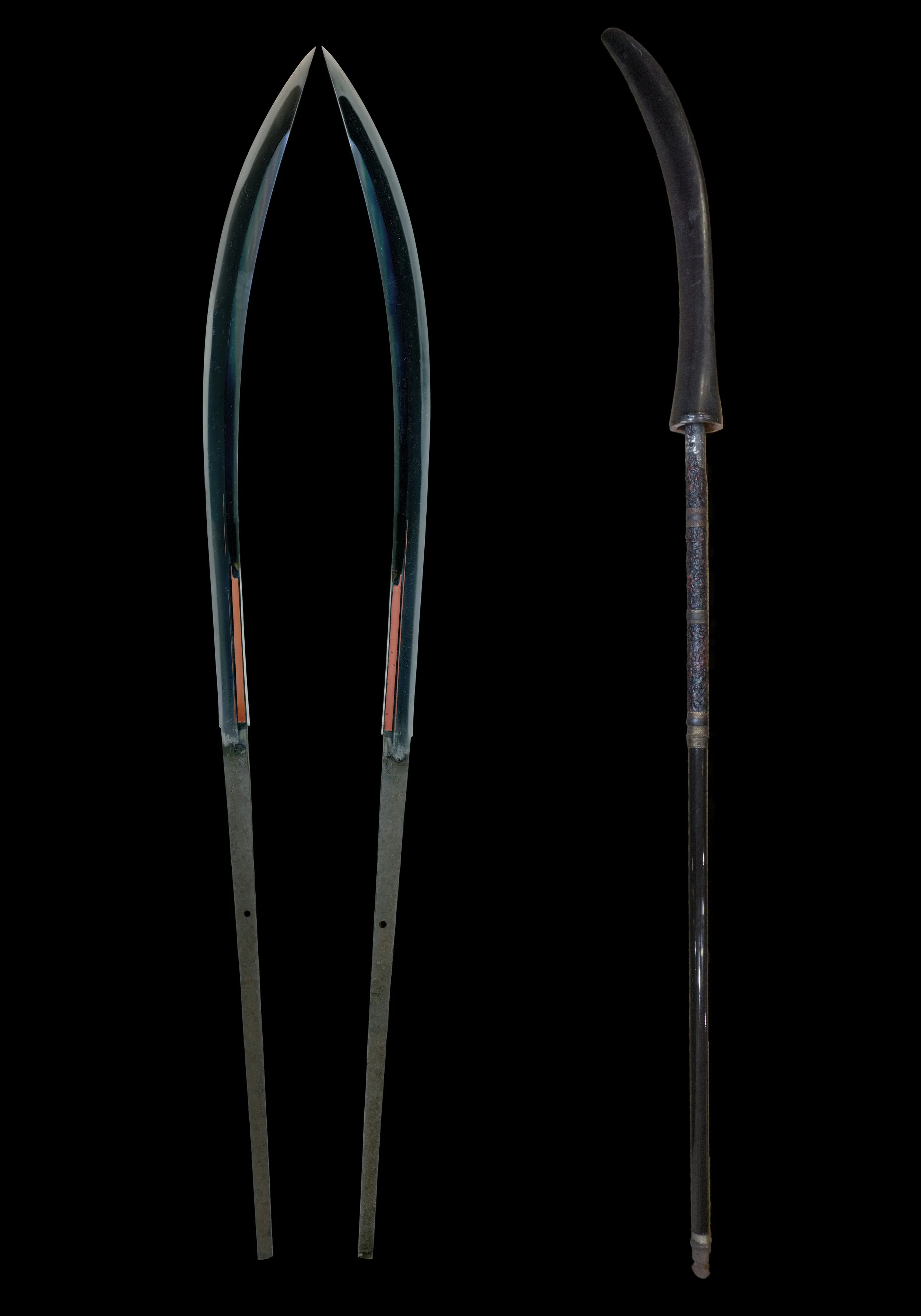
This impressive naginata is attributed to Takada Munekage. The blade possesses a graceful yet martial sugata, highlighted by an impressive 4.2 cm sori that gives the piece an elegant and commanding presence. The deep curvature, combined with the elongated profile characteristic of a true battlefield naginata, creates a striking silhouette that immediately evokes the warfare of the Sengoku period.
Particularly noteworthy is the lacquered naginata-hi running along the blade, a feature that enhances both its visual appeal and overall refinement. The proportions remain well balanced throughout, preserving the distinctive form that made the naginata one of the most effective and versatile polearms of feudal Japan.
Works of the Bungo Takada school have long been appreciated for their strong connection to the warrior culture of Kyushu. Forged during one of the most turbulent periods of Japanese history, this naginata offers collectors an opportunity to own a weapon representative of the Sengoku era itself, a time when blades were created not merely as works of art, but as instruments of war.
Combining historical significance, an elegant deeply curved sugata, a lacquered naginata-hi, and an attribution to a smith who served the Ōtomo clan, this is a compelling example of late Sengoku-period Bungo craftsmanship and an excellent addition to any collection focused on Japanese polearms or the martial traditions of Kyushu.
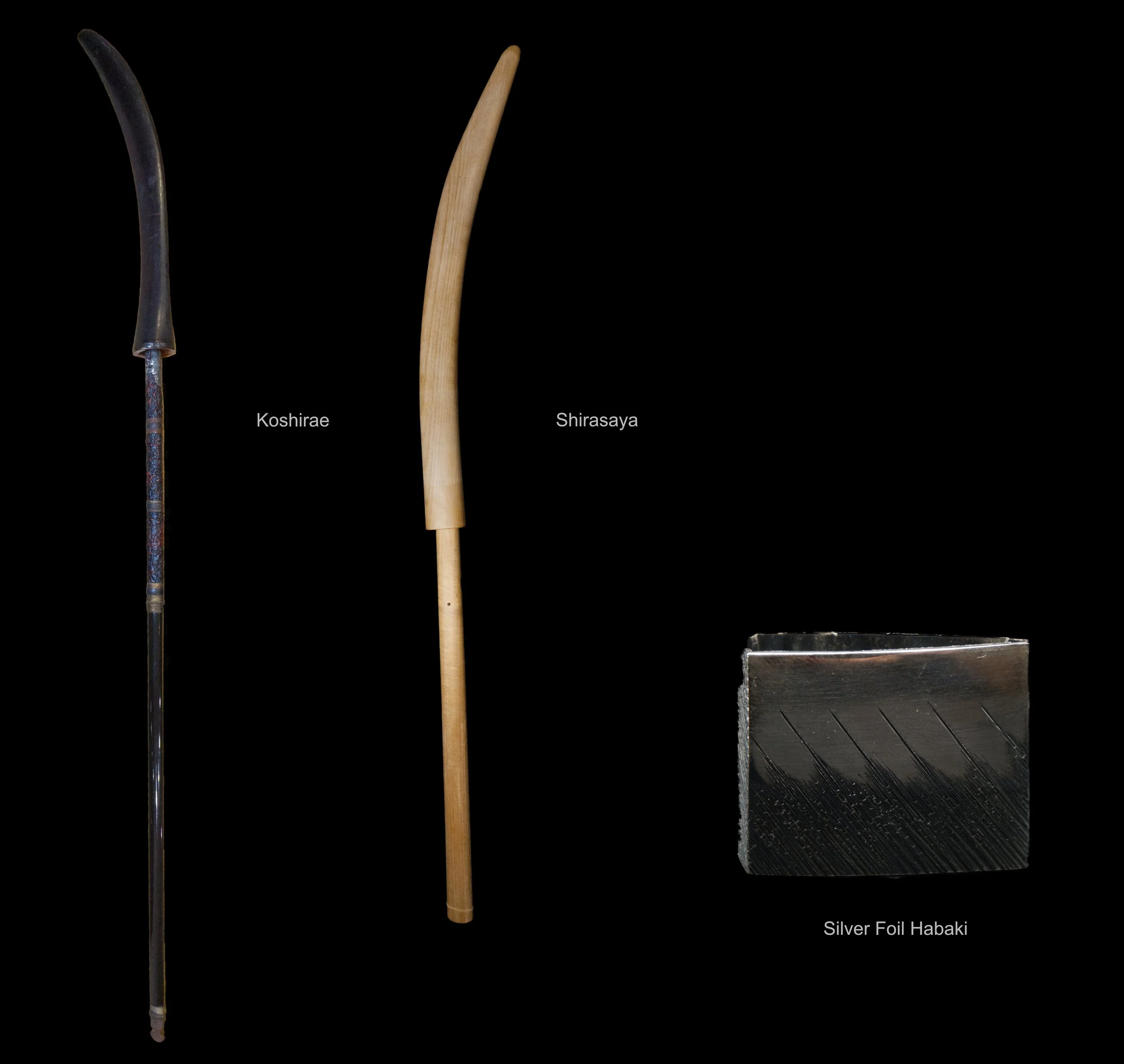
Accompanying the blade is a handsome and highly practical full-length naginata koshirae, likely dating to the late Edo period. Measuring approximately 2.5 metres in overall length from end to end, the mounting preserves the imposing proportions expected of a traditional battlefield naginata. Particularly attractive is the upper portion of the shaft, which has been finished in a finely textured lacquer, providing both visual interest and a more secure grip when handling the weapon. The koshirae remains well suited to the blade and significantly enhances its presentation, allowing collectors to appreciate the naginata much as it would have appeared when mounted for use. Complete naginata koshirae of this size and quality are increasingly difficult to find today, making this an especially appealing and complete example of a Sengoku-period style polearm preserved with its historic mounting.