
Hō Tsugaru Toshiyuki no Mikoto Ōmi no Kami Tsuguhira Wakizashi
奉津軽俊之命近江守継平造之 脇指 Item TK047
Period: Shinto Period (1757)
Mei (Signature): Forged by Ōmi no Kami Tsuguhira under the commission (by order) of the Lord of Tsugaru 奉津軽俊之命近江守継平造之
Second month (February), Spring, Hōreki 7 (丁丑 / Fire Ox year). 宝暦丁丑年春二月 (1757)Designation: Tokubetsu Hozon
Nakago - 17cm -Ubu
Nagasa - 59.3cm
Sori: - 1.3cm
Motohaba - 3.1cm
Sakihaba - 2.3cm
Kissaki - 3cm
Motokasane - 0.92cm
SOLD
A Wakizashi Commissioned by the Lord of Tsugaru
This exceptional wakizashi bears the distinguished inscription:
「奉津軽侯之命近江守継平造之」
"Made by Ōmi no Kami Tsuguhira by order of the Lord of Tsugaru."
The reverse of the tang is dated to the second month of Hōreki 7 (1757). At the time, the Tsugaru Domain was ruled by Tsugaru Nobuyasu (1739–1784), the seventh daimyō of the domain. The inscription records that the blade was commissioned by order of the Lord of Tsugaru.
Swords bearing inscriptions identifying their patron are considerably rarer than those signed only by the smith, providing an exceptional level of historical provenance.
The Tsugaru Domain was founded by Tsugaru Tamenobu (1550–1608), who broke away from the Nanbu clan during Japan's Sengoku period and established an independent power in the Tsugaru region of northern Honshū. After pledging allegiance to Toyotomi Hideyoshi, his rule was officially recognized, and following the Battle of Sekigahara in 1600, the clan secured its position under the Tokugawa shogunate. From Hirosaki Castle, the Tsugaru family governed the domain throughout the Edo period, cultivating a distinguished samurai tradition and becoming closely associated with the preservation of fine swords, armour, and martial culture.
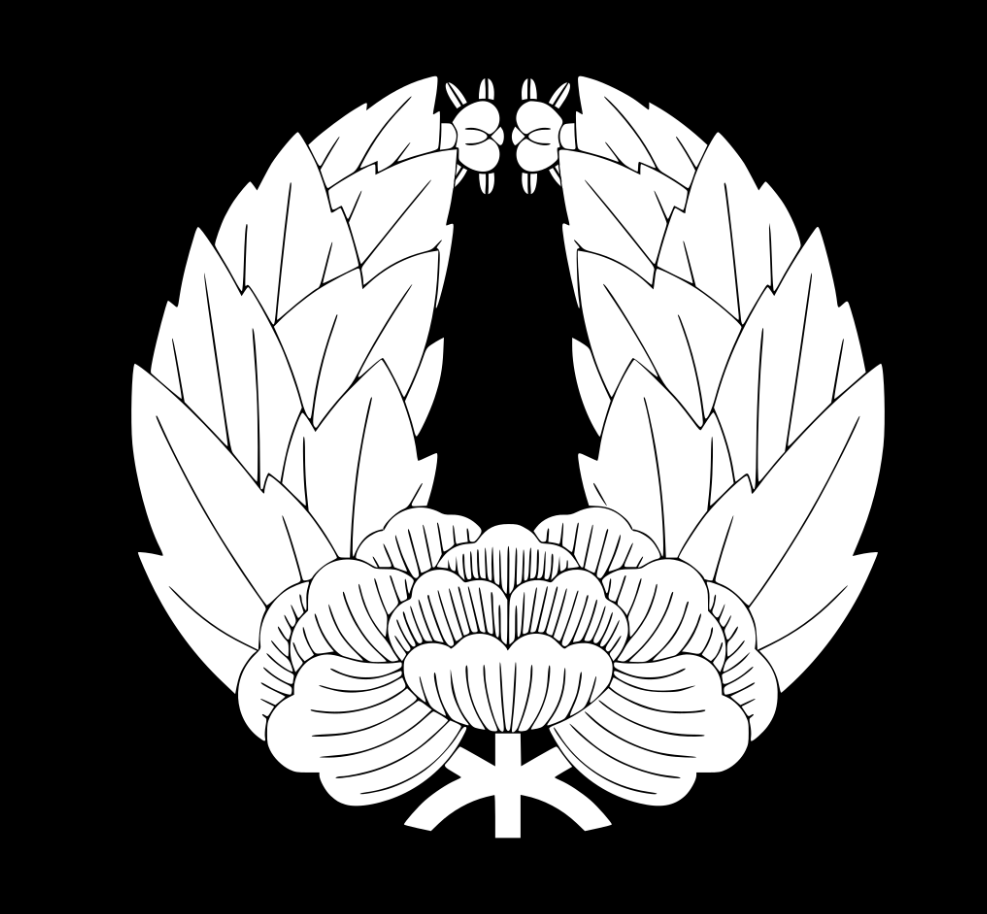
Tsugaru Clan Emblem
At first glance, one of the most striking characteristics of this wakizashi is its exceptionally rare maru-mune construction. While the overwhelming majority of Japanese swords are forged with an iori-mune, examples exhibiting a true rounded spine are encountered only infrequently, giving the blade an immediately distinctive appearance. Measuring an impressive 59.3 cm in length with a remarkably thick kasane, the sword possesses a commanding presence that belies its classification as a wakizashi.
The jihada is beautifully forged in a finely compact ko-itame, transitioning into a flowing masame-hada toward the shinogi-ji. The steel displays a refined texture with abundant ji-nie, producing a vibrant surface that rewards close examination from every angle.
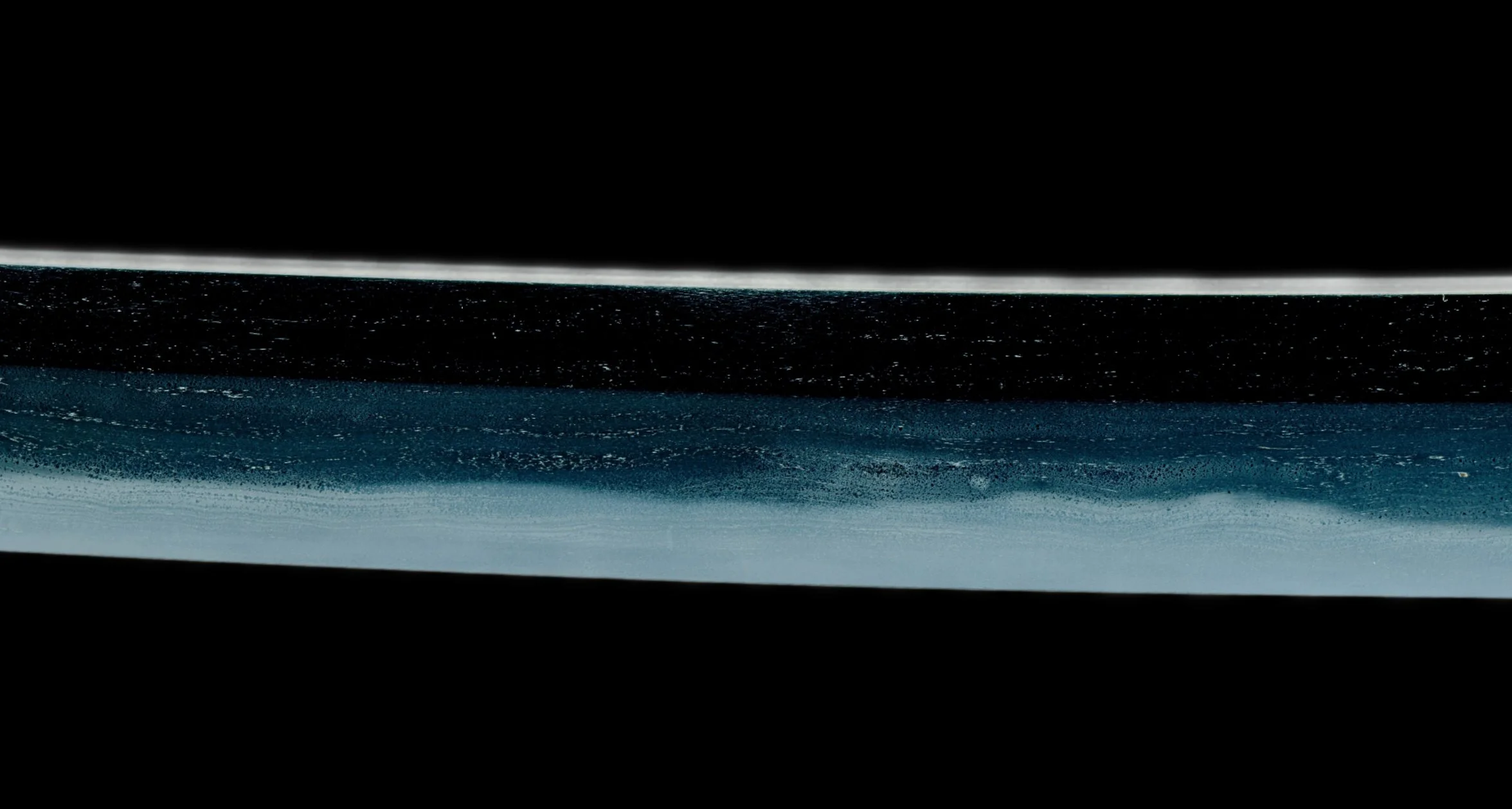
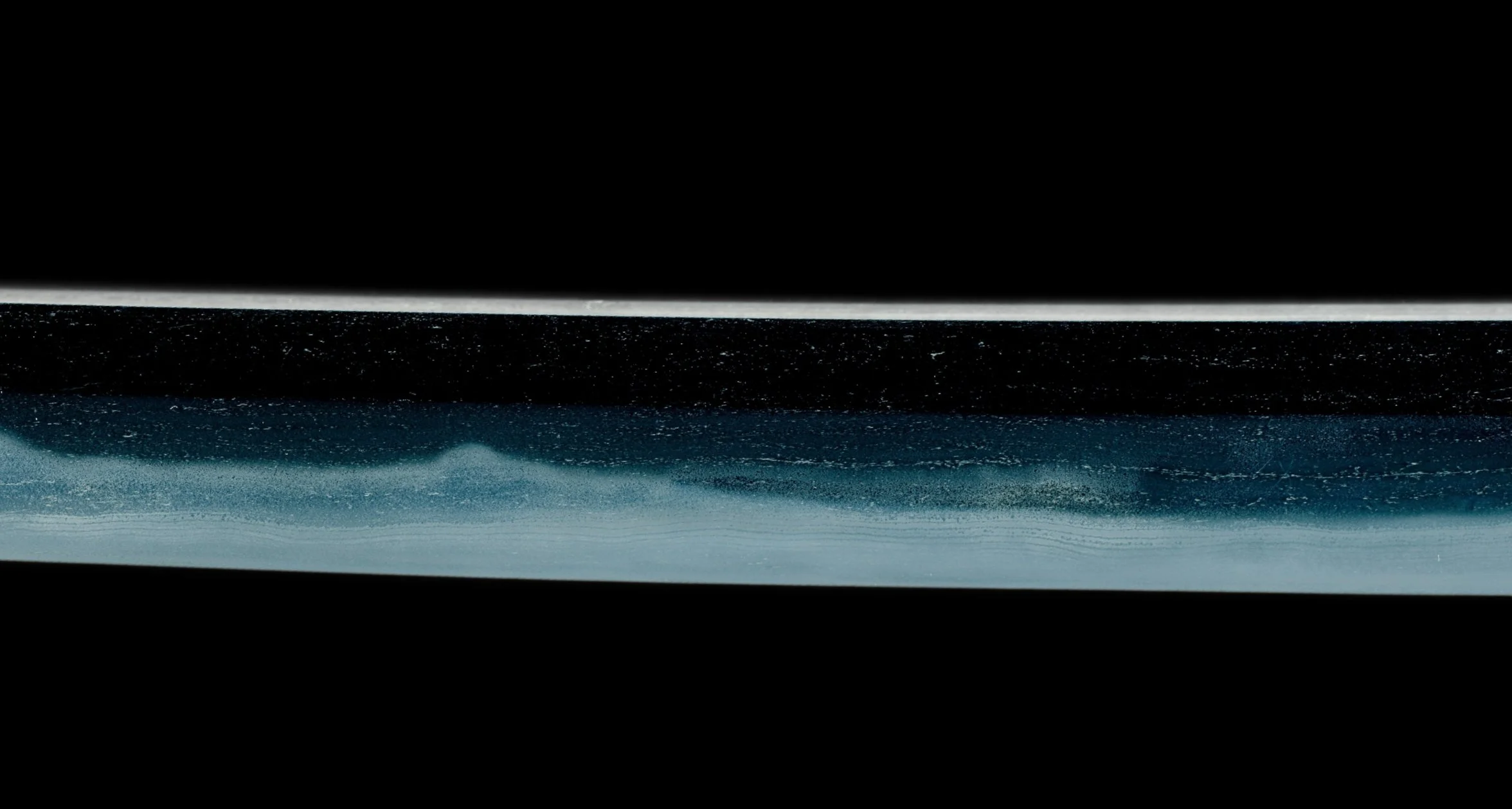
The true beauty of this blade, however, lies within its extraordinarily active hamon. Richly laden with ara-nie, the temperline is alive with an abundance of hataraki, giving the blade an unmistakable sense of movement and vitality. Long, sweeping sunagashi traverse virtually the entire length of the hamon, their graceful lines resembling the deliberate strokes of a master calligrapher's brush drawn effortlessly through wet ink. Interwoven throughout are brilliant flashes of kinsuji, appearing like bolts of lightning as they cut sharply through the hardened steel, creating a striking contrast against the surrounding nie. The effect is both elegant and dynamic, lending the blade an artistic quality rarely encountered.
Toward the monouchi, the activity becomes even more remarkable, with clearly defined nijūba developing into areas of sanjūba, further demonstrating the smith's exceptional command of heat treatment and steel. Combined with the abundant ara-nie, vibrant ji-nie, extensive internal activity throughout both the hamon and ji, and the dramatic interplay of sunagashi and kinsuji, the blade continually reveals new details under changing light, rewarding prolonged study with an extraordinary depth of workmanship.
Possessing an uncommon maru-mune, exceptional proportions, and an extraordinarily vibrant display of hataraki, this wakizashi stands as both an important historical artefact and a superb workmanship of the third-generation Ōmi no Kami Tsuguhira. From its prestigious daimyō provenance to its remarkably active forging and tempering, it is a sword whose appreciation only deepens with careful study, revealing the technical mastery and artistic vision of one of the Edo period's accomplished smiths.
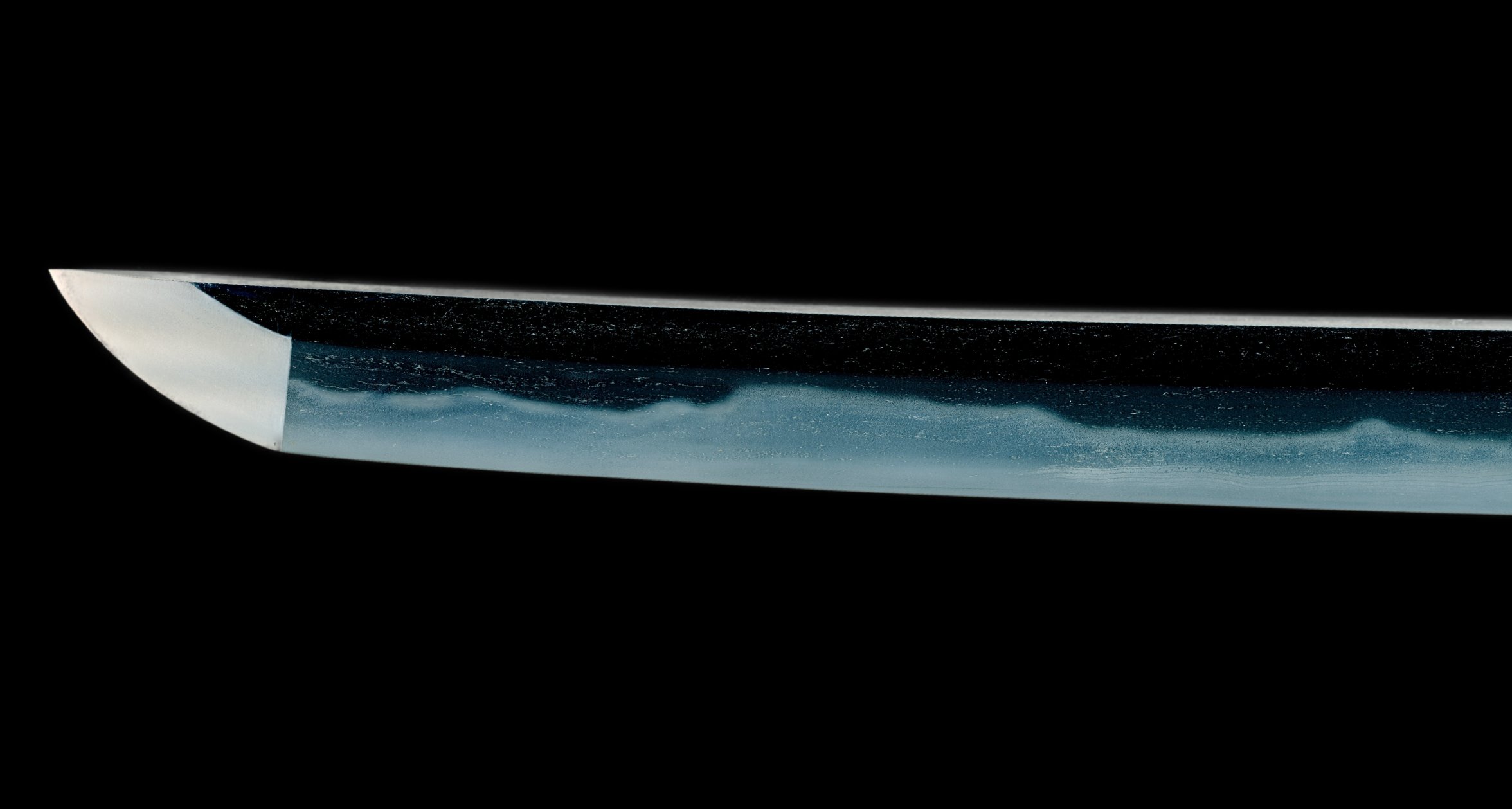
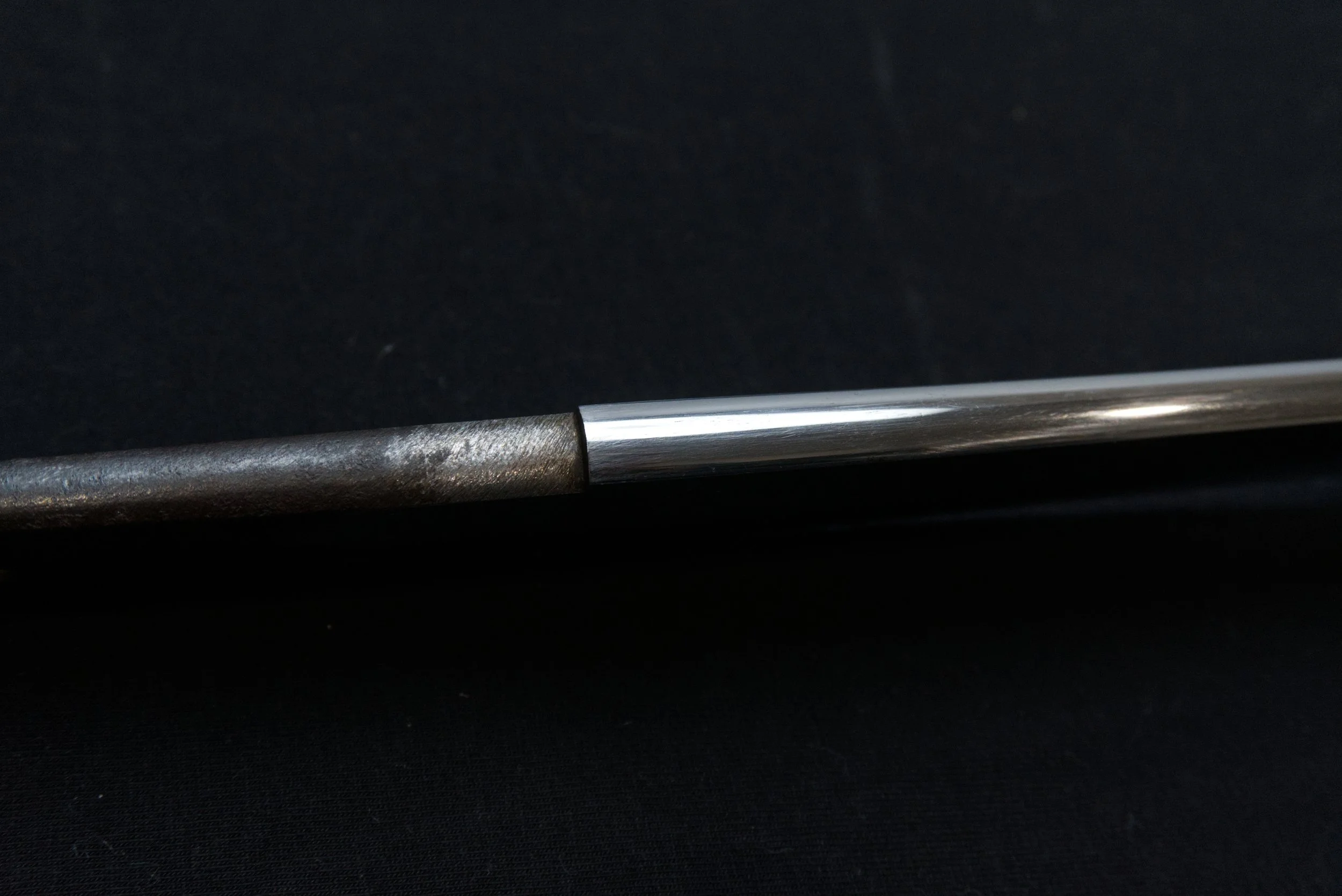
Maru-mune