Mumei attributed to Nioh
無名 二王 刀
Item TK048
Period:Koto -late Kamakura period (13th century), estimated around Gentoku Period (1329-1331)
Designation: Tokubetsu Hozon
Mei (Signature): Mumei
Nakago - 17.7cm - O-Suriage Mumei - 2 Mekugi Ana
Nagasa - 70.5cm
Sori - 1.6cm
Motohaba - 2.7cm
Sakihaba - 1.8cm
Kissaki - 2.8cm
Motokasane - 0.7cm
Price: ¥ 1,300,000
The Nioh School – Seven Centuries of Yamato Tradition in Suō
The Nio School of Suō Province is traditionally said to descend from the late Heian period smiths Kiyomasa and Kiyohira. As no extant works by Kiyohira are known today, Kiyotsugu is generally regarded as the effective founder of the school.
The Nio School is believed to have originated from a branch of the Senjuin tradition that migrated from Yamato Province to Suō Province during the late Heian period, coinciding with the rise of the powerful Ōuchi clan. The school reached its greatest prosperity during the Meitoku era (from 1390 onward), when the Ōuchi served as military governors over six provinces and became one of western Japan's most influential feudal families.
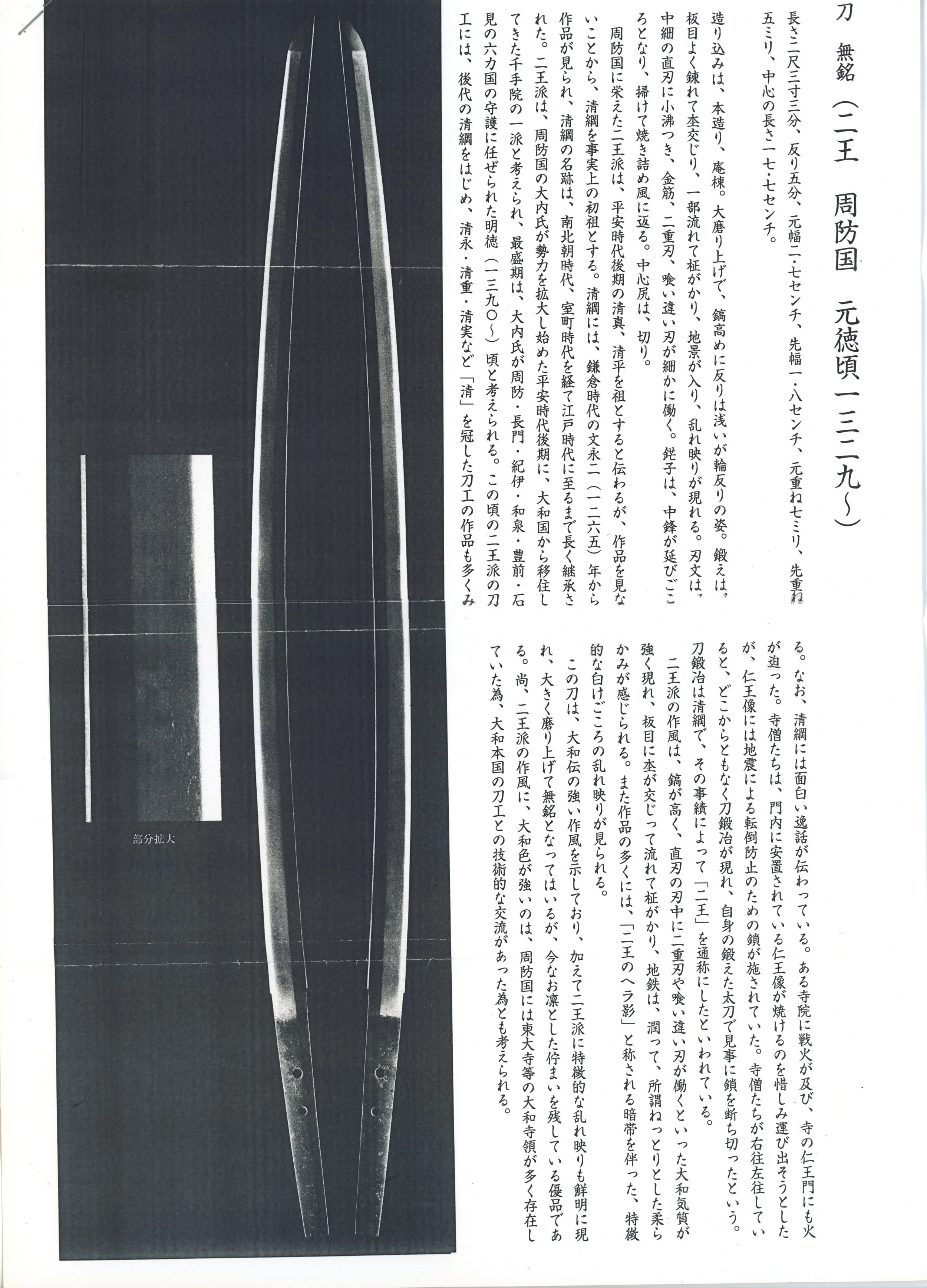
According to a published excerpt accompanying this blade, it is estimated to date to the Gentoku era (1329–1331), placing its manufacture firmly within the Late Kamakura period. Forged during the formative years of the Nio School, it displays the distinctive Yamato-derived characteristics that became the hallmark of the tradition's earliest and most highly regarded works.
The blade is constructed in shinogi-zukuri with an iori-mune and has been greatly shortened (ō-suriage). It exhibits a relatively high shinogi, graceful torii-zori, and an elegant overall silhouette despite its shortened form.
The jihada consists primarily of itame mixed with mokume, with portions flowing into nagare-hada. Fine ji-nie is well developed throughout, while the most striking feature of the blade is the beautifully preserved midare-utsuri, which is exceptionally clear and lends remarkable depth and vitality to the steel.
The hamon is a medium-width suguha with fine ashi, containing delicate kinsuji, nijūba, and abundant nie activity throughout. The bōshi continues in sugu before becoming slightly elongated toward the point before turning back in a yakizume-like manner. The nakago-jiri is finished in kirijiri.
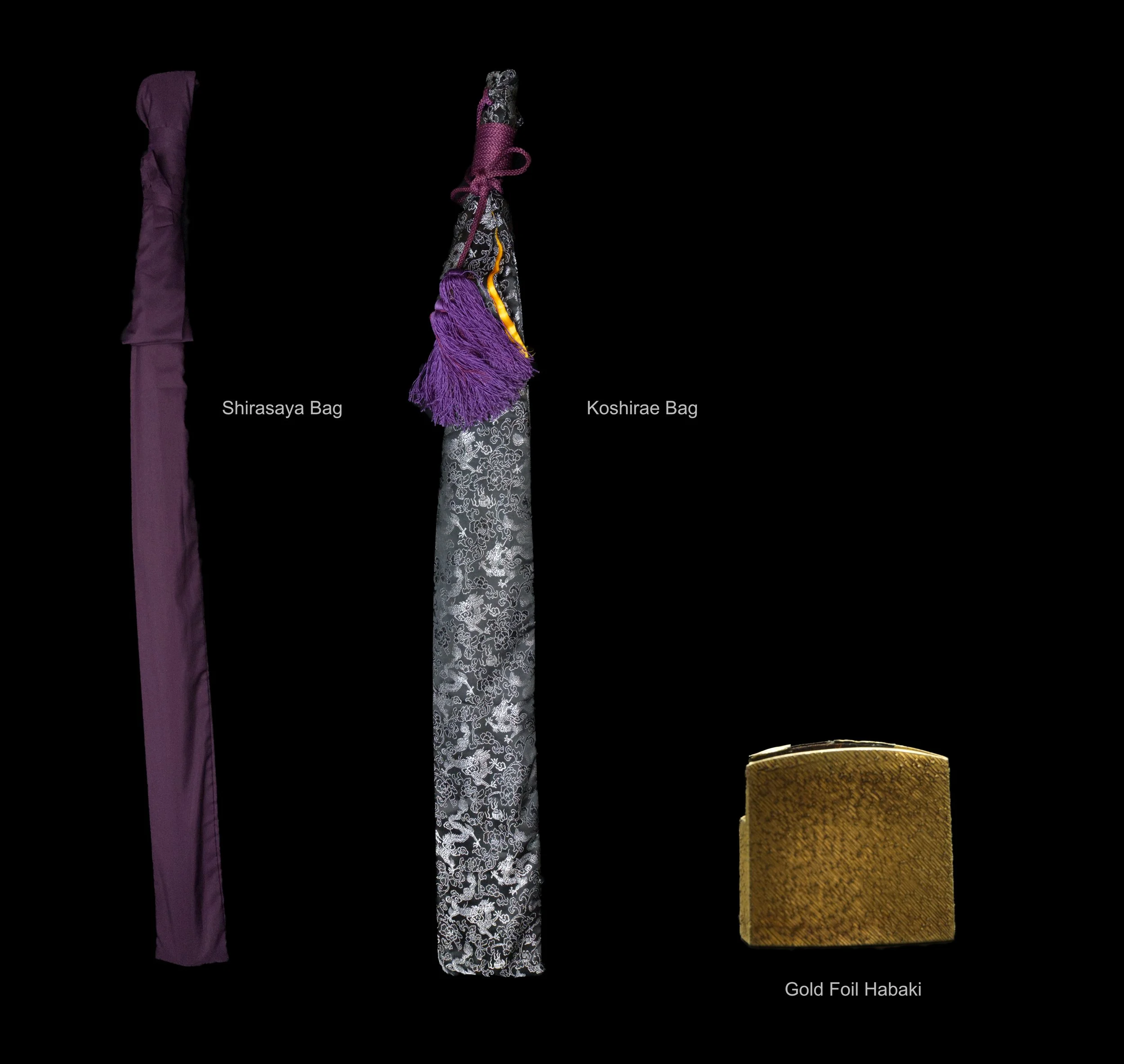
Accompanying the blade is a handsome koshirae mounted with a black lacquered saya fitted with an iron kojiri. The highlight of the mounting is undoubtedly its finely executed kashira, depicting Fudō Myōō in an impressive three-dimensional relief. One of the most revered deities in Japanese Esoteric Buddhism, Fudō Myōō has long been associated with Japanese sword culture and is traditionally depicted holding the Sword of Wisdom, symbolizing the cutting away of ignorance and delusion, while the sacred rope in his left hand represents compassion and the guidance of all beings toward enlightenment.
Overall, this is an excellent representative work of the Nio School, displaying the characteristic Yamato-influenced workmanship for which the tradition is renowned. The beautifully preserved midare-utsuri, refined forging, lively nie activity, and elegant suguha combine to create a blade of remarkable beauty and historical significance. Together with its attractive koshirae, this sword represents a highly desirable example of Late Kamakura Nio workmanship
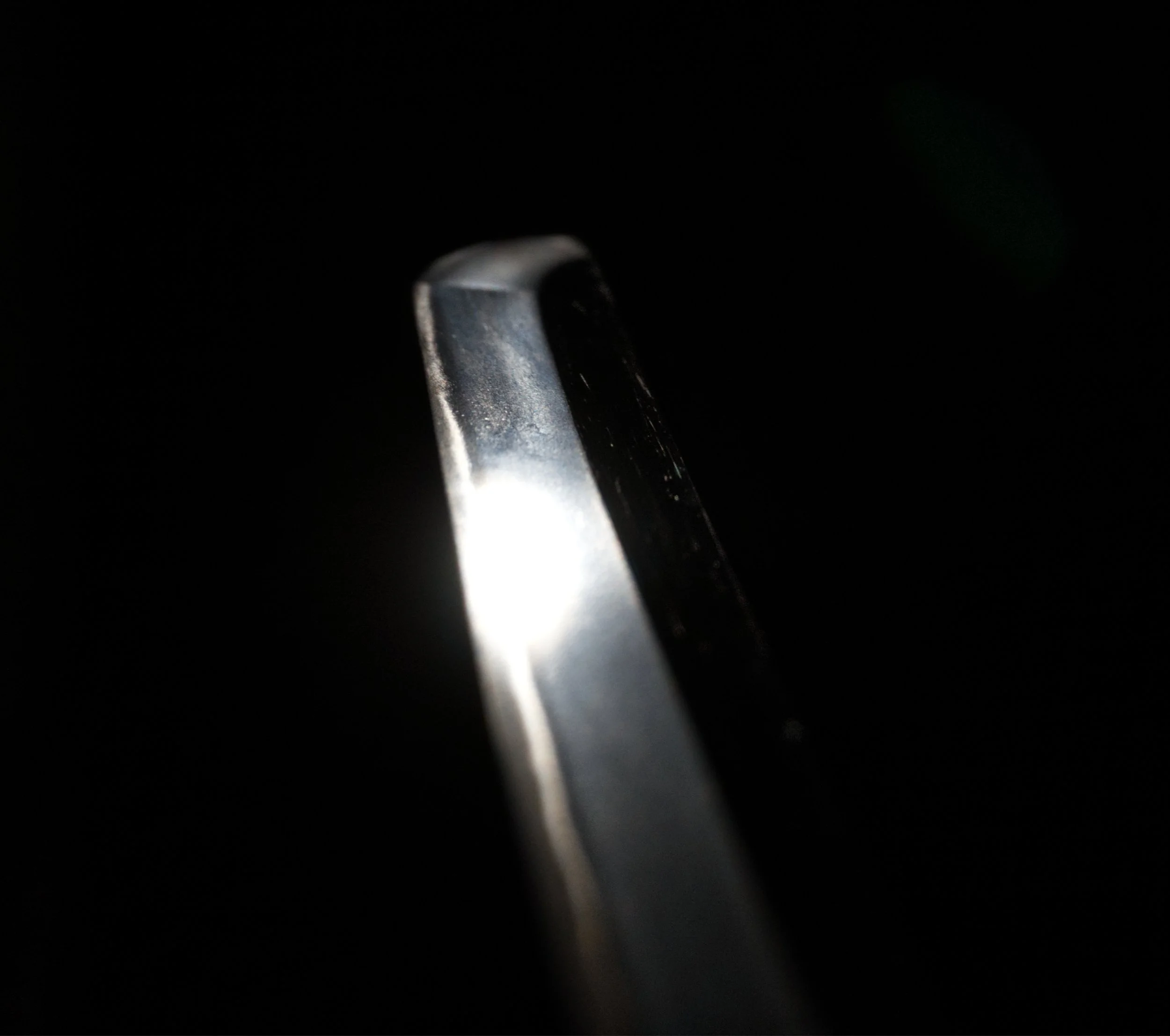
Can you see the Utsuri?
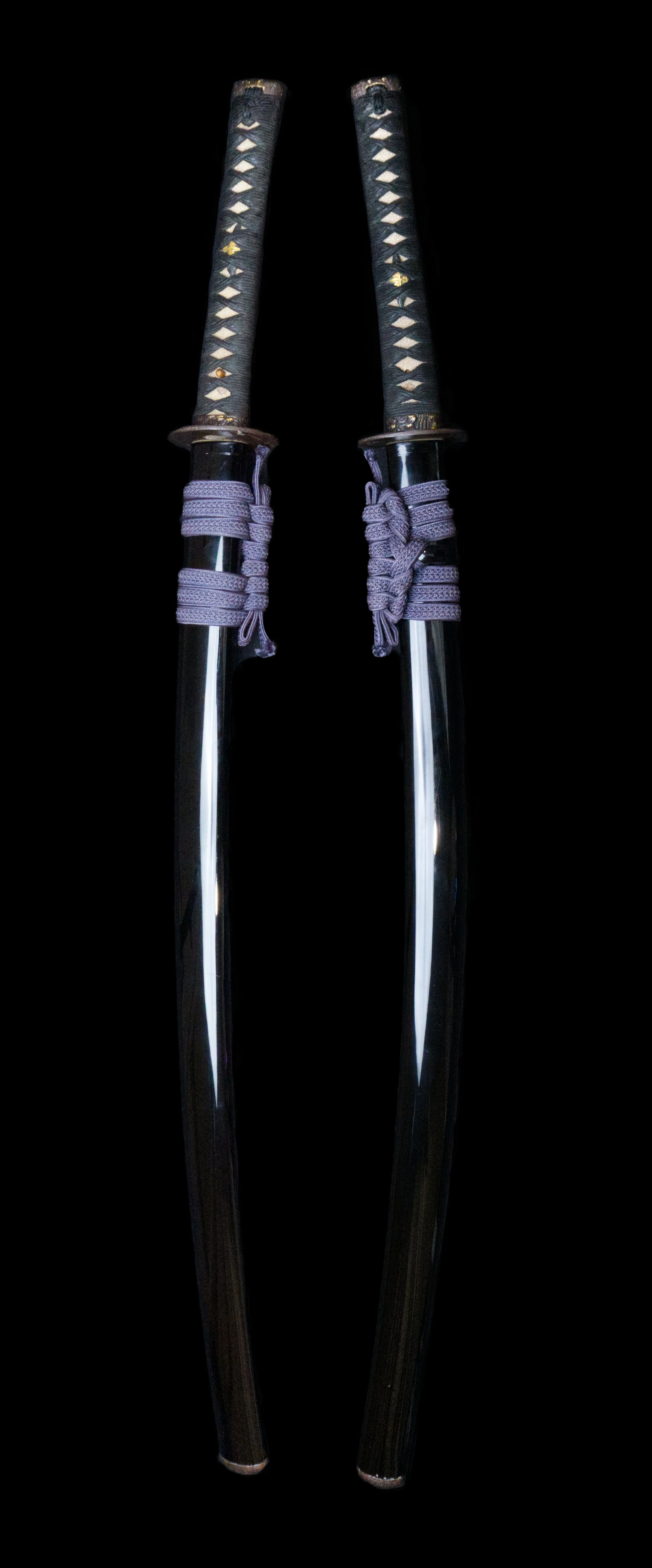
Fudō Myōō