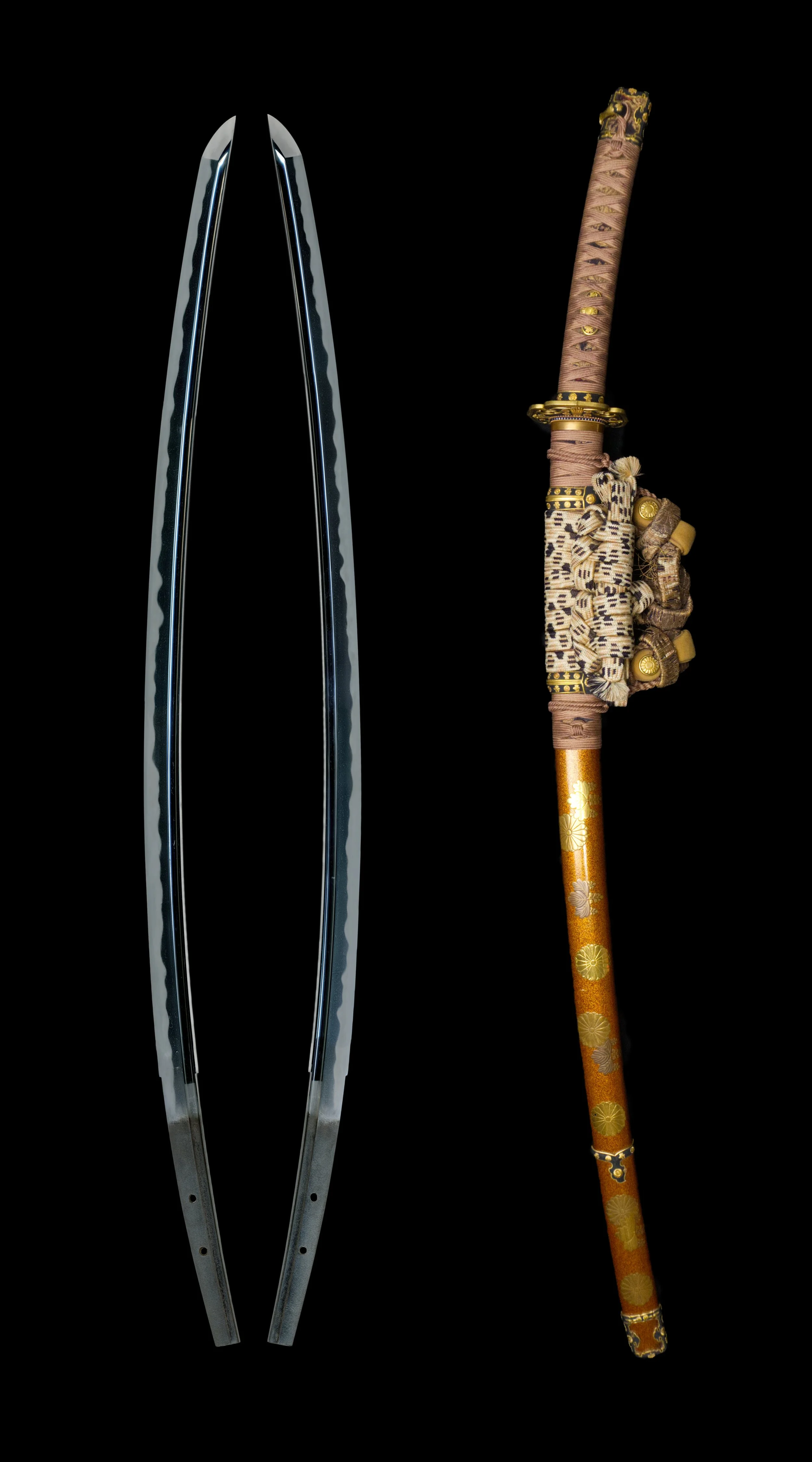
Mumei Attributed to Kanenaga Katana
無名 兼長 刀
Item TK050
Period: Koto - Nanbokucho Period
Mei (Signature): Mumei
Designation: Designated on Reiwa 6, November 6th (2024)
70th JUYO TOKENNakago - 22.3cm - Two Mekugi-Ana
Nagasa - 75cm
Sori: - 2.5cm
Motohaba - 3.15cm
Sakihaba: 2.1cm
Kissaki: 3.7cm
Motokasane - 0.72cm
SOLD
Kanenaga - Disciple of CHOGI (Osafune Nagayoshi)
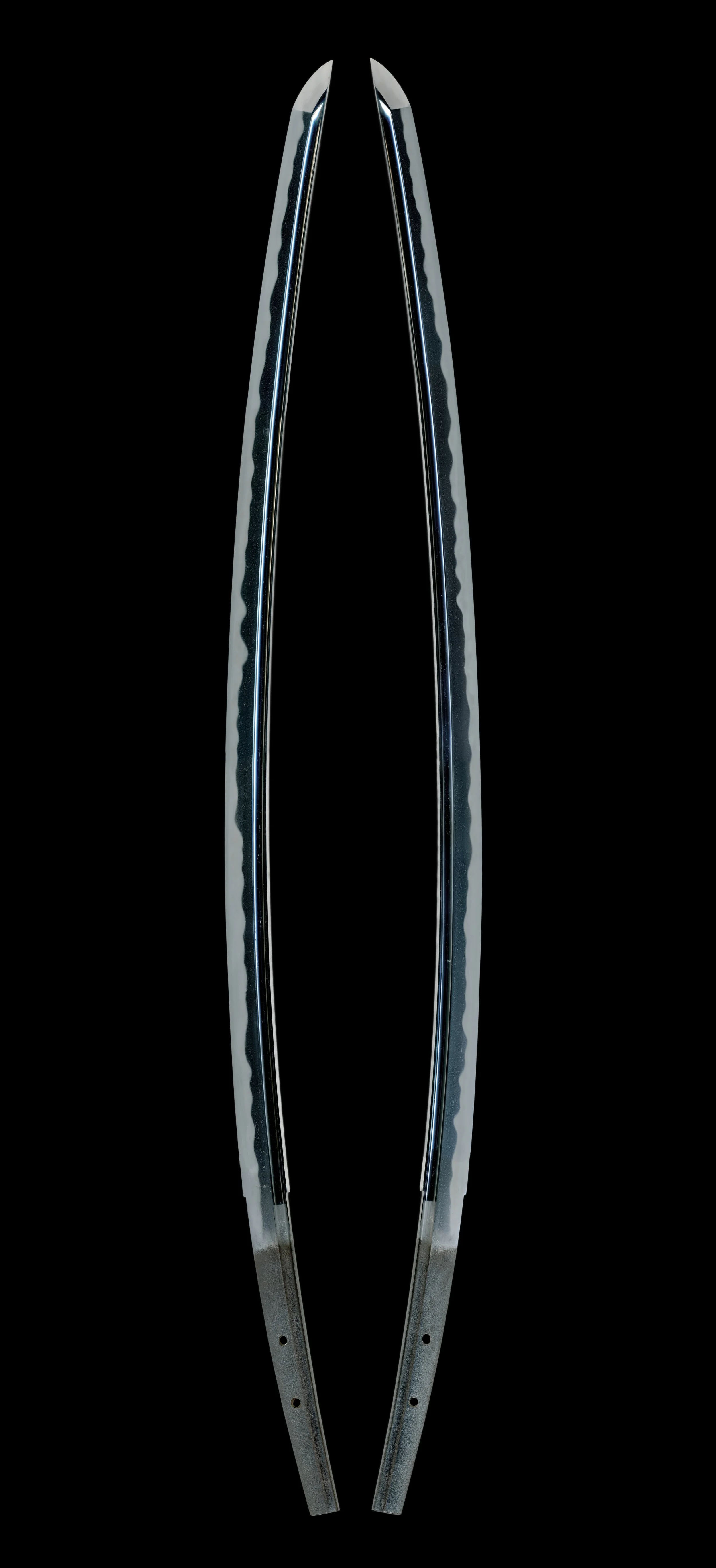
We are delighted to present an exceptionally rare offering: a magnificent Jūyō Tōken katana attributed to Kanenaga, widely regarded as the most accomplished and celebrated disciple of the legendary Osafune Chōgi (Nagayoshi). Among the foremost masters of the Sōden-Bizen tradition, Kanenaga successfully combined the elegance of the Osafune school with the bold and dynamic characteristics of the Sōshū tradition, producing some of the finest swords of the Nanbokuchō period.
One of the most remarkable aspects of this blade is its exceptional state of preservation. Despite having undergone ō-suriage, it retains an impressively healthy and powerful form. Measuring a substantial 75.0 cm in length, with a broad mihaba and robust proportions, it is a commanding example that perfectly captures the grandeur of Nanbokuchō-period workmanship.
Most notably, the NBTHK Jūyō Tōken Zufu describes this sword as one of the examples that best exemplifies the characteristic workmanship of Kanenaga. This is an exceptional distinction, making the blade not merely an attribution, but a benchmark example of the smith's work and a true masterpiece of the Sōden-Bizen tradition.
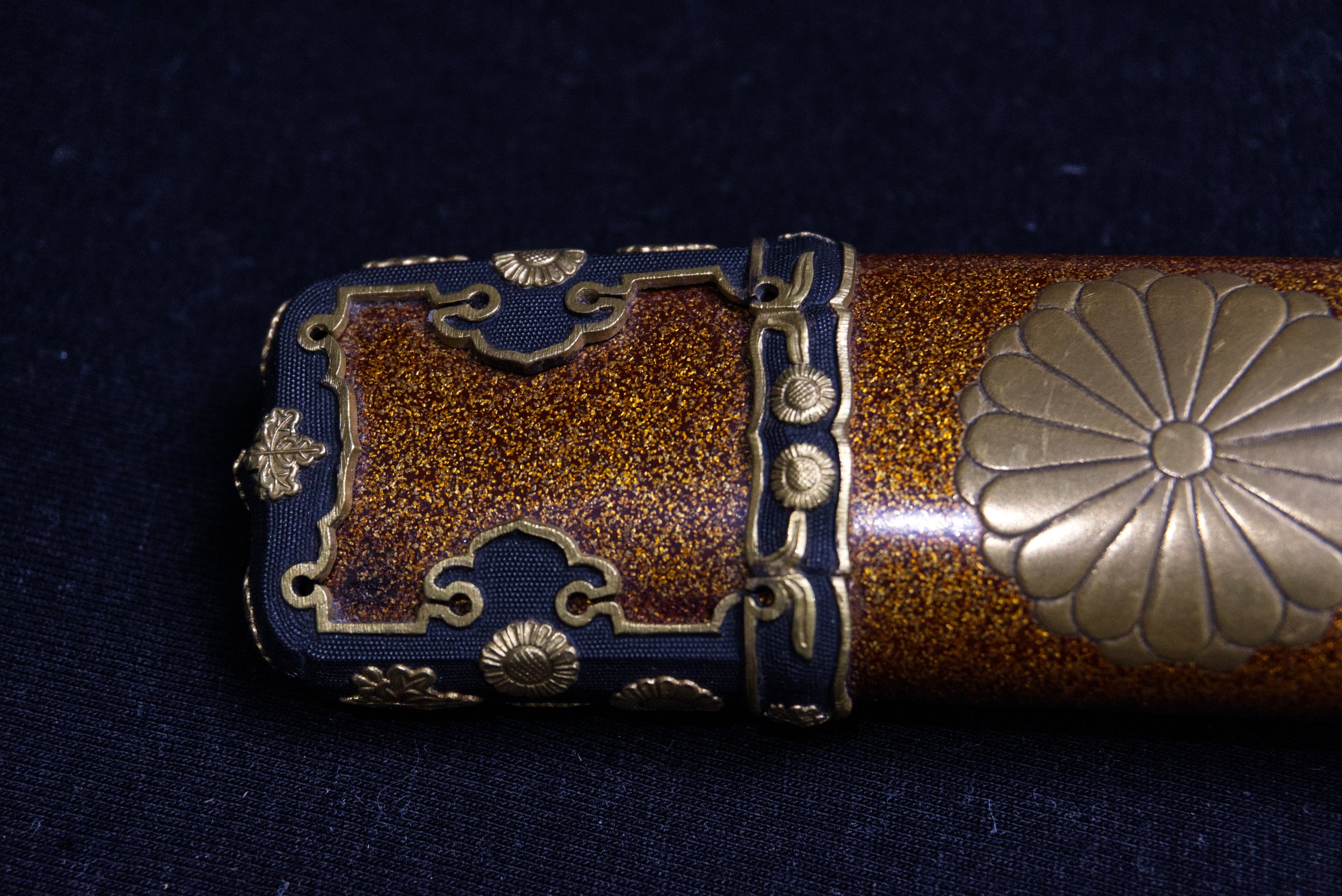
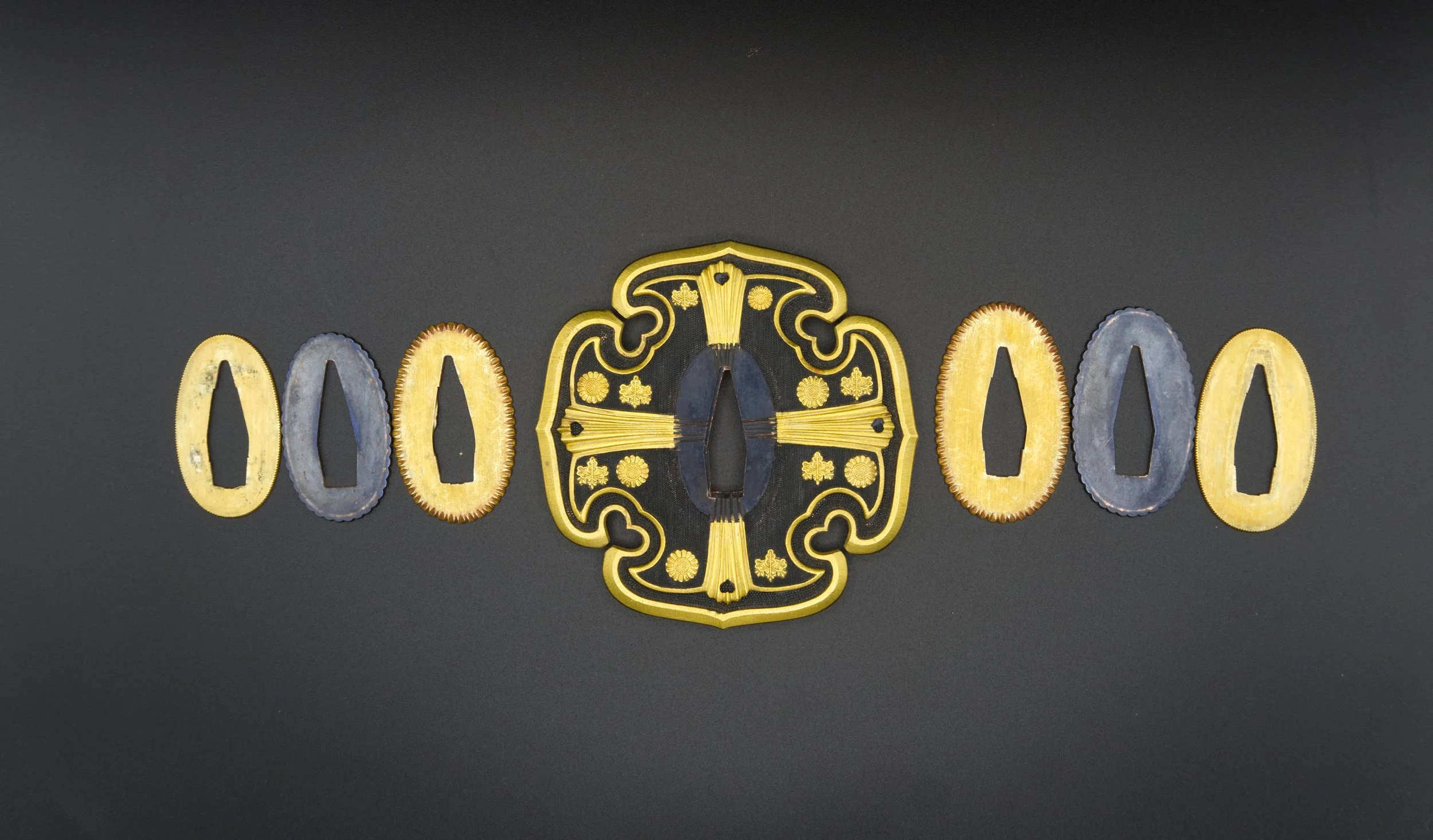
The blade is accompanied by a magnificent Meiji-period Itomaki no Tachi koshirae, featuring a beautifully lacquered saya decorated with elegant kikumon (Imperial chrysanthemum crests) in gold. The refined tachi fittings and wrapped saya create a dignified mounting that perfectly complements a sword of this importance.
Further enhancing this offering, the blade is accompanied by a fresh sayagaki by Tanobe Michihiro-sensei, providing an outstanding finishing touch to an already exceptional Jūyō masterpiece.
Combining outstanding dimensions, remarkably healthy preservation, benchmark-quality workmanship, an elegant Meiji-period Itomaki no Tachi koshirae, and a fresh Tanobe-sensei sayagaki, this is a museum-quality Sōden-Bizen masterpiece and a centrepiece worthy of the finest Japanese sword collections.
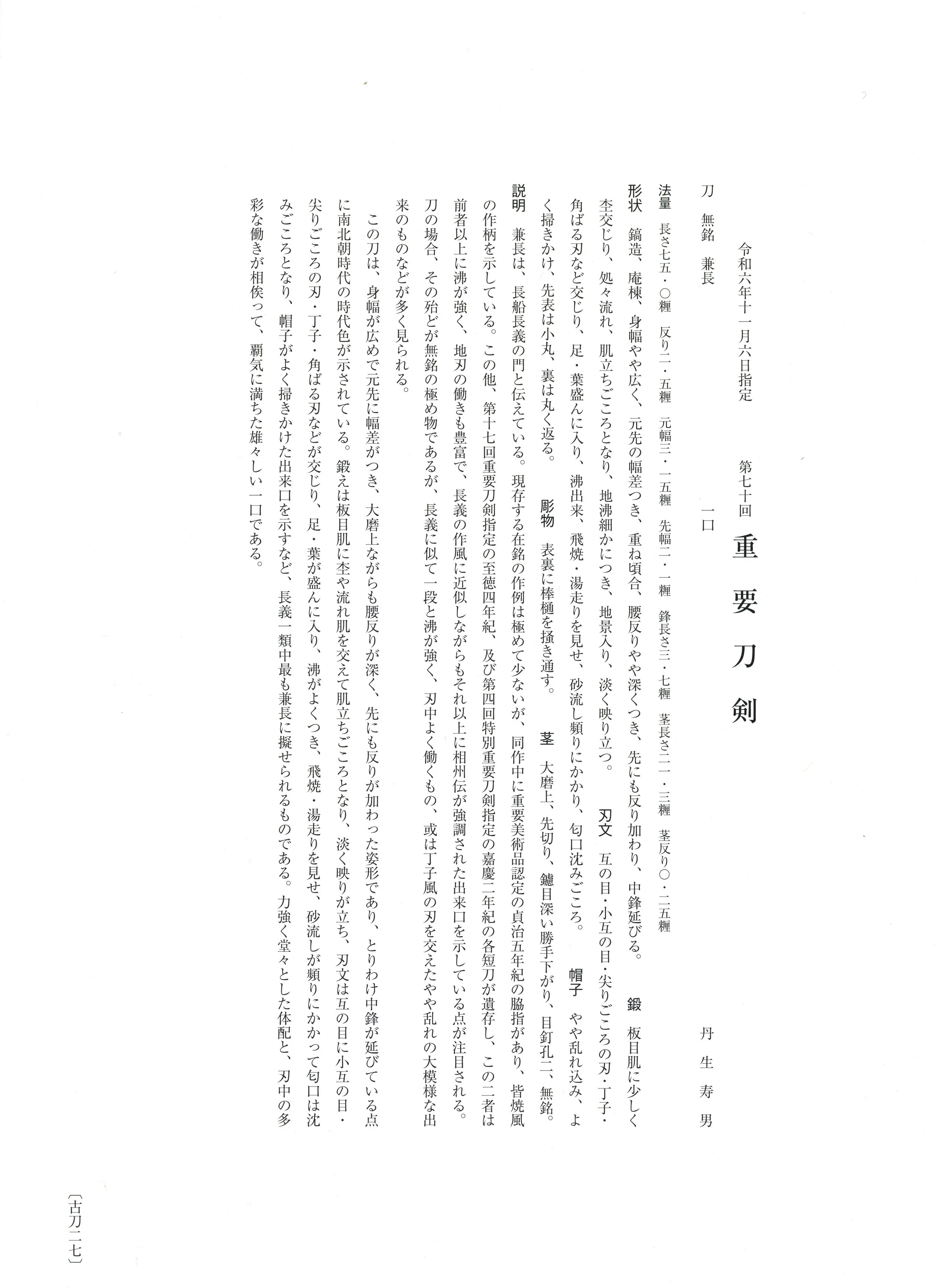
Below is a Direct Translation of the NBTHK Juyu Zufu
Sugata
Shinogi-zukuri construction with an iori-mune. The blade is somewhat wide, with a noticeable taper from the base to the point. The thickness is well proportioned. It displays a relatively deep koshi-zori, with additional curvature continuing toward the tip. The chū-kissaki is elongated.
Kitae (Forging)
Forged in itame-hada with some mokume mixed in. Flowing grain appears in places, giving the surface a slightly standing texture. Fine ji-nie are well attached, accompanied by chikei, while a faint utsuri is visible.
Hamon
A varied pattern consisting of gunome, small gunome, pointed elements, chōji, and angular temper shapes. Numerous ashi and yō enter the hamon. It is a nie-deki blade, displaying abundant tobiyaki and yubashiri, with frequent sunagashi. The habuchi has a somewhat subdued appearance.
Boshi
The bōshi enters in a slightly irregular manner, with excellent hakikake. On the omote it ends in a komaru, while on the ura it returns in a rounded form.
Horimono
A bōhi is carved continuously through both sides of the blade.
Nakago
The tang has been ō-suriage (greatly shortened). The tip has been cut straight (kirijiri). The file marks are deep katte-sagari. There are two mekugi-ana, and the blade is unsigned (mumei).
Commentary
Kanenaga is traditionally regarded as a disciple of Osafune Nagayoshi.
Very few signed examples survive today. Among those that do are:
an Important Art Object wakizashi dated Jōji 5 (1366), displaying a hitatsura-style workmanship;
a tantō dated Shitoku 4 (1387), designated an Important Sword at the 17th Jūyō session;
another tantō dated Kakei 2 (1388), designated a Tokubetsu Jūyō Sword at the 4th Tokubetsu Jūyō session.
The latter two exhibit even stronger nie than the first example and are rich in activities within both the jihada and hamon. While closely resembling the workmanship of Nagayoshi, they emphasize the Sōshū tradition to an even greater degree.
As for tachi and katana, nearly all surviving examples are mumei and have been attributed to Kanenaga through appraisal. Compared with Nagayoshi, they generally display stronger nie and more vigorous activity within the hamon. Many also show somewhat irregular tempering incorporating chōji elements.
This sword has a broad mihaba with clear taper toward the point. Although greatly shortened, it retains a deep koshi-zori with additional curvature extending toward the tip. Particularly noteworthy is the elongated chū-kissaki, which strongly reflects the style of the Nanbokuchō period.
The forging is itame mixed with mokume and flowing grain, producing a somewhat standing texture. A faint utsuri appears across the surface. The hamon consists primarily of gunome, mixed with small gunome, pointed elements, chōji, and angular temper forms. Numerous ashi and yō are present, with abundant nie throughout. Tobiyaki and yubashiri appear prominently, while sunagashi runs frequently through the blade. The habuchi is slightly subdued, and the bōshi displays excellent hakikake.
Among the group of works associated with Nagayoshi, this sword is regarded as one of the examples most characteristic of Kanenaga.
Its powerful, dignified shape combined with the remarkably varied activities within the hamon creates a blade of exceptional vitality and heroic presence.