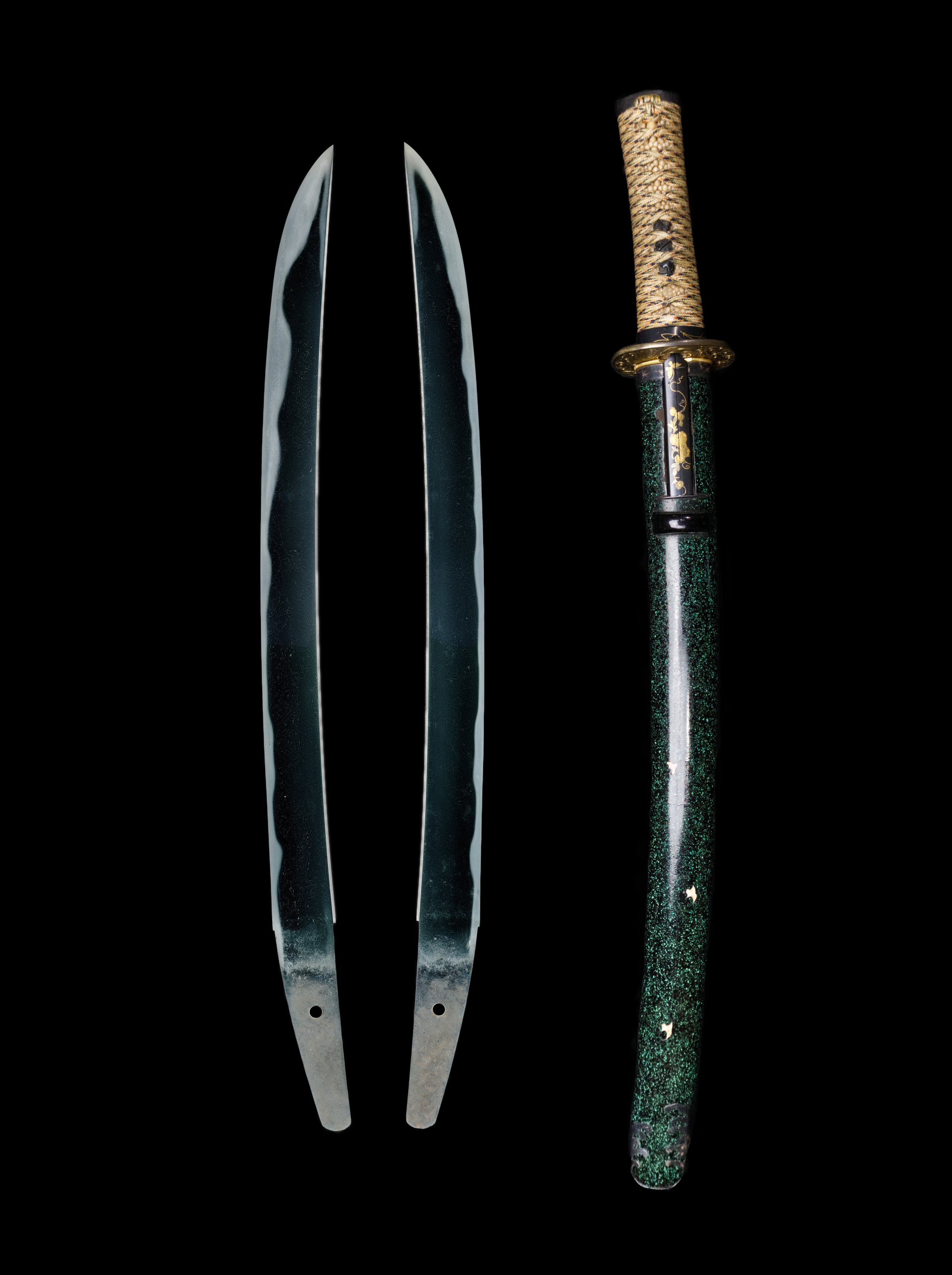
Mumei Attributed to Den Sa Kunihiro
無銘 伝左国弘 脇指
Item TK051
Period: Koto - Nanbokucho Period
Mei (Signature): Mumei
Designation: Tokubetsu Hozon
Nakago - cm - One Mekugi-Ana
Nagasa - 37.5cm
Sori: - 0.75cm
Motohaba - 3cm
Motokasane - 0.72cm
SOLD
Sa Kunihiro of the Chikuzen Sa School
Sa Kunihiro (左國弘) was one of the principal smiths of the celebrated Chikuzen Sa School (筑前左派), a tradition founded in the Nanbokuchō period by the legendary master O-Sa (大左), one of the most distinguished disciples traditionally associated with Masamune. Under O-Sa, the Sa School became renowned for successfully blending the powerful Sōshū tradition with the older sword-making heritage of Kyūshū, producing works of exceptional vitality and refinement.
The exact lineage of Kunihiro remains uncertain. Different historical genealogies identify him as the son of Yasuyoshi (安吉), Sadayuki (定行), or Yoshihiro (吉弘). Regardless of which theory is accepted, dated surviving works confirm that Kunihiro was a direct contemporary of these smiths and belonged to the earliest generation of O-Sa's disciples, working during the mid-fourteenth century.
Although considerably rarer than the works of Yasuyoshi, Kunihiro's swords display the defining characteristics of the mature Sa tradition: a harmonious combination of refined workmanship and bold Sōshū influence, featuring flowing jihada, vibrant nie, and an energetic hamon. His surviving works are scarce, making authenticated examples highly desirable among collectors of Nanbokuchō-period Sōshū-inspired swords.
This wakizashi presents an exceptionally powerful and distinctly Sōshū-influenced appearance. Constructed in hira-zukuri with a rare mitsu-mune, the blade possesses a broad mihaba and substantial kasane, creating a robust and commanding sugata. The use of a mitsu-mune is a characteristic frequently encountered in works of the Sōshū tradition, further complementing the attribution to Den Sa Kunihiro.
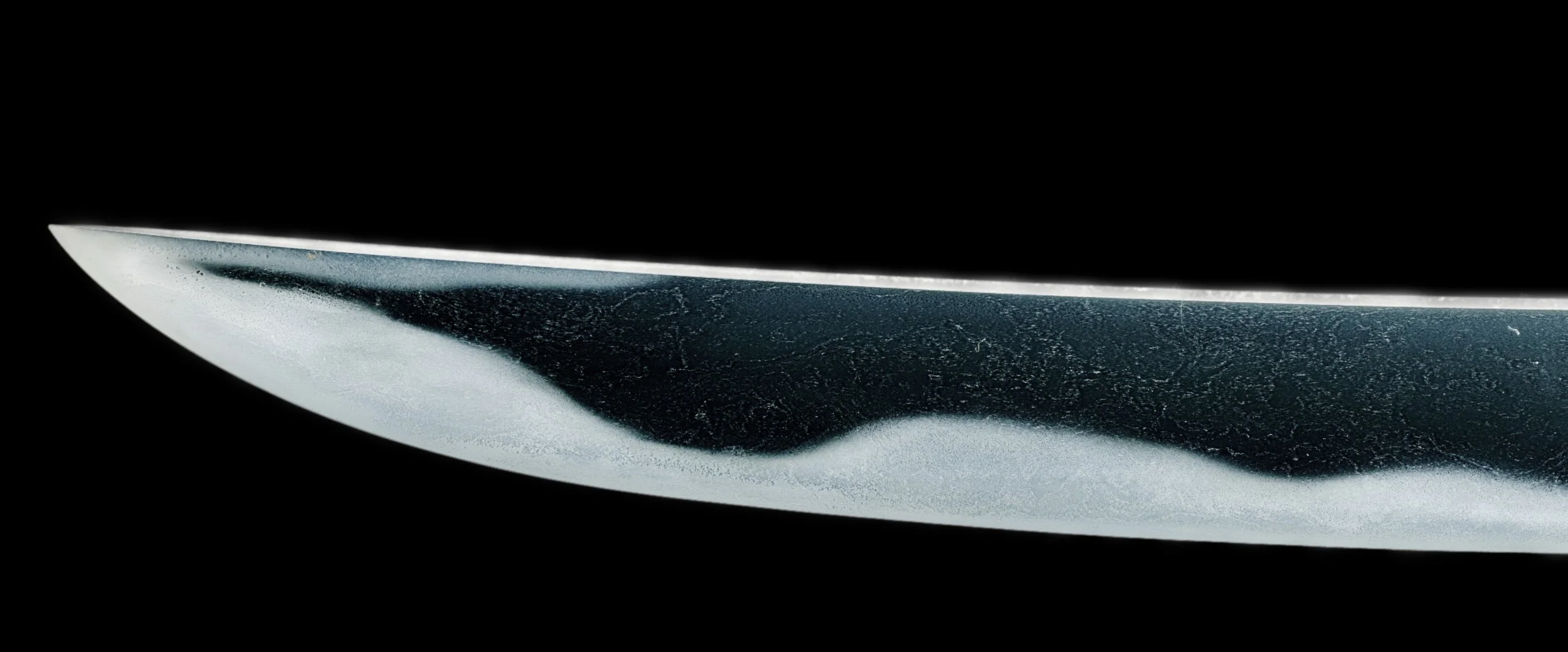
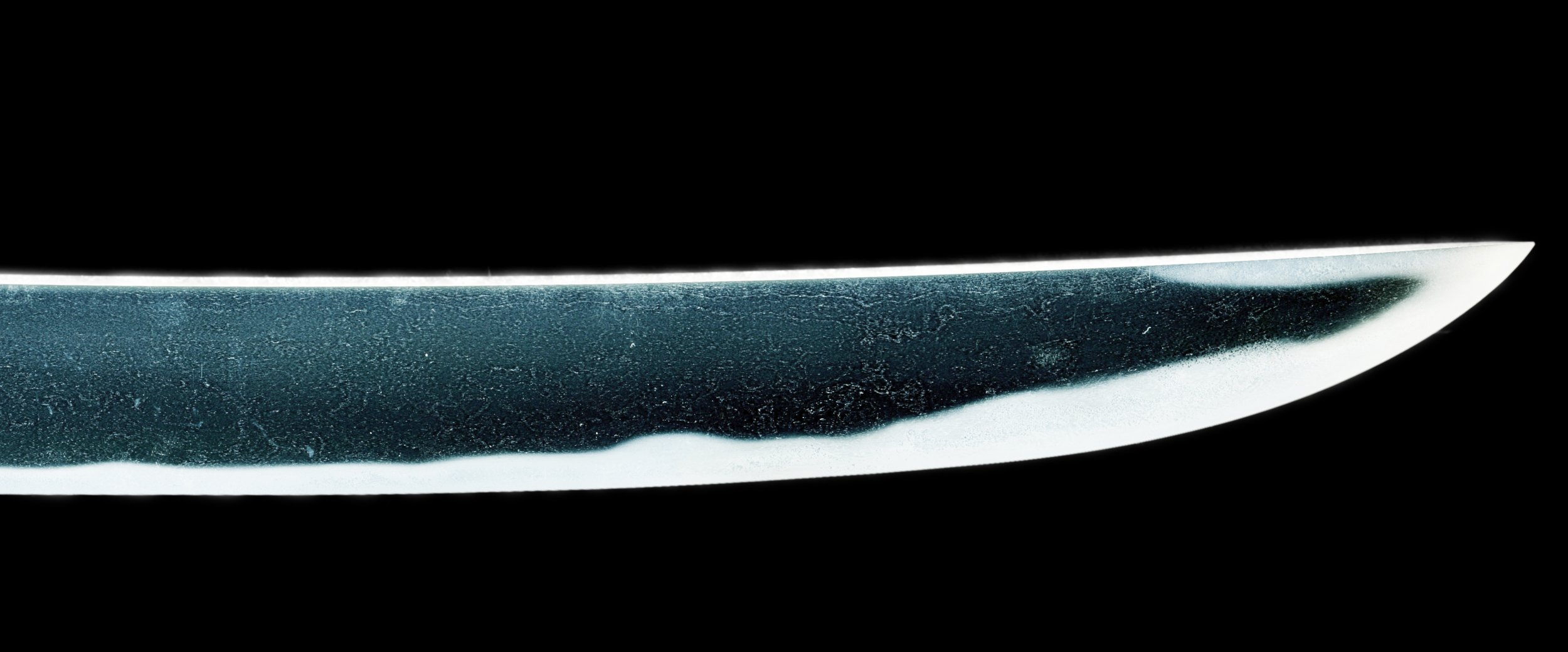
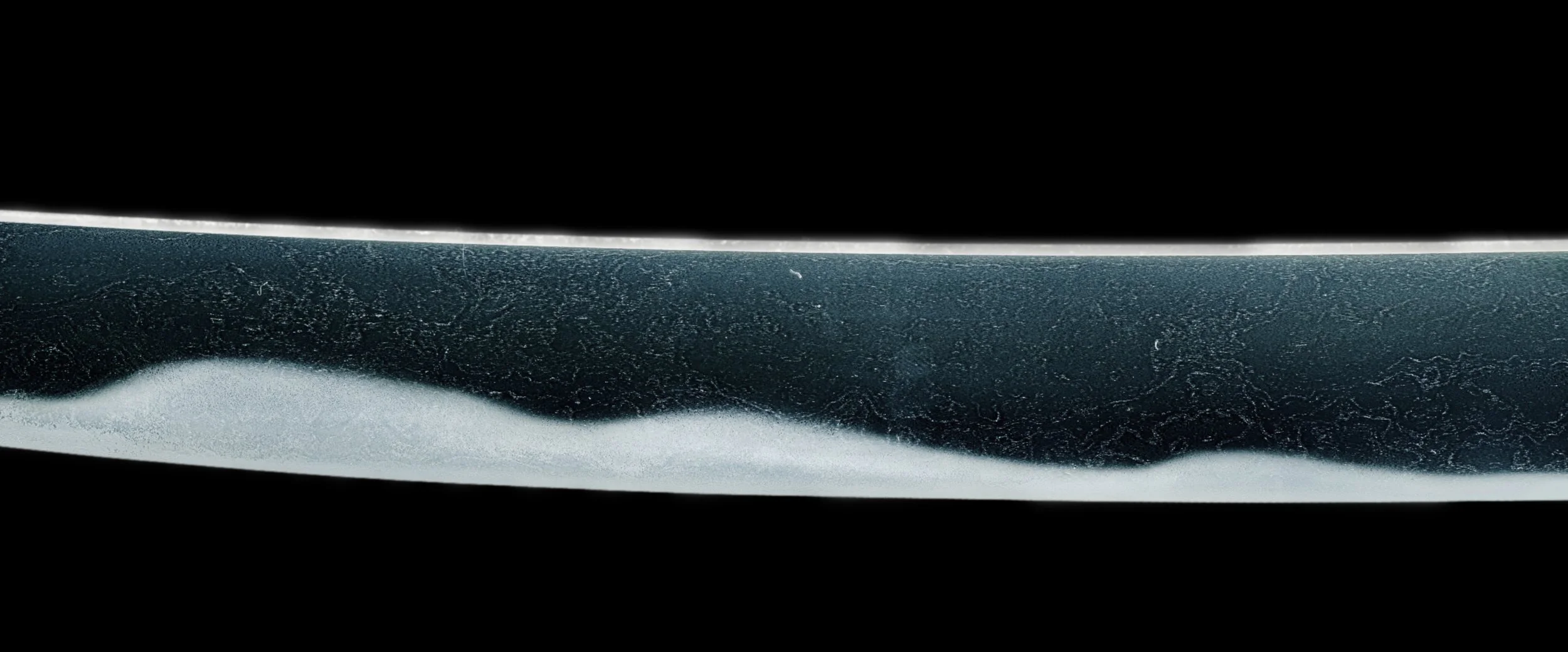
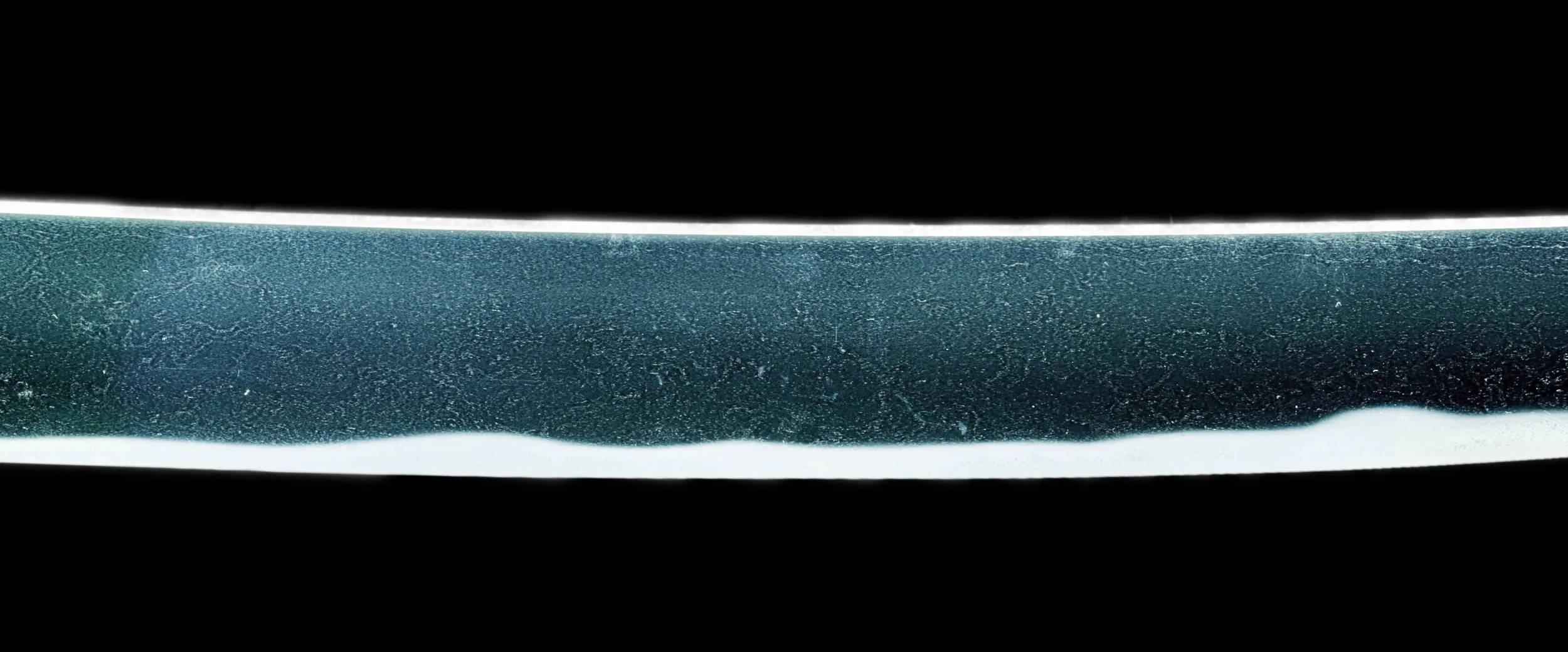
The jigane consists of a well-forged itame hada interwoven with flowing nagare, together with areas of zanguri-hada, a coarse, pear skin-like texture that lends the ji a rugged and highly expressive character. This combination produces a lively surface that is entirely in keeping with the bold workmanship expected of Sōshū-inspired blades.
The hamon is executed in notare-gunome, beginning in a relatively restrained form near the machi before gradually increasing in scale toward the monouchi and kissaki. Richly covered in bright nie and nioi, the temper displays abundant ashi and yō, creating a dynamic and energetic appearance throughout the blade. The gradual expansion of the hamon toward the point enhances the blade's visual impact while showcasing the smith's confident and deliberate control of the yakiba.
Overall, this is a powerful and highly expressive work, combining bold proportions, vigorous jihada and an active nie-based hamon to produce a wakizashi that exemplifies the robust character for which Sōshū-den workmanship is so highly regarded.
Accompanying the blade is an attractive matching koshirae featuring a green nashiji-nuri lacquered saya with elegant gold maki-e floral decoration around the kozuka and kogai pockets. Included are both a kozuka and a waribashi-style kogai, which can be separated into a functional pair of chopsticks, a charming and uncommon feature that adds both historical interest and practical ingenuity to the mounting.