Fuji Samanosuke Minamoto Yoshimune Katana
富士左馬亮源義宗 刀
Item TK053
Period: Shinshinto — Late Edo Period
Mei (Signature): Fuji Samanosuke Minamoto Yoshimune 富士左馬亮源義宗
A day in December, Bunkyū 3 (1863) 文久三年十二月日Designation: Tokubetsu Hozon
Nakago - 24.6cm Ubu, 1 Mekugi-ana
Nagasa - 77cm
Sori: - 0.9cm
Motohaba - 3.35cm
Sakihaba - 2.4cm
Kissaki - 5.5cm
Motokasane - 1.0cm
SOLD
An Imperial Loyalist’s Sword, An Exceptionally Powerful Kinnōtō Katana by Fuji Samanosuke Minamoto Yoshimune, Dated 1863
This imposing katana was forged in 1863 by Fuji Samanosuke Minamoto Yoshimune (富士左馬亮源義宗), during the final turbulent years of the Tokugawa shogunate.
What immediately distinguishes this sword is its extraordinary physical presence. With a cutting-edge length of approximately 77 cm, an exceptionally wide mihaba and an astonishing 10 mm kasane (compared to the approximately 7 mm thickness of an average katana), it is a blade of remarkable power and authority. Its long nagasa, robust proportions and massive construction are quintessential characteristics of a Kinnōtō (勤皇刀)—the powerful swords associated with the political upheaval of the Bakumatsu period.
The term Kinnōtō, meaning "Imperial Loyalist sword," refers not to a particular school or style of swordsmithing, but rather to a type of sword forged during the final years of the Edo period for men living through an era of genuine conflict. Supporters of the Sonnō Jōi (尊王攘夷) movement and their opponents alike sought practical, battle-worthy weapons as Japan descended into political instability that ultimately culminated in the Meiji Restoration.
The year 1863, inscribed upon this blade, was one of the defining years of this turbulent age. Political assassinations, armed uprisings and violent confrontations between Imperial loyalists and supporters of the Tokugawa shogunate became increasingly common. It was also the year in which the Shinsengumi was formed in Kyoto, gaining notoriety for policing the Imperial capital and combating anti-shogunate factions. Unlike many swords of the peaceful Edo period that served primarily as symbols of rank, Kinnōtō such as this were forged with the genuine expectation that they might be carried into combat, giving them a unique historical significance beyond their impressive physical form.
The blade is forged in shinogi-zukuri with an iori-mune, displaying exceptionally broad proportions and an extraordinary 10 mm kasane, resulting in a sword of immense rigidity and commanding presence.
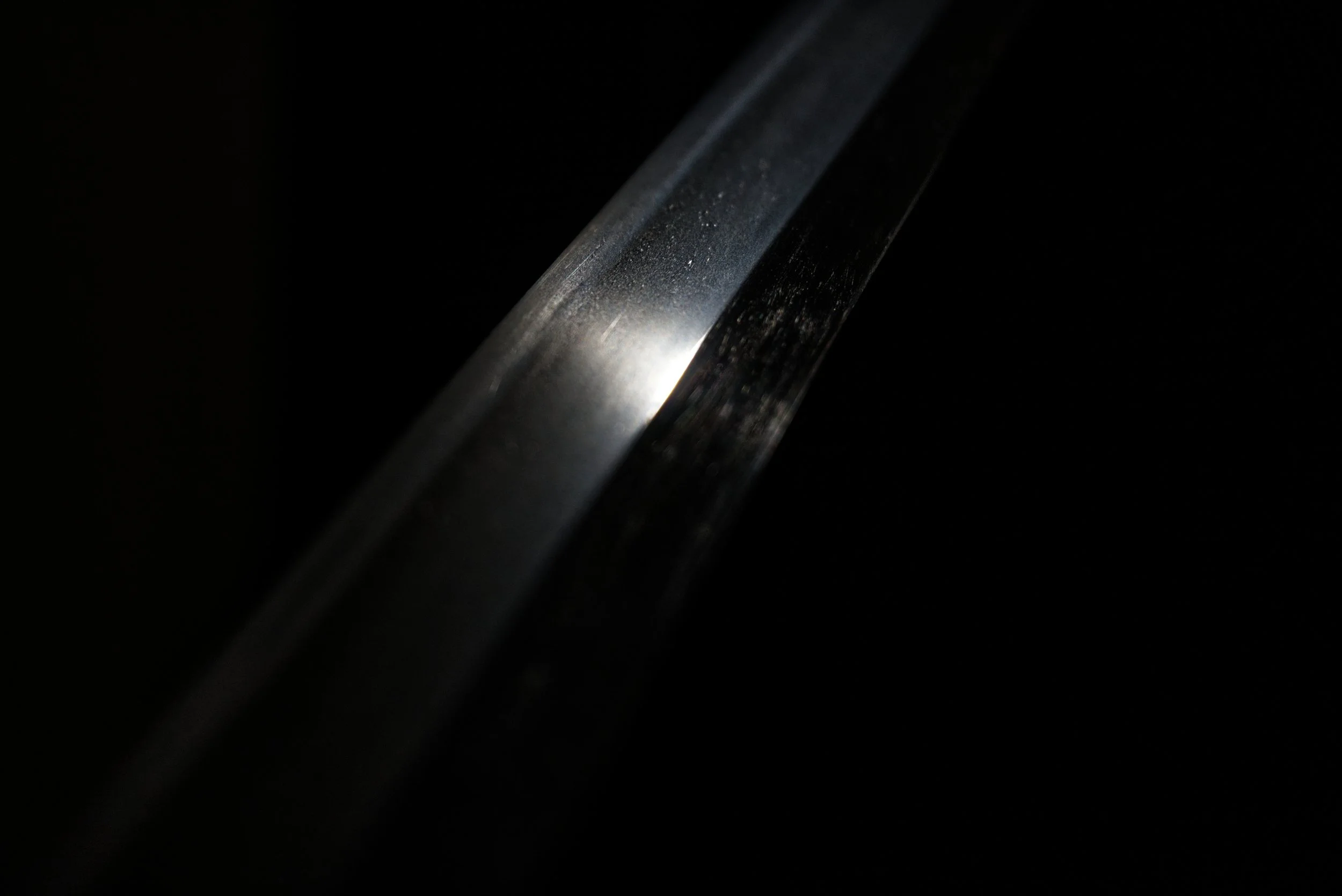
The jihada is a finely forged, tightly-knit ko-itame hada, exhibiting excellent consistency throughout the blade and demonstrating the smith's refined workmanship. The hamon is a dignified chū-suguha executed in nie-deki, with abundant ashi extending into the cutting edge.
The prominence of ashi is particularly noteworthy. Traditionally, these "legs" of hardened steel are believed to interrupt the martensitic structure of the edge at regular intervals, helping to inhibit the propagation of cracks or chips should the edge sustain heavy impact. While modern metallurgical research continues to debate the precise extent of this effect, many sword scholars and polishers have long regarded abundant, well-formed ashi as a desirable feature in blades intended for practical use, both for their aesthetic beauty and their potential contribution to edge durability. Combined with its exceptionally thick kasane and powerful construction, the workmanship of this blade strongly reinforces its character as a sword conceived for reliability and service during one of the most turbulent periods of Japanese history.
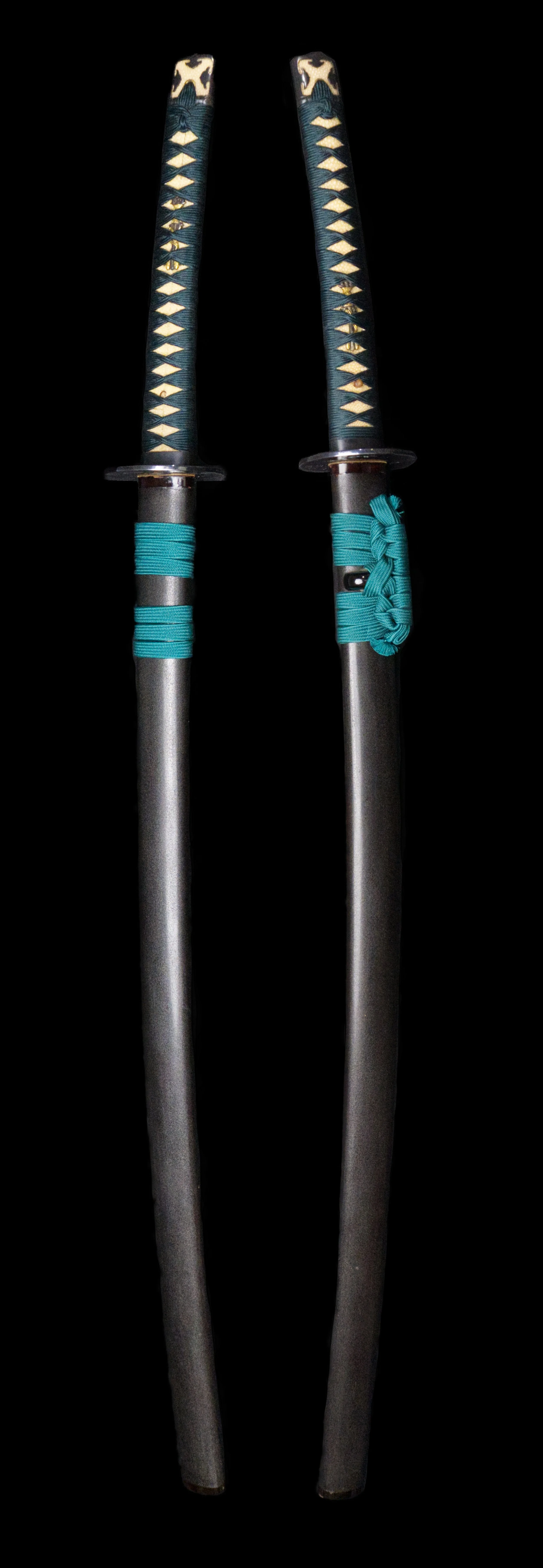
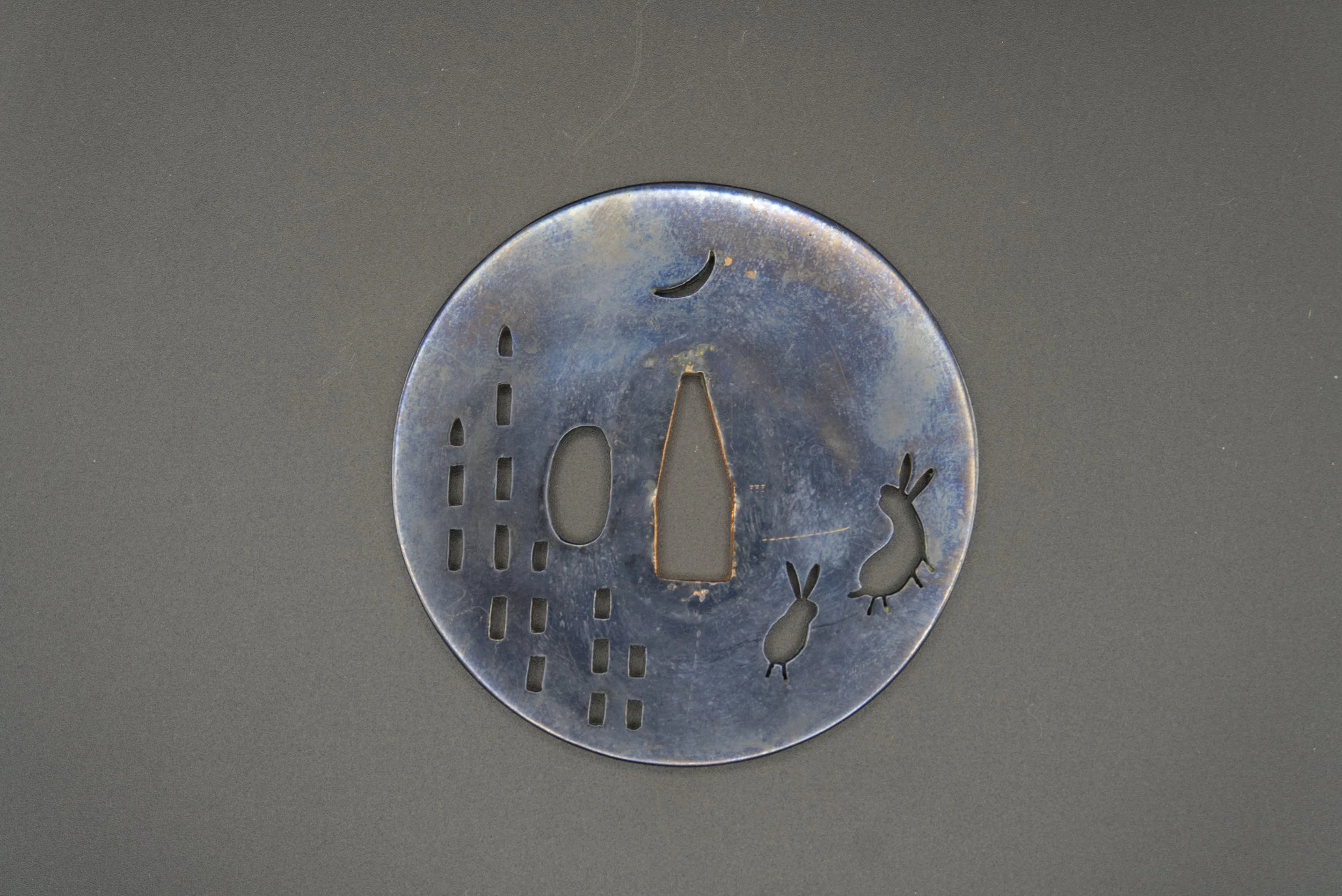
This Katana is accompanied by an attractive koshirae featuring a notably long tsuka, proportioned to match the blade's extended nakago, a characteristic commonly seen on Bakumatsu-period Kinnōtō. Combining exceptional dimensions, robust construction and direct association with the turbulent Bakumatsu period, this is a quintessential Kinnōtō. Both historically significant and unmistakably practical in design, it represents an excellent opportunity to acquire a powerful sword from one of the most pivotal eras in Japanese history.