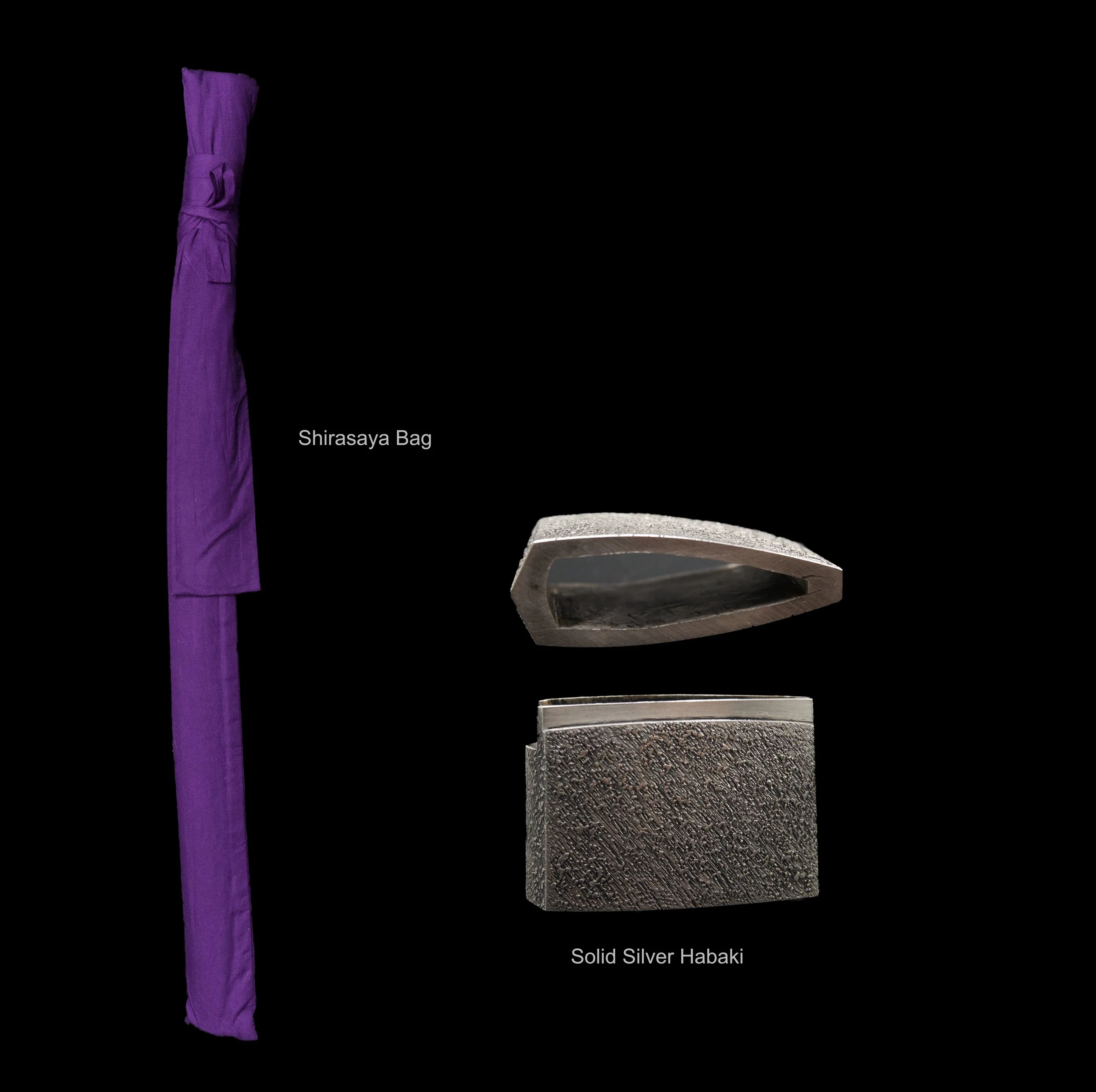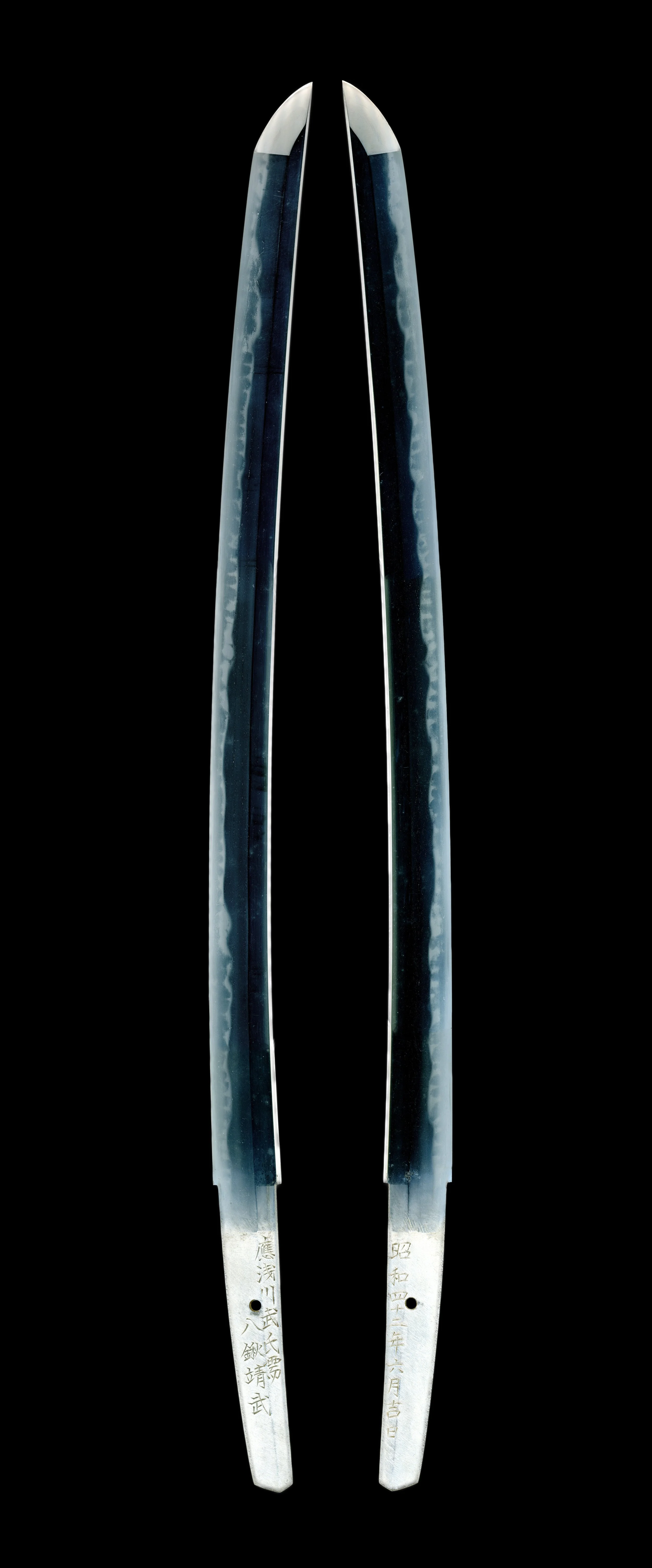
Yasutake Yakuwa Wakizashi
八鍬靖武 脇差
Item TK054
Period: Modern (1967)
Mei (Signature): Made at the request of Mr. Takeshi Asakawa, by Yakuwa Yasutake 應浅川武氏 八鍬靖武
“An auspicious day in June 1967” (Showa 42), 昭和四十二年六月吉日Nakago - 16.5cm -Ubu
Nagasa - 59cm
Sori: - 1.2cm
Motohaba - 3.8cm
Sakihaba - 2.7cm
Kissaki - 4cm
Motokasane - 0.89cm
Price: ¥ 450,000
Mukansa Swordsmith Yasutake Yakuwa
Yasutake Yakuwa (real name: Take Yakuwa) was born in Yamagata Prefecture in 1909. He began his swordsmithing career under Ikeda Yasumitsu (also known as Kazumitsu), a renowned smith from his hometown who traced his lineage to the influential Suishinshi Masahide school and was instrumental in the revival of traditional swordmaking.
In 1935, Yakuwa relocated to Tokyo and joined the Japan Sword Forging Association, established within the grounds of Yasukuni Shrine. There, he became one of the shrine's official swordsmiths, forging the famed Yasukuni-to (also known as Kudan-to) for the Japanese military using high-quality Izumo tamahagane. During the Second World War, Army Minister Field Marshal Sugiyama bestowed upon him the smith name Yasutake, under which he would become widely known.
Following Japan's defeat in 1945, sword production was heavily restricted under a licensing system. Yasutake obtained his licence in 1954, allowing him to resume forging. Over the following decades, he produced numerous outstanding works, regularly exhibiting them at prestigious competitions and earning widespread recognition through multiple awards.
Throughout his career, Yasutake sought to emulate the masterpieces of classical swordsmiths such as Rai Kunitoshi of the Yamashiro tradition and Shintōgo Kunimitsu of the Sōshū tradition. His exceptional skill culminated in 1973 when he was commissioned to forge the sacred sword for the Shikinen Sengū ceremony of the Ise Grand Shrine. He also produced and donated ceremonial swords to several important shrines across Japan, including Yasukuni Shrine.
In 1981, Yasutake was recognised by the NBTHK as a Mukansa (exempt from competition judging) swordsmith and was also awarded the prestigious Masamune Prize, one of the highest honours in modern Japanese swordmaking.
Yasutake continued forging until his passing in 1983 at the age of 74. His legacy lives on through his finely crafted blades and faithful adherence to the great traditions of Japanese swordsmithing.