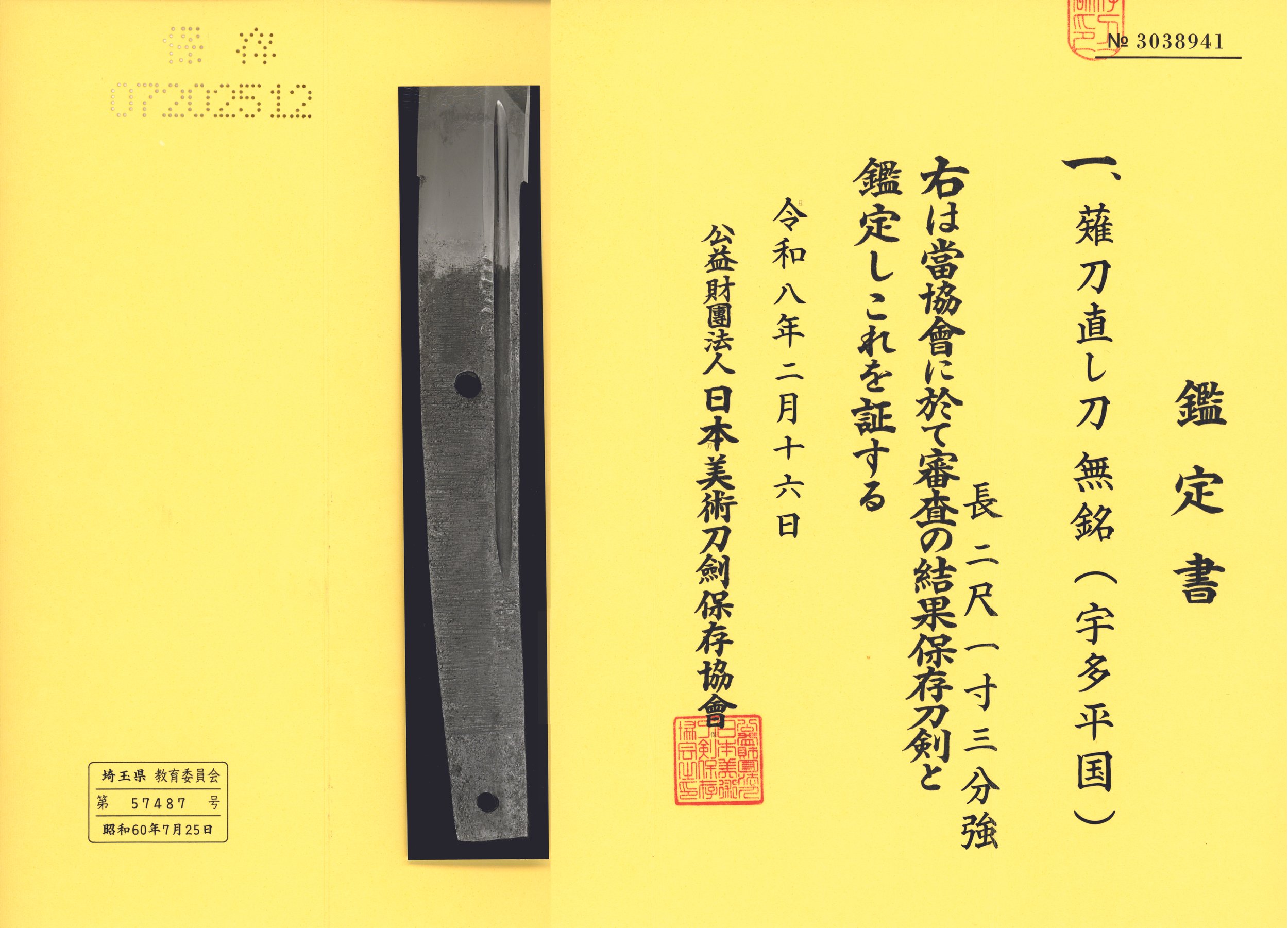
Mumei Attributed to Uda Hirakuni Naginata-naoshi Katana
無銘 刀(宇多平国)
Item TK059
Period:Koto - Bungi Jidai (1501~)
Designation: Hozon
Mei (Signature): Mumei Attributed to Uda Hirakuni
無銘(宇多平国)Nakago - 2 Mekugi-ana
Nagasa - 64.8cm
Sori - 1.5cm
Motohaba - 2.95cm
Motokasane - 0.6cm
Nakago Length - 17.8cm
Price: ¥ 680,000
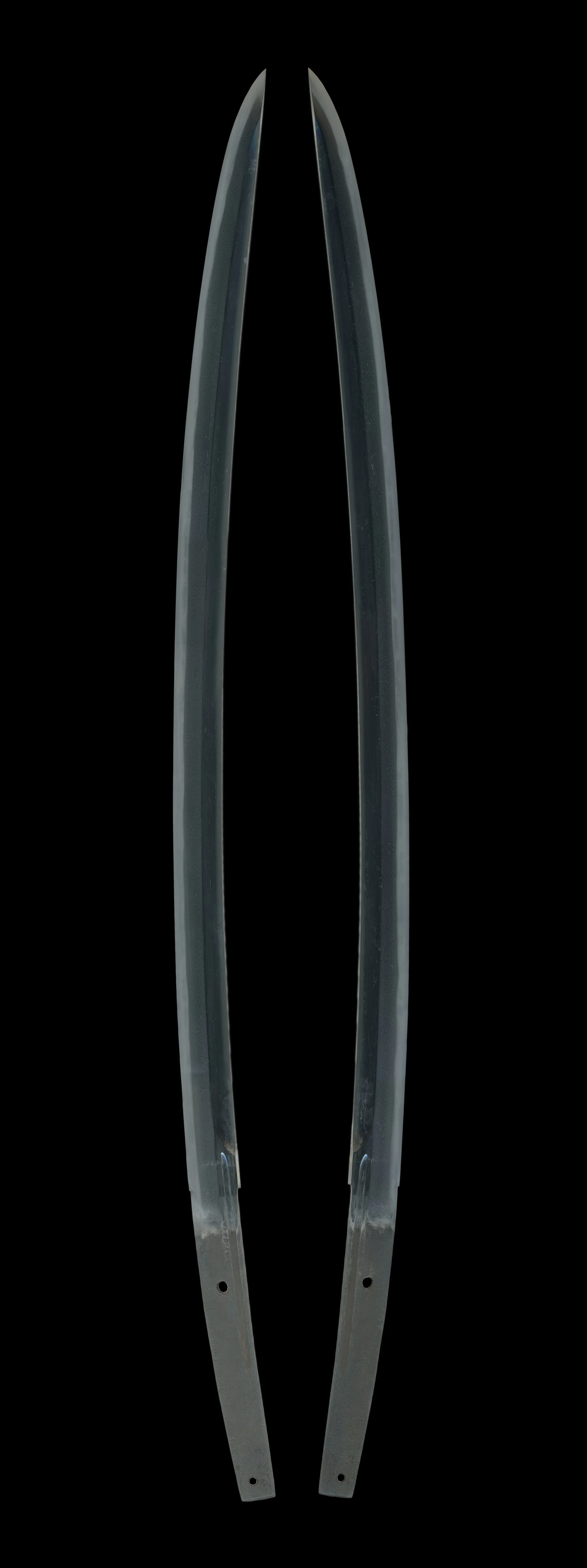
Naginata-naoshi Katana Attributed to Uda Hirakuni (宇多平国) – Bunki Era, Etchū Province
Uda Hirakuni (宇多平国) was a swordsmith of the Uda school who worked in Etchū Province during the Bunki era (1501–1504), in the latter part of the Muromachi period. He belonged to the long-established Uda tradition, a school whose origins were rooted in the traditions of Yamato but which developed a particularly strong affinity with the workmanship of the Sōshū tradition.
The Uda school had flourished in Etchū from the Nanbokuchō period onward. Its earliest masters are generally grouped under the designation Ko-Uda (古宇多), while their Muromachi-period successors are referred to simply as Uda. Hirakuni belongs to this later generation of the school and is traditionally recorded as a student of Uda Kunikiyo (宇多国清).
This is an attractive Koto-period naginata-naoshi katana, attributed to Uda Hirakuni. Originally forged in the form of a naginata, the blade was shortened and reshaped into its present katana configuration. It retains its original naginata-hi, an appealing feature that clearly speaks to the blade's former form. The hi continues past the present machi and extends down into what is now the nakago, providing a visible reminder of the blade's history and transformation from naginata to katana.
The blade presents a very pleasing and characterful sugata, retaining much of the distinctive character associated with its naginata origins.
The jigane is particularly interesting, displaying an active mixture of itame and masame, with areas of mokume and conspicuous burl-like formations also visible throughout the steel. The overall complexion of the jigane is somewhat dark and blackish, giving the blade a subdued and distinctly old appearance befitting its Koto-period manufacture.
The hamon is based in notare, with activity visible within the hardened edge. Hataraki including ashi and yo can be observed, adding further variation and interest to the tempering.
Overall, this is a very appealing Koto-period naginata-naoshi katana, combining an attractive shape, expressive old steel, and clear evidence of its origins as a naginata.