(Aoi mon) Echizen Yasutsugu, resident of Bushū Edo Katana
(葵紋)以南蛮鉄於武州江戸越前康継 刀
Item TK060
Period: Shinto Period - Early Edo
Mei (Signature): (Aoi mon) Echizen Yasutsugu, made in Edo, Musashi Province, using Nanban iron.
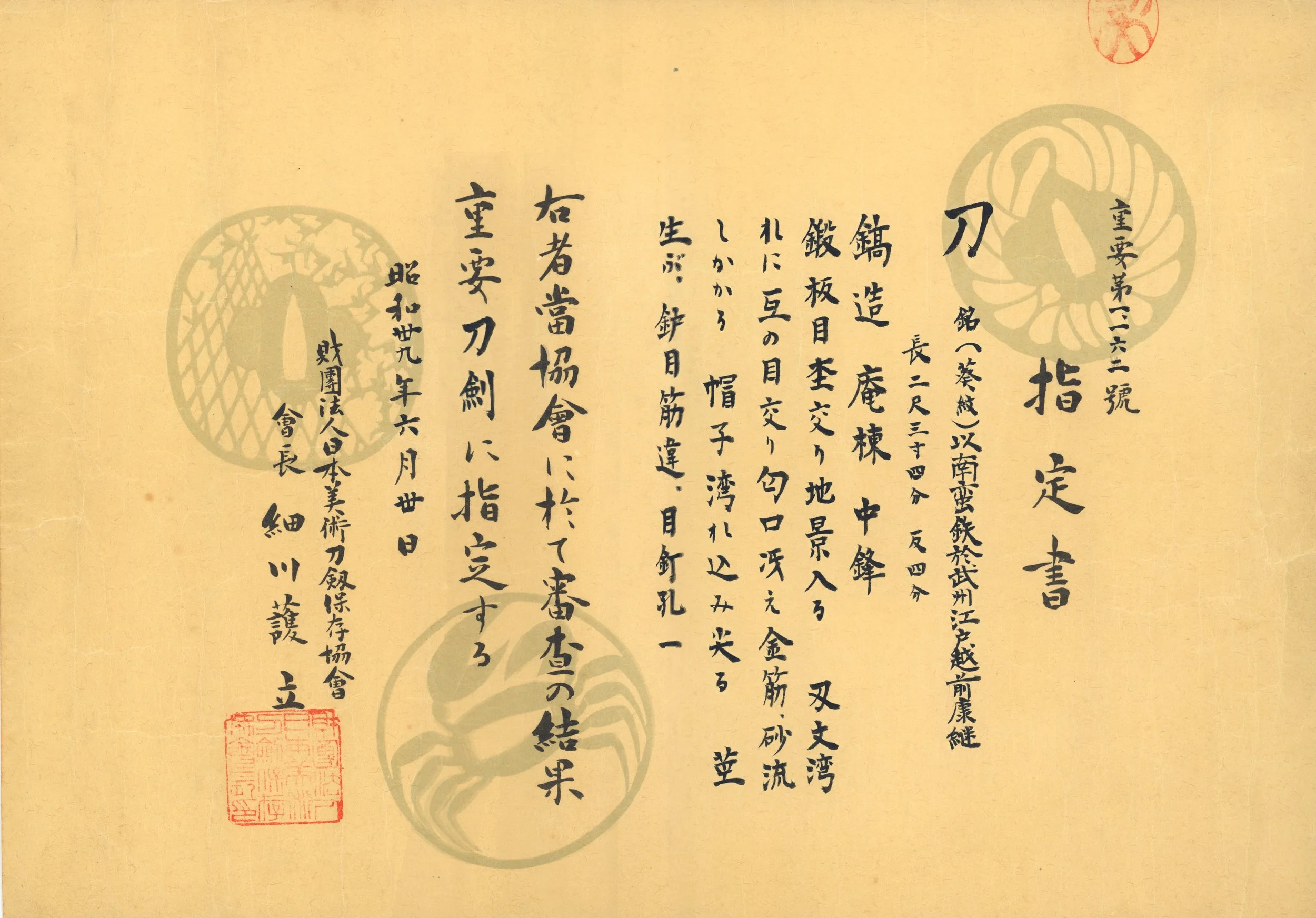
(葵紋)以南蛮鉄於武州江戸越前康継Designation: Designated on Showa 39, June 30th (1964)
12th JUYO TOKENNakago - Ubu - 1 Mekugi-Ana
Nagasa - 70.9cm
Sori: - 1.2cm
Motohaba - 3.2cm
Sakihaba - 2.2cm
Kissaki - 3.6cm
Motokasane - 0.72cm
Nakago length - 21.7cm
¥ 8,000,000
12th Jūyō Tōken Katana by the Second Generation Echizen Yasutsugu 二代越前康継
Touken Takarado’s Supplementary Commentary:
In our opinion, the relatively concise description found in the Jūyō zufu does not fully do justice to the beauty and remarkable activity displayed by this katana. This is a sword that truly needs to be seen in motion and under changing light to appreciate the sheer amount of detail present throughout the blade.
The sugata is particularly attractive, with a broad and well balanced form, shallow sori, and a dignified chū kissaki that together create a powerful yet refined appearance. Interestingly, the Jūyō zufu describes the kasane as somewhat thin. Having examined the sword personally, we respectfully differ in our impression; to us, the blade feels quite substantial in hand, and we would even consider the kasane somewhat thick rather than thin.
Another noteworthy detail not mentioned in the Jūyō zufu is that this blade was forged using Nanban iron (南蛮鉄). Nanban-tetsu refers to imported foreign iron brought to Japan through overseas trade, and its use became one of the distinctive characteristics associated with the Yasutsugu lineage. The Shodai Yasutsugu was particularly well known for incorporating this imported iron into his swordmaking, and the tradition was continued by succeeding generations, who sometimes recorded its use directly on the nakago. Its presence in this Nidai work therefore represents another important connection to the traditions established by the Shodai and to the distinctive history of the Yasutsugu school.
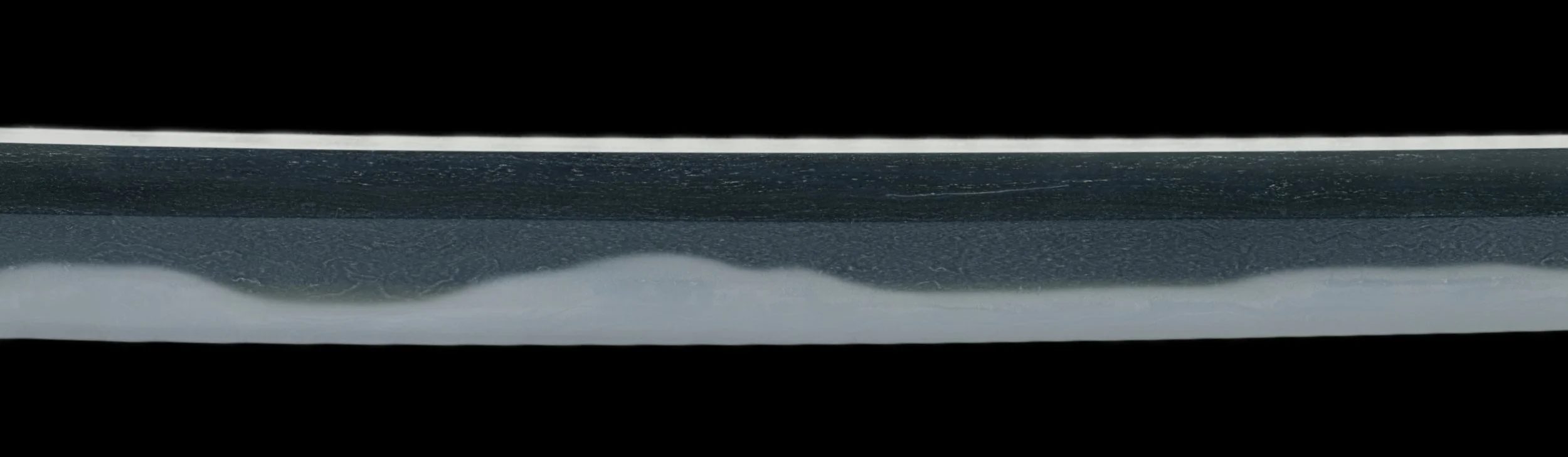
The jigane is exceptionally clear and easy to appreciate, showing a beautifully forged itame mixed with mokume, with the individual patterns of the hada readily visible across the surface. Thick ji nie and the presence of chikei further enrich the steel and give the ji considerable depth.
The greatest attraction, however, is undoubtedly the hamon. The notare and gunome structure is filled with activity, with abundant kinsuji and sunagashi appearing repeatedly throughout virtually the entire hamon. Under proper lighting, these activities become remarkably vivid, giving the blade an almost constantly changing appearance as it is viewed from different angles. The bōshi is equally impressive, with its lively hakikake providing a dramatic conclusion to the workmanship at the kissaki.
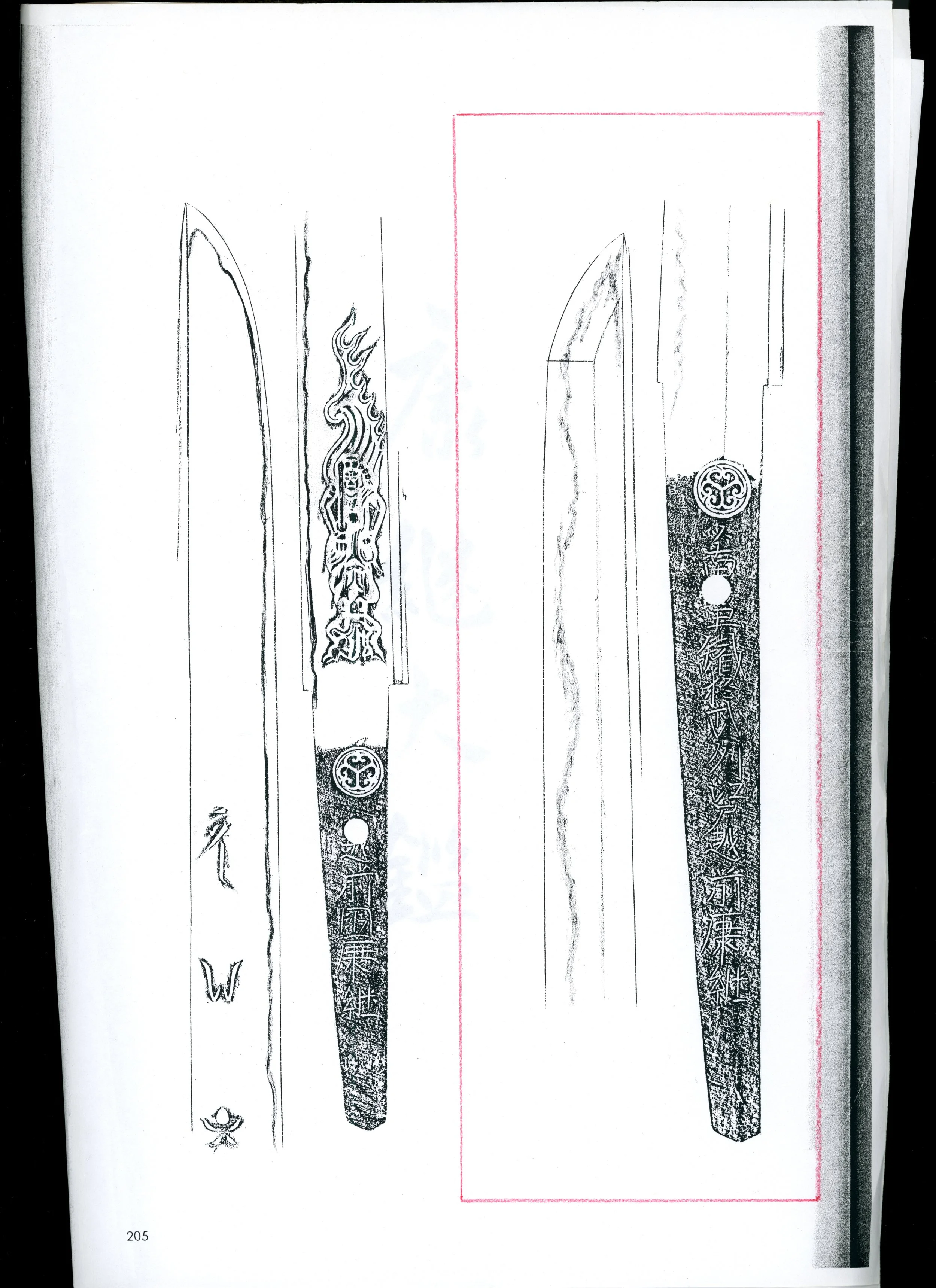
Another particularly important feature is the Aoi mon carved into the nakago above the signature. The Shodai Yasutsugu was appointed to serve the Tokugawa and was granted the character 「康」 (Yasu) by Tokugawa Ieyasu, together with the exceptional privilege of using the Tokugawa family's Aoi crest on his swords. This privilege was inherited by the succeeding Yasutsugu lineage, and its presence on this Nidai work is a powerful reminder of the family's unusually close relationship with the Tokugawa Shogunate.
The Jūyō zufu itself specifically remarks that, among the works of the second generation Yasutsugu, this sword displays workmanship particularly close to that of the Shodai Yasutsugu, describing the blade as magnificent. It is also noteworthy that this very sword is featured in the Yasutsugu Taikan, further adding to its importance as a representative work of the smith.
Overall, this is an exceptionally vivid, active and beautiful example of Nidai Yasutsugu, a sword whose character is difficult to communicate through photographs or a written description alone. We strongly encourage viewers to watch the accompanying video, where the extraordinary jigane, the abundance of kinsuji and sunagashi, and the activity within the hamon can be appreciated far more clearly.
Below is a Direct Translation of the NBTHK Juyu Zufu
Sugata
The blade is shinogi-zukuri with an iori-mune. The kasane is somewhat thin, and the curvature is shallow with a chū-kissaki.
Jigane
The kitae is itame mixed with mokume, with areas of standing hada. Chikei appear within the ji, and the ji-nie is thickly attached.
Hamon
The hamon consists of notare with mutually alternating gunome, with ashi activity. Kinsuji and sunagashi frequently appear throughout, and ko-nie is well attached.
Boshi
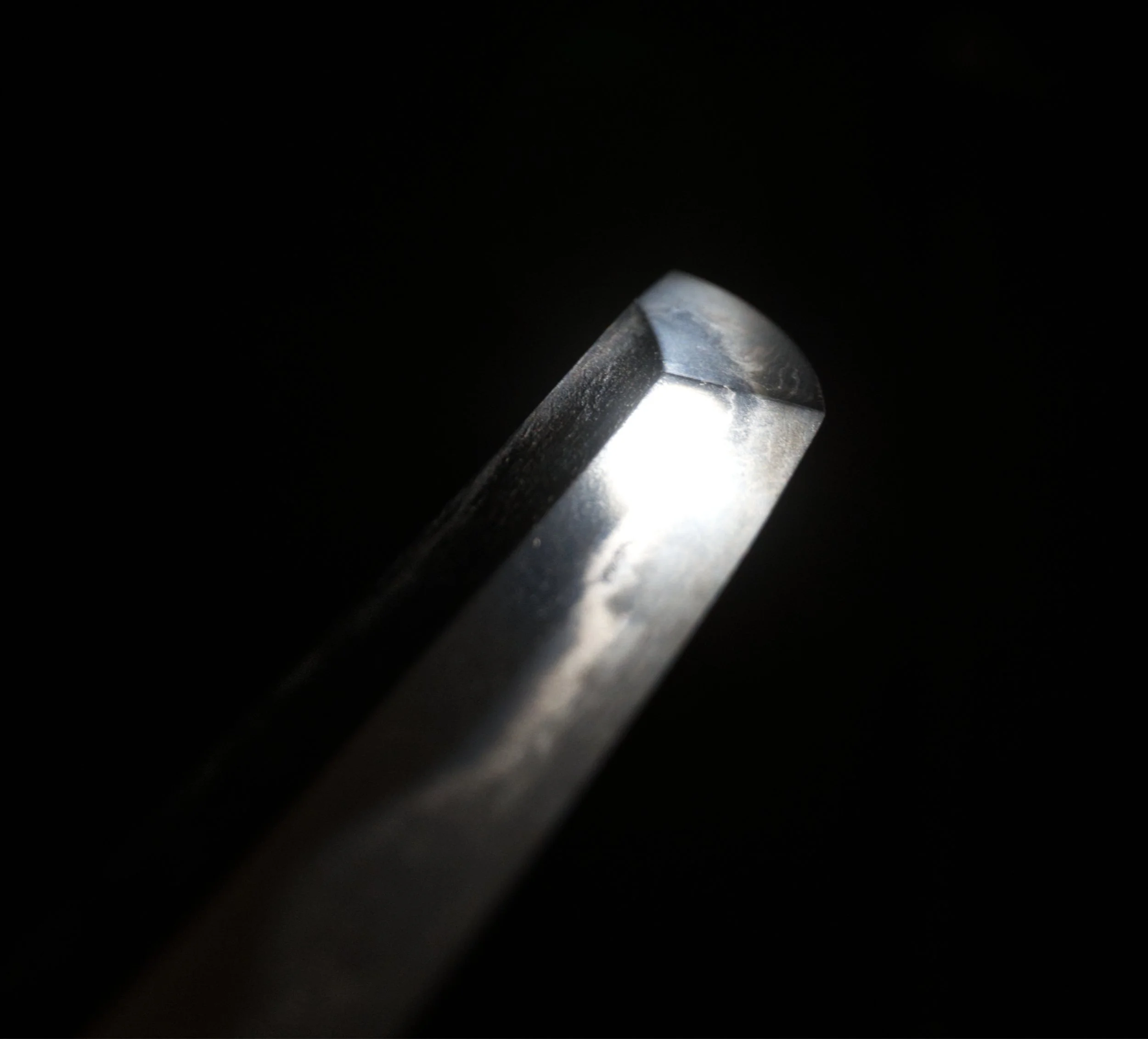
The bōshi is notare-komi, with the tip forming a hakikake and then turning back.
Nakago
The nakago is ubu. The nakagojiri is iriyama-gata. The yasurime are suji-chigai, there is one mekugi-ana, and there is a long signature located toward the center of the omote.
Commentary
The second-generation Yasutsugu was one of the outstanding pupils of the first-generation Yasutsugu. After the first-generation Higo Daijō Yasutsugu died in Genna 7 (1621), he succeeded as the second generation and became a retainer of both the Tokugawa Shogunate and the Echizen Yūki family, serving the two on an alternating-year basis.
However, whether he actually travelled back and forth between Edo and Fukui in alternate years is open to some question. From around Shōhō 3 (1646) onward, the Edo and Echizen branches separated.
The second-generation Yasutsugu was a highly skilled smith who followed in his father's footsteps. During the early part of his career, he produced carvings similar to those of the first generation, including work associated with Kinai. Both styles closely resemble those of the first generation.
However, the dimensions and scale of the carvings of the first generation are not quite matched by the second.
Among the second generation's works, this sword displays workmanship particularly close to that of the first generation and is magnificent.
The inscription, with the exception of the character 「継」 (tsugu), is entirely in the same manner as that of the first generation.