Mumei Attributed to Tomomitsu Katana
無銘 倫光 刀
Item TK064
Period: Nanbokucho Period
Mei (Signature): Mumei Attributed to Tomomitsu
無銘 倫光Designation: Designated on Reiwa 3 (2021) October 19th
67th JUYO TOKEN & Hozon Kanagu (Menuki)Nakago - 2 Mekugi Ana
Nagasa - 72.2cm
Sori: - 1.7cm
Motohaba - 3.2cm
Sakihaba - 2.3cm
Kissaki - 4.3cm
Motokasane - 0.6cm
Nakago length - 20.2cm
Nakago Sori - 0.2cm
¥ 6,300,000
Nanbokucho Period Katana of Tomomitsu - Student of Kanemitsu of the Bizen Osafune School
Touken Takarado Supplementary Commentary:
This katana is a particularly fine example of Tomomitsu’s workmanship, retaining the powerful and imposing form characteristic of the Nanbokuchō period, with its broad mihaba and commanding overall proportions. Despite its considerable age, the jiba remains remarkably healthy, allowing the quality and activity of both the jihada and hamon to be appreciated clearly.
The blade is an outstanding representation of Nanbokuchō-period Bizen-den, possessing the grand and powerful sugata so admired from this era, culminating in an extended ō-kissaki that gives the sword tremendous presence. The futatsuji-hi running along the blade is also a feature seen in other works by Tomomitsu and further enhances its elegant yet imposing appearance.
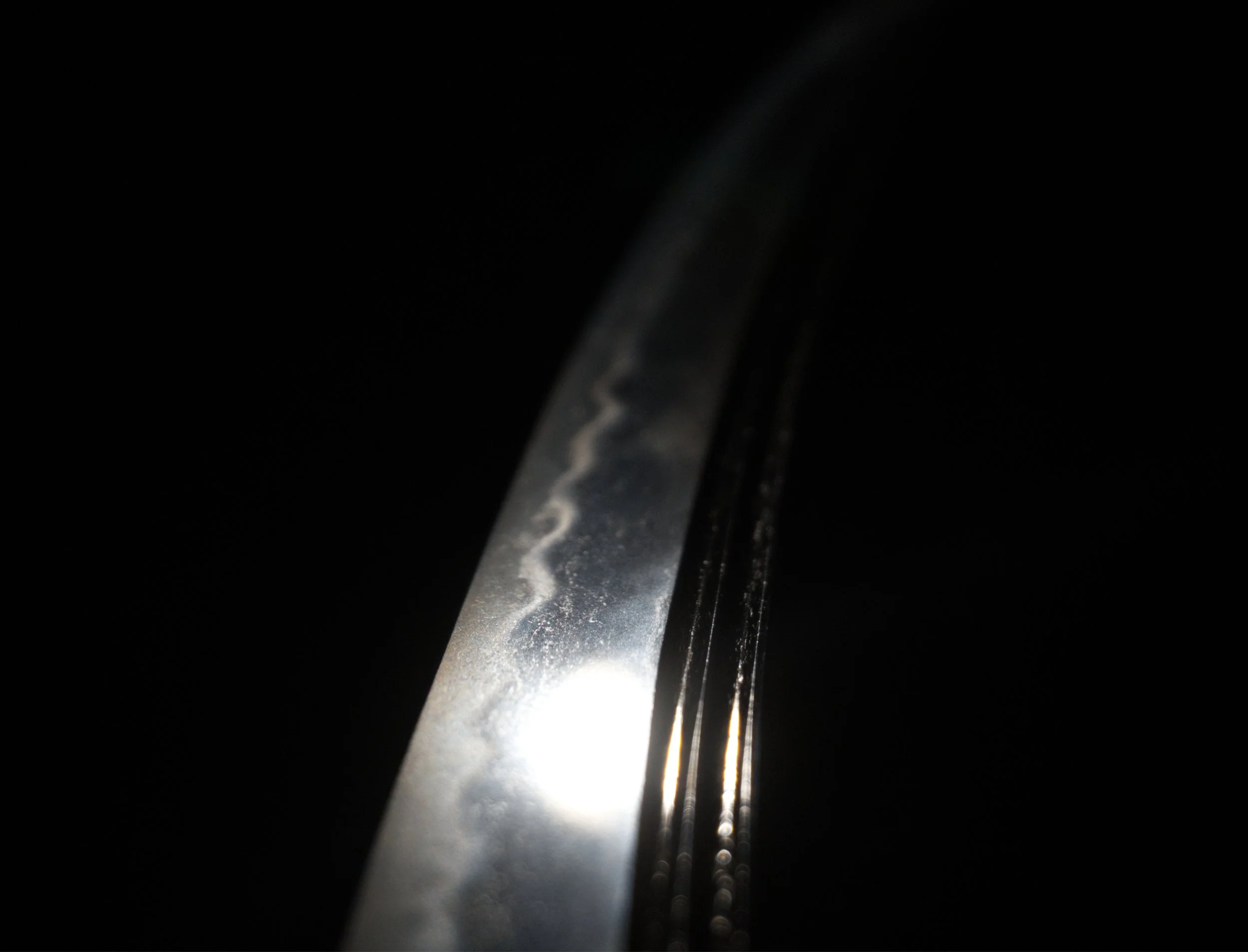
Particularly captivating is the utsuri, which can only be described as otherworldly. This ethereal activity is remarkably clear and visible throughout virtually the entire blade, shifting across the ji as the sword is viewed under changing light. Together with the exceptionally healthy jigane and abundant hataraki, it gives the blade extraordinary depth and visual character that photographs alone cannot adequately convey. We strongly recommend viewing our accompanying video in 4K HD, where the utsuri, jihada, hamon and activities within the steel can be appreciated far more clearly.
Accompanying the blade is an exceptional brand-new koshirae, specially commissioned by Touken Takarado and completed in 2026. For this project, we commissioned Ishizaki-sensei of the Osafune Japanese Sword Museum to create and coordinate the koshirae, with the individual fittings personally selected and curated by Touken Takarado around a unified dragon motif.
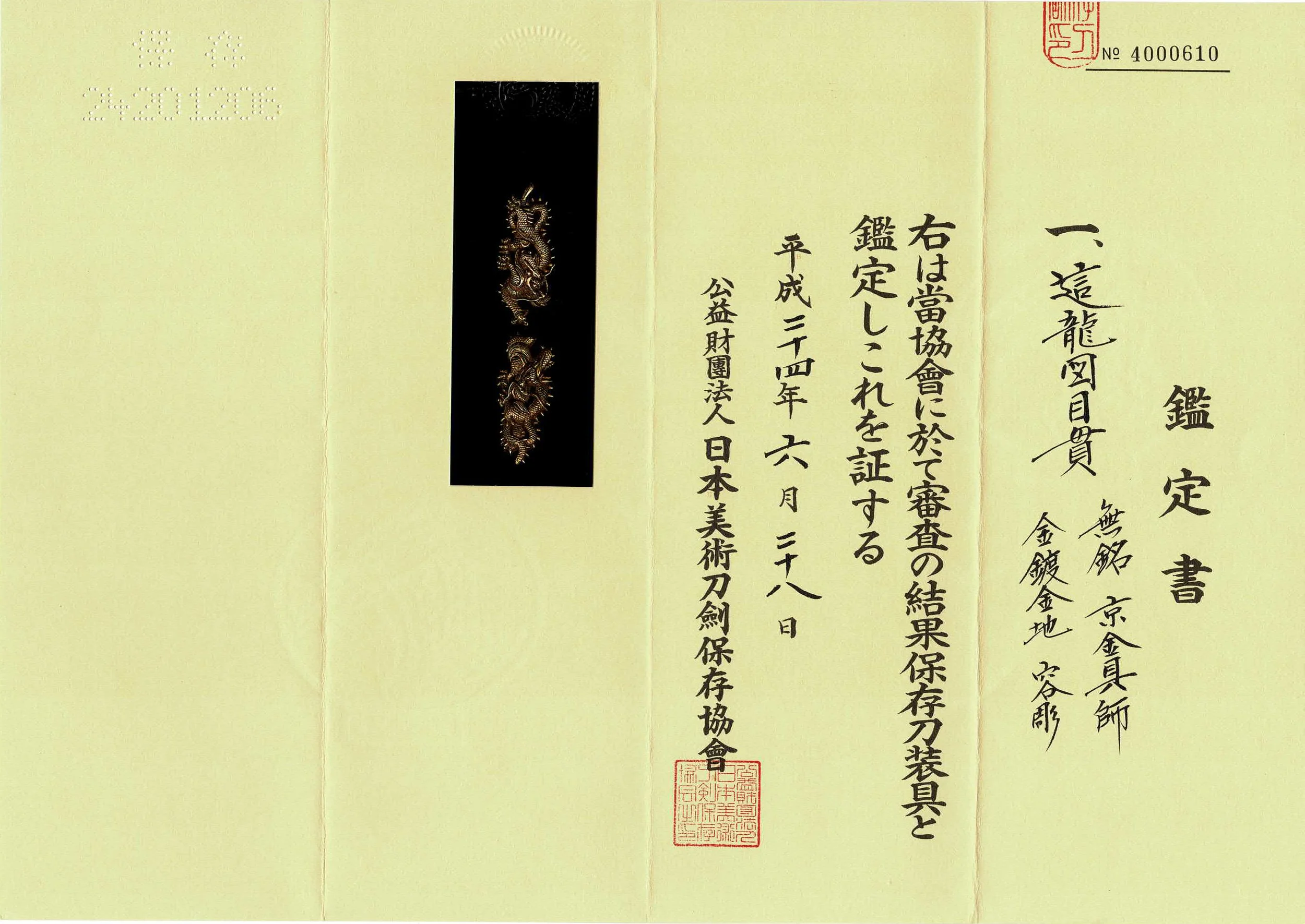
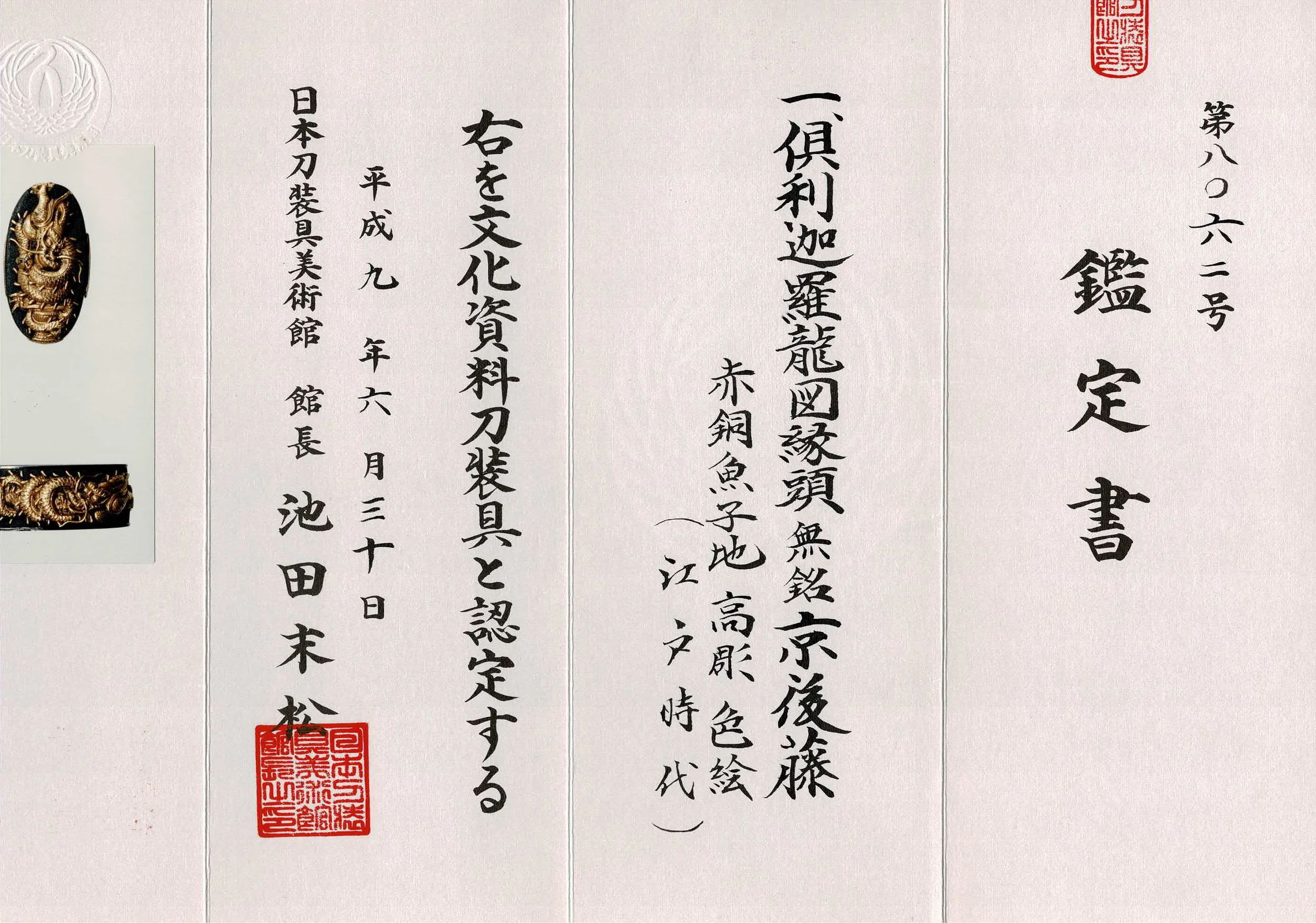
Particular attention was given to both the quality and authenticity of the fittings. The menuki are accompanied by NBTHK Hozon papers. The koshirae is further complemented by a superb shakudō dragon themed tsuba that is signed. Rather than simply assembling a set of matching components, the fittings were carefully chosen to create a cohesive koshirae worthy of accompanying a Jūyō Token Nanbokuchō blade.
The saya is especially noteworthy. It has been finished in genuine urushi lacquer by a master craftsman of Sanuki lacquerware, representing the traditional lacquer-working culture of the home region of Touken Takarado’s president. Multiple layers of genuine urushi are carefully applied and cured using traditional methods, producing the characteristic traditional depth and lustre. For this particular koshirae, we selected suki-urushi (透き漆), a translucent urushi finish that allows the natural beauty and grain of the underlying wood to remain visible beneath the lacquer, giving the saya an exceptionally warm and organic appearance.
Completing the mounting is a luxurious tsunegumi (常組) tsukamaki, executed with great care and providing an elegant finishing touch to the overall composition. The result is a newly created koshirae that remains firmly rooted in traditional Japanese craftsmanship: antique fittings personally curated around a consistent theme, genuine traditional urushi work, and a mounting specially commissioned to complement an exceptional sword.
Below is a Direct Translation of the NBTHK Juyu Zufu
Sugata
The blade is shinogi-zukuri with an iori-mune.
The mihaba is wide, with the difference in width between the base and the point somewhat noticeable. The kasane is of ordinary thickness.
The curvature is rather shallow, and the blade terminates in a chū-kissaki.
Jihada
The kitae is itame mixed with mokume, with the grain tending somewhat toward hada-dachi.
There is abundant ji-nie, with plentiful chikei, and utsuri is present.
Hamon
The hamon is based principally on ko-notare, mixed with ko-chōji, ko-gunome, and forms resembling togari-ba.
There are abundant ashi and yō.
The nioiguchi tends toward being tight, predominantly nioi-deki with nie.
Around the monouchi, the nie becomes somewhat more broken or irregular.
Fine kinsuji occur in places, accompanied by sunagashi.
Boshi
The bōshi has some nie activity and proceeds straight, turning back with a rounded tip.
Horimono
On both the omote and ura are futasuji-hi, which continue through the nakago.
Nakago
Ō-suriage.
The nakago-jiri is kiri.
The yasurime are kiri.
There are two mekugi-ana. Mumei.
Commentary
Tomomitsu (倫光) was a swordsmith of the Bizen Osafune school during the Nanbokuchō period. He was one of the smiths working under Kanemitsu (兼光), and according to one theory, he is also said to have been Kanemitsu's younger brother.
Among his extant works, dated examples range from the Jōwa era through the Eiwa era [1345–1379].
His workmanship is particularly characterized by a spacious, expansive midare based principally upon notare. Within the Kanemitsu school, his style is among those closest to Kanemitsu's own workmanship, and in terms of the quality and rank of his work, there are pieces that approach the level of his master.
This katana has a wide mihaba, with the difference between the width at the base and toward the point somewhat noticeable, and it terminates in a chū-kissaki. This overall sugata displays the distinctive characteristics of the Nanbokuchō period.
The kitae consists of itame mixed with mokume, with the hada tending to stand visibly. There is abundant ji-nie, plentiful chikei, and clearly visible utsuri.
The hamon is based principally upon ko-notare, incorporating ko-chōji, ko-gunome, and pointed togari-like elements. Ashi and yō enter abundantly, and the workmanship is predominantly in nioi with nie, while the nioiguchi tends to be tight.
These characteristics show a workmanship closely resembling that of Kanemitsu.
At the same time, however, characteristics such as the somewhat prominently standing jihada and the use of a relaxed and spacious notare as the fundamental structure of the hamon clearly display the distinctive traits of Tomomitsu's own workmanship.
Both the jigane and the hamon are exceptionally healthy, and this is a magnificent and powerful work attributed to Tomomitsu.