Mumei Attributed to Shimada school Wakizashi
無銘 島田 脇指
Item TK068
Period:Koto
Designation: Hozon & Hozon (Koshirae)
Mei (Signature): Mumei Attributed to Shimada school
無銘 (島田)Mekugiana - 3 Mekugi-ana
Nagasa - 31.6cm
Sori - 0.6cm
Motohaba - 3cm
Motokasane: 0.5cm
Nakago Length - 11.9cm
¥ 650,000
Shimada School Wakizashi with Antique Koshirae – A Legacy of Sōshū-Den Swordmaking
The Shimada School (島田派) was a distinguished swordmaking tradition established in Suruga Province, present-day Shizuoka Prefecture, which flourished particularly during the late Muromachi and Sengoku periods. Situated along the important Tōkaidō route, the region was a crossroads of cultural and military activity, providing an environment in which swordmaking traditions from eastern and western Japan could intersect.
The school is traditionally associated with the swordsmith Yoshisuke (義助), whose lineage became central to the development of Shimada workmanship. Other notable representatives include Sukemune (助宗) and Hirosuke (廣助). The school became particularly recognised for its interpretation of the Sōshū tradition, incorporating elements of Mino workmanship to produce swords with distinctive character and considerable variety.
Shimada blades are known for their diverse tempering patterns, ranging from restrained suguha and gently undulating notare to lively gunome-midare and elaborate hitatsura.
The Shimada School represents an important chapter in the development of late-kotō Japanese swordmaking, preserving the technical and artistic influences of the great classical traditions during one of Japan's most turbulent historical periods.
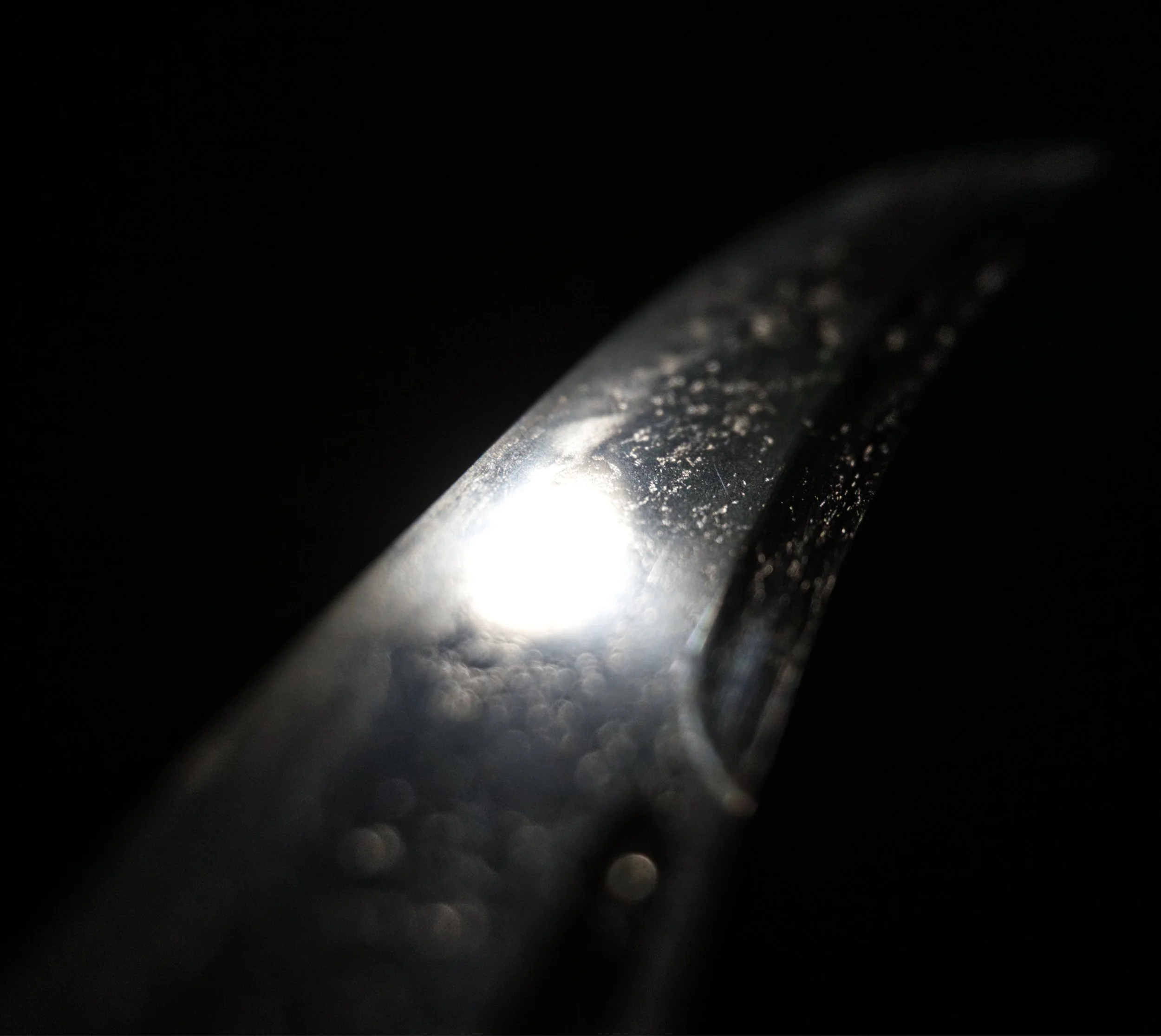
The jigane consists of itame-hada mixed with areas of more pronounced and irregular grain, displaying a somewhat coarse and rustic texture characteristic of the Shimada school. The forging pattern is clearly visible throughout the blade, with areas of rougher, more open grain that give the steel a distinctive and expressive appearance. Although the surface lacks the refinement of more tightly forged jigane, it retains a rugged character that reflects the traditional workmanship associated with the Shimada school.
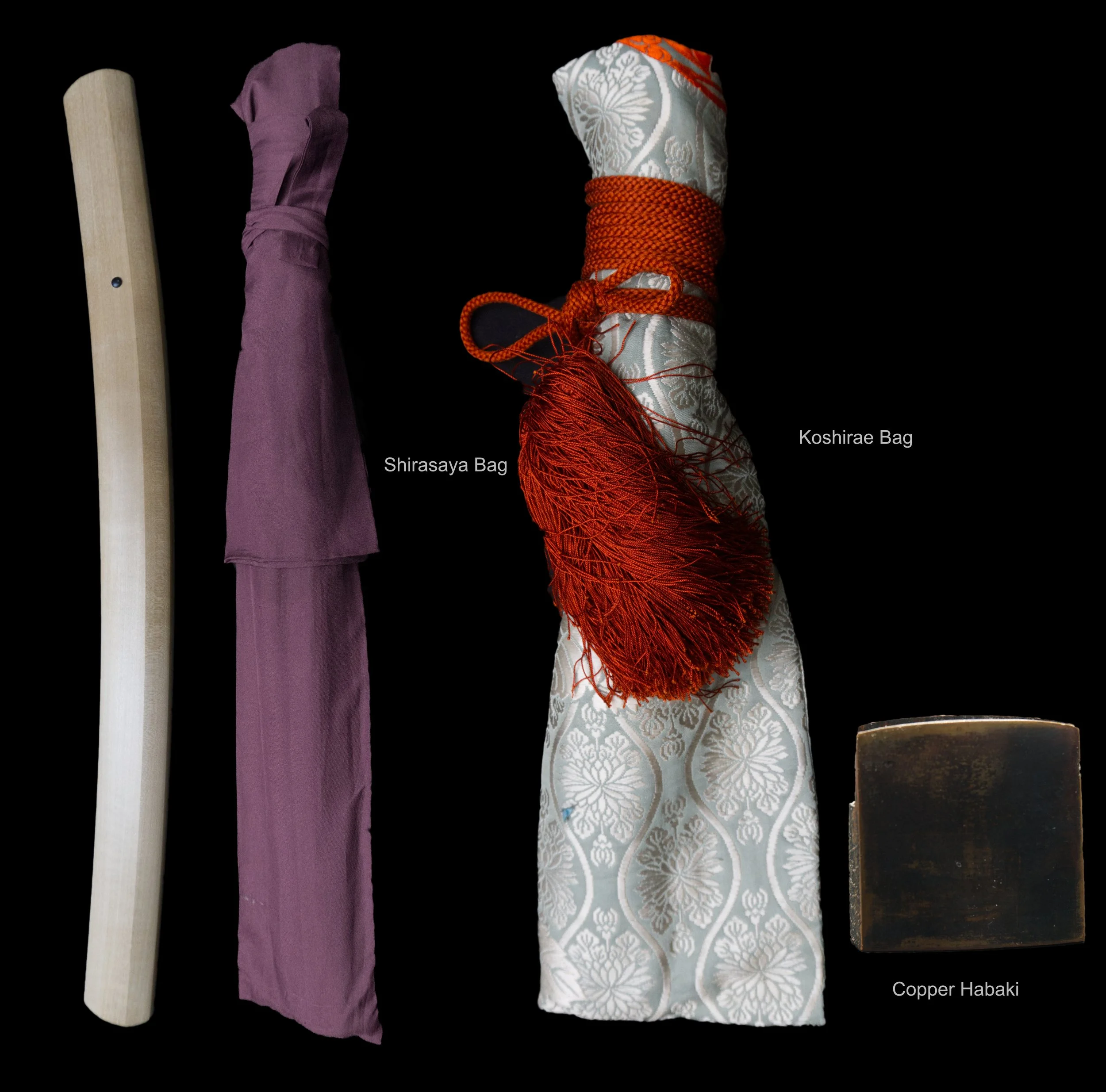
The wakizashi is accompanied by an elegant koshirae featuring a distinctive black lacquered saya decorated with finely scattered mother-of-pearl particles (aogai-mijin chirashi) and an intricate cracked-ice pattern (kōriwari-mon). The metal fittings are adorned with beautifully rendered wave motifs (hatō-zu), while the menuki depict peonies growing among rocks (iwa-botan-zu). The tsuka is covered in white samegawa and wrapped in dark iron-coloured silk using the traditional morohineri-maki style. An ornamental kozuka and a contrasting yellow-and-black patterned sageo complete the mounting, creating a harmonious combination of refined metalwork and decorative lacquer craftsmanship.