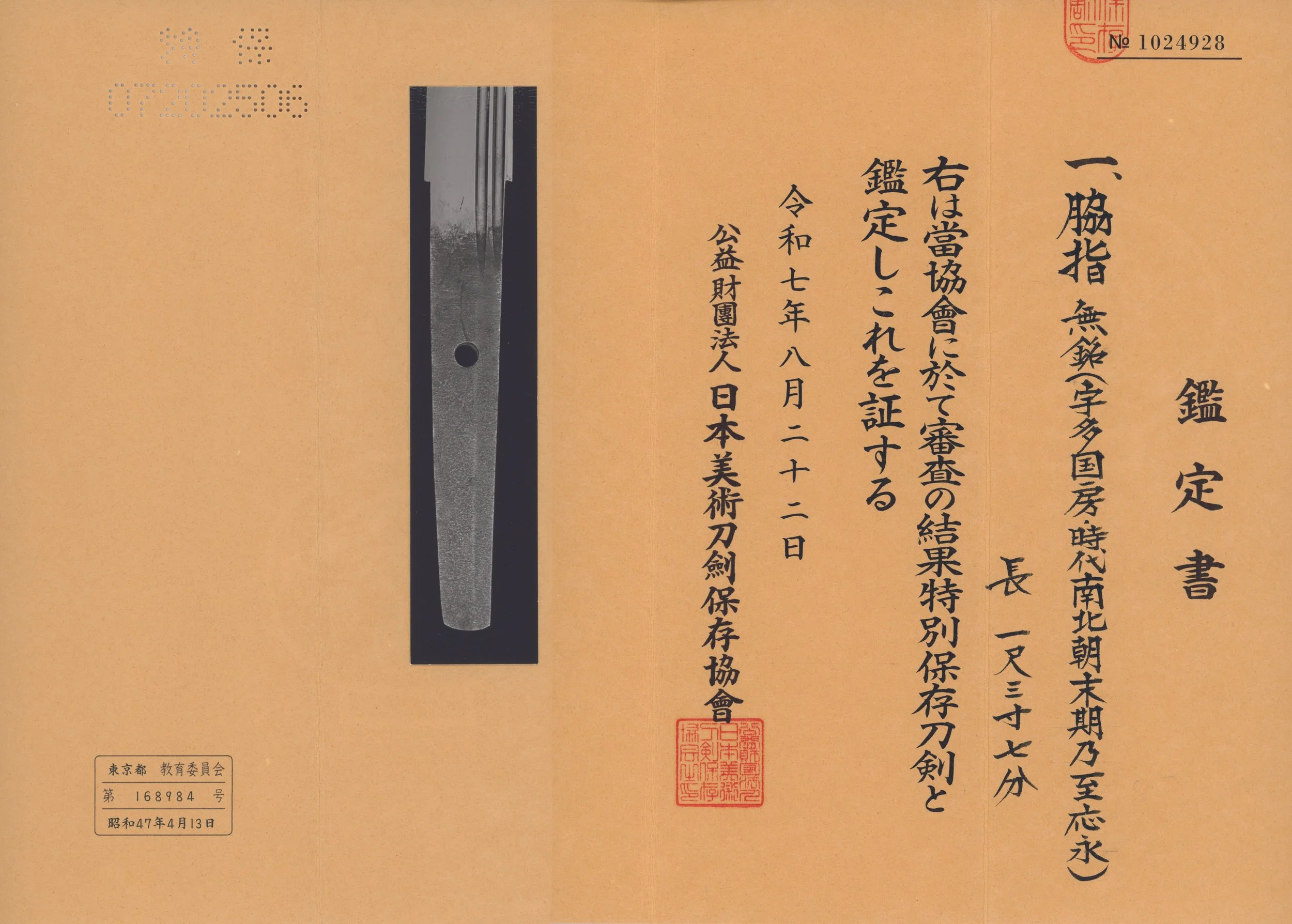
Mumei Attributed to Uda Kunifusa Wakizashi
無銘 宇多国房 脇指
Item TK069
Period:Koto - Late Nanbokuchō period to the Ōei era (approximately late 14th to early 15th century).
Designation: Tokubetsu Hozon
Mei (Signature): Mumei Attributed to Uda Kunifusa school
無銘 (宇多国房)Nakago - 1 Mekugi-ana
Nagasa - 41.4cm
Sori - 0.6cm
Motohaba - 2.35cm
Sakihaba - 1.7cm
Motokasane - 0.45cm
Kissaki - 2.8cm
Nakago Length - 11.9cm
¥ 600,000
Uda Kunifusa (宇多国房) was an important swordsmith of the Etchū Uda School, whose lineage flourished from the Nanbokuchō period into the early Muromachi period, including the Ōei era (1394–1428). The Kunifusa name was carried by successive generations, representing an important continuation of the early Uda swordmaking tradition.
The Uda School traces its origins to Yamato Province, where its founder, Kunimitsu (国光), is traditionally believed to have originated before establishing his school in Etchū Province, present-day Toyama Prefecture. Kunifusa is traditionally regarded as a son of Kunimitsu and was among the principal smiths responsible for developing the distinctive workmanship of the early Uda School.
Although rooted in the classical Yamato tradition, the Uda smiths gradually incorporated elements of Sōshū-den, a development particularly evident in the workmanship associated with Kunifusa.
The Kunifusa lineage represents an important chapter in the evolution of the Etchū Uda School, preserving its Yamato foundations while embracing the dynamic influences of Sōshū workmanship. This combination of traditions gives Uda swords their distinctive character and enduring historical appeal.
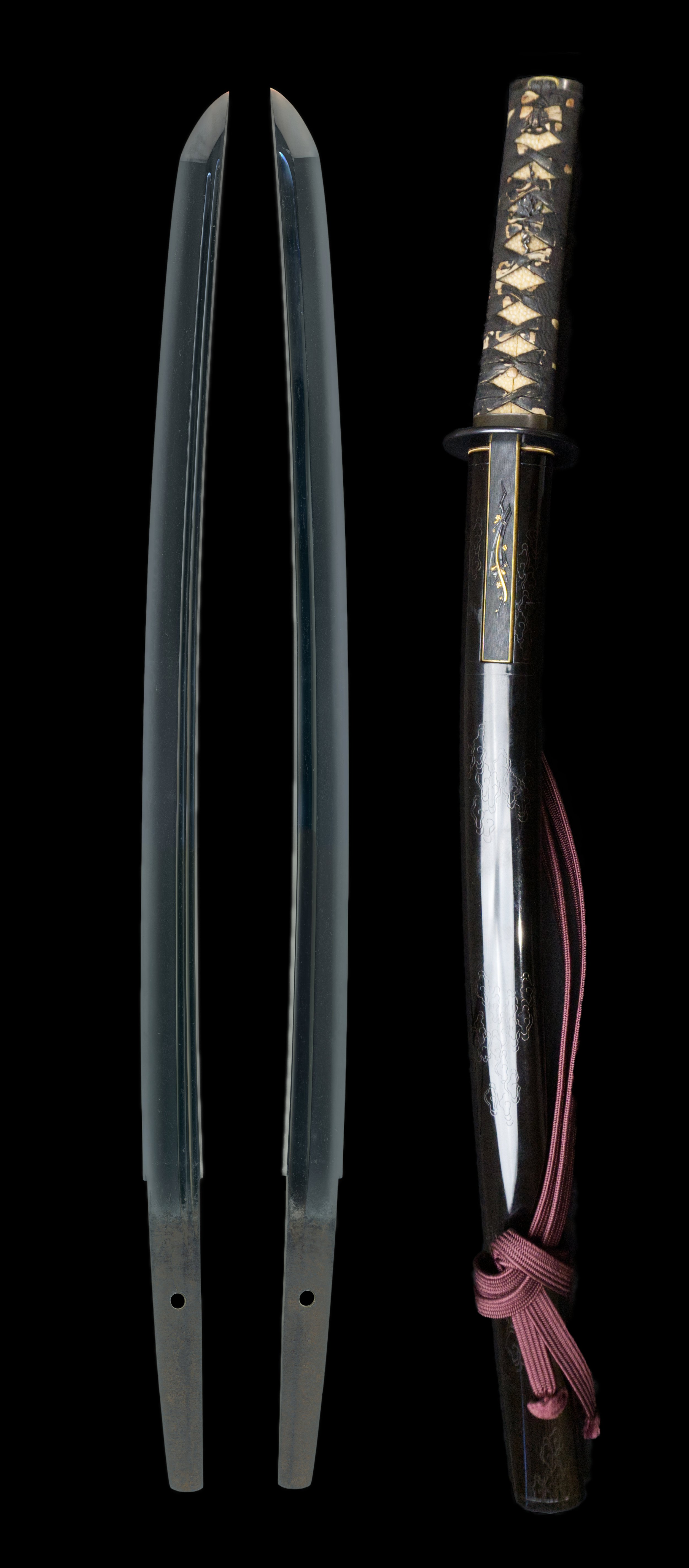
The blade is constructed in shinogi-zukuri with an iori-mune, and is particularly distinguished by its asymmetrical horimono, featuring two different styles of grooves on either side of the blade. One side displays a single broad bo-hi, while the reverse features a narrower arrangement of parallel grooves, creating an interesting contrast. The jigane displays a prominent itame-hada with areas of flowing masame, together with darker patches and variations in the steel characteristic of the Uda tradition. The hamon is predominantly suguha-based, exhibiting gentle irregularities with small undulating formations and visible activity along the tempering boundary.
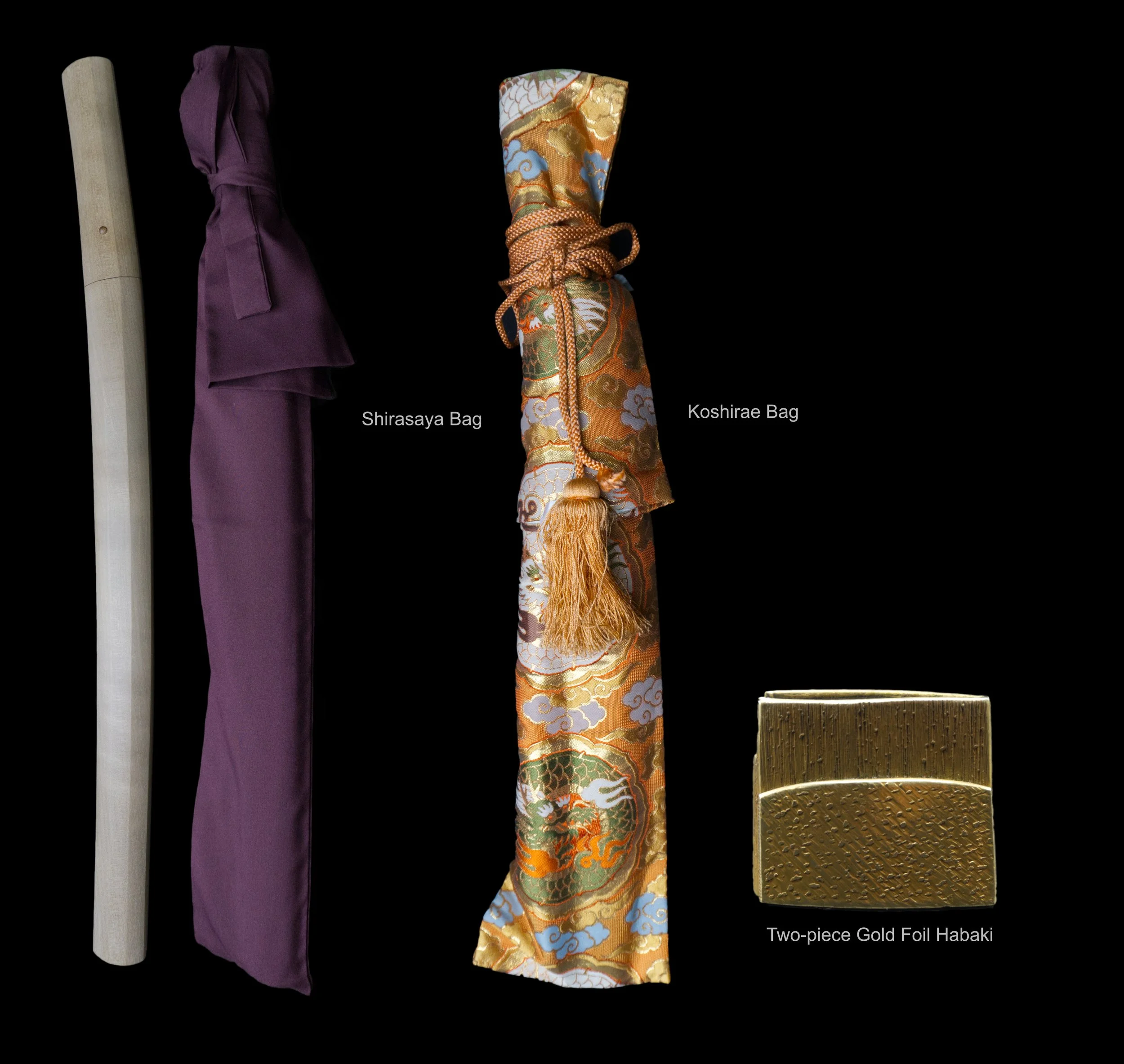
The koshirae features a glossy black lacquered saya decorated with delicate cloud motifs distributed along its length. The tsuka is covered in white samegawa and wrapped in black silk, with ornamental menuki visible beneath the wrapping. The mounting is complemented by a black shakudō tsuba and dark metal fittings with subtle decorative accents. Particularly attractive are the accompanying kozuka and kōgai, both featuring finely executed designs with contrasting gold and silver details, including a graceful flowering branch motif on the kozuka and flowing cloud-like patterns on the kōgai. A deep burgundy sageo completes the mounting, providing a pleasing contrast against the black lacquer and creating a refined, harmonious appearance.
Uda Kunifusa Wakizashi with Antique Koshirae – A Distinguished Smith of the Etchū Uda School