Mumei Den Tametsugu
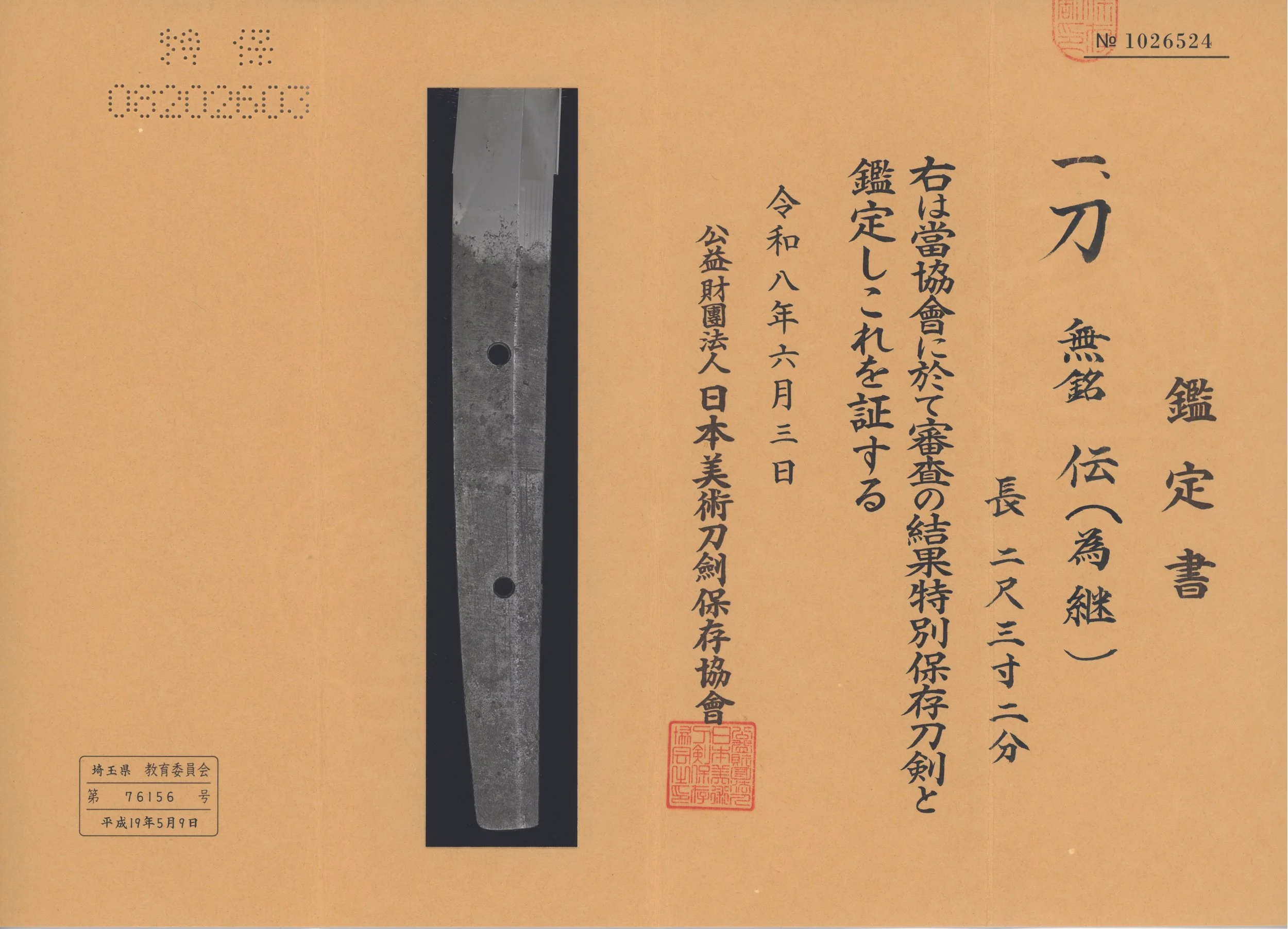
無銘 伝 為継
Item TK072
Period:Koto -late Kamakura period (13th century) to the early Nanbokucho period (14th century).
Designation: Tokubetsu Hozon
Mei (Signature): Mumei
Nakago - O-Suriage Mumei - 2 Mekugi Ana
Nagasa - 70.3cm
Sori - 2.3cm
Motohaba - 2.9cm
Sakihaba - 2cm
Kissaki - 4.7cm
Motokasane - 0.3cm
Nakago Length - 18.3cm
¥ 2,500,000
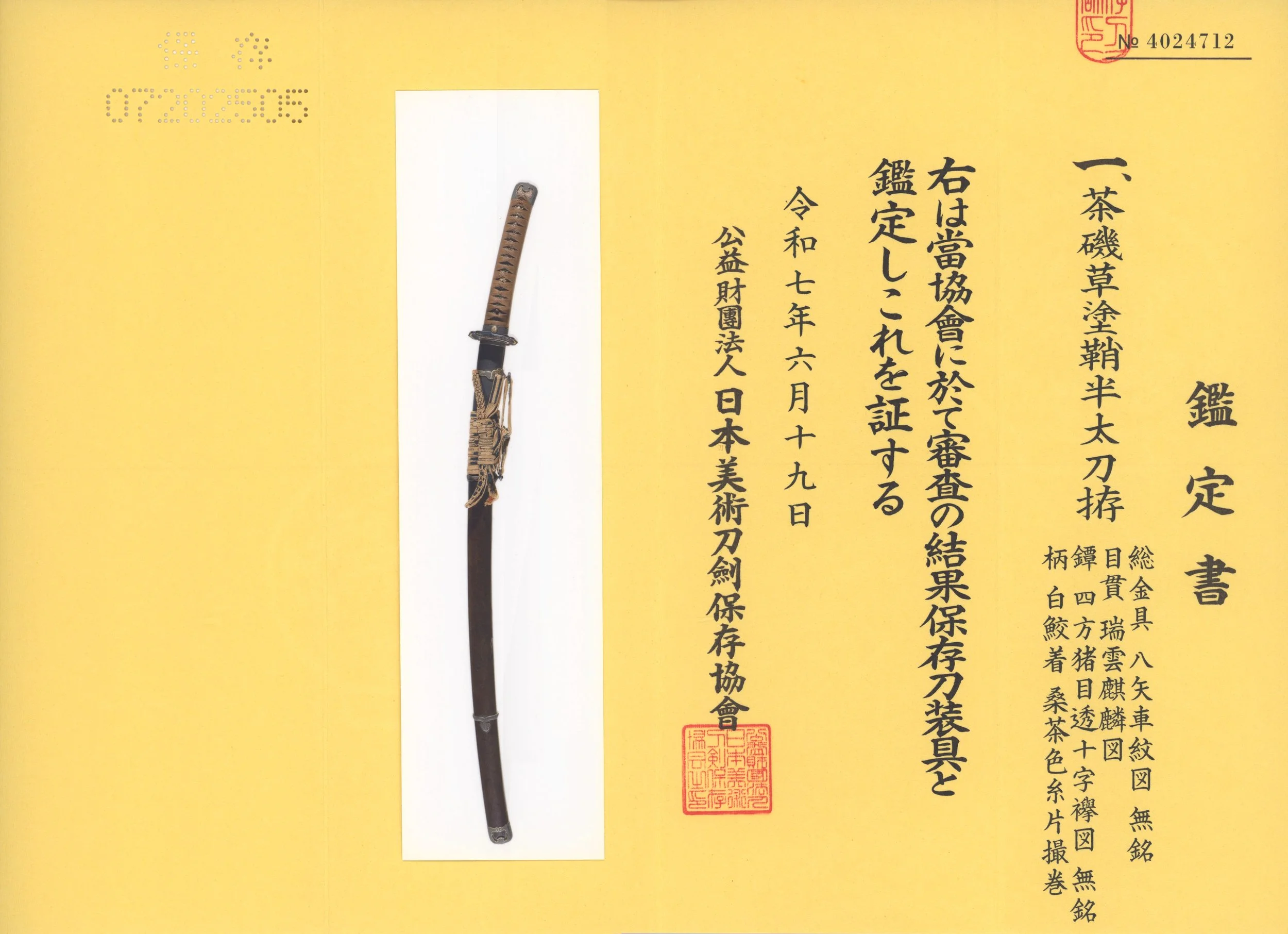
Mumei Den Tametsugu Katana with Hozon Edo Period Handachi Koshirae
Tametsugu (為継) was an esteemed swordsmith active during the Nanbokuchō period (1336–1392), traditionally regarded as the son of the legendary Gō Yoshihiro—one of the ten celebrated disciples of Masamune (正宗十哲). Though Gō Yoshihiro’s life was brief, his influence was profound, and Tametsugu is believed to have continued his father’s legacy by studying under another of Masamune’s disciples, Norishige.
Tametsugu’s blades are renowned for their powerful expression of the Sōshū tradition. His works often feature dynamic notare hamon, chikei (dark streaks in the steel), and a jihada thick with ji-nie—hallmarks of high-level Sōshū craftsmanship. These features reflect the deep influence of both Gō Yoshihiro and Norishige in his technique and aesthetic.
Although he began his career in Echizen Province, Tametsugu later relocated to Mino. Many of his blades are unsigned (mumei) due to their age and shortening over time, but they are confidently attributed to him based on their workmanship and distinctive characteristics.
This blade is constructed in shinogi-zukuri, displaying an interesting geometry reminiscent of nagamaki-naoshi, with a notably thin mune and a distinctive diamond-shaped cross-section. The overall sugata reflects the characteristic proportions of the Nanbokuchō period, featuring an extended chū-kissaki that lends the blade an elegant yet powerful appearance.
The jigane exhibits the distinctive Sōshū-den workmanship associated with Tametsugu, consisting of a beautifully forged mixture of itame-hada and mokume-hada. These grain patterns interweave seamlessly across the surface, producing a rich and dynamic texture characteristic of the Sōshū tradition. The hamon is a vigorous gunome-midare, with irregular, undulating peaks creating a lively and expressive temper line that complements the richly textured steel.
This Tametsugu blade is accompanied by an impressive handachi koshirae, certified as NBTHK Hozon Tōsōgu, a relatively rare distinction for a complete handachi mounting. The saya features a distinctive brown isokusa-nuri lacquer finish, complemented by a coordinated set of metal fittings decorated with the yatsuguruma-mon (eight-spoked wheel crest). The tsuka is wrapped in mulberry-brown ito over white samegawa, executed in katatsumami-maki style, with menuki depicting a kirin amidst auspicious clouds. The tsuba features an intricate sukashi design incorporating four inome (heart-shaped) openings and a cross-shaped motif. The combination of its distinctive lacquerwork, decorative fittings, and NBTHK certification makes this a particularly desirable and uncommon accompaniment to the Tametsugu blade.