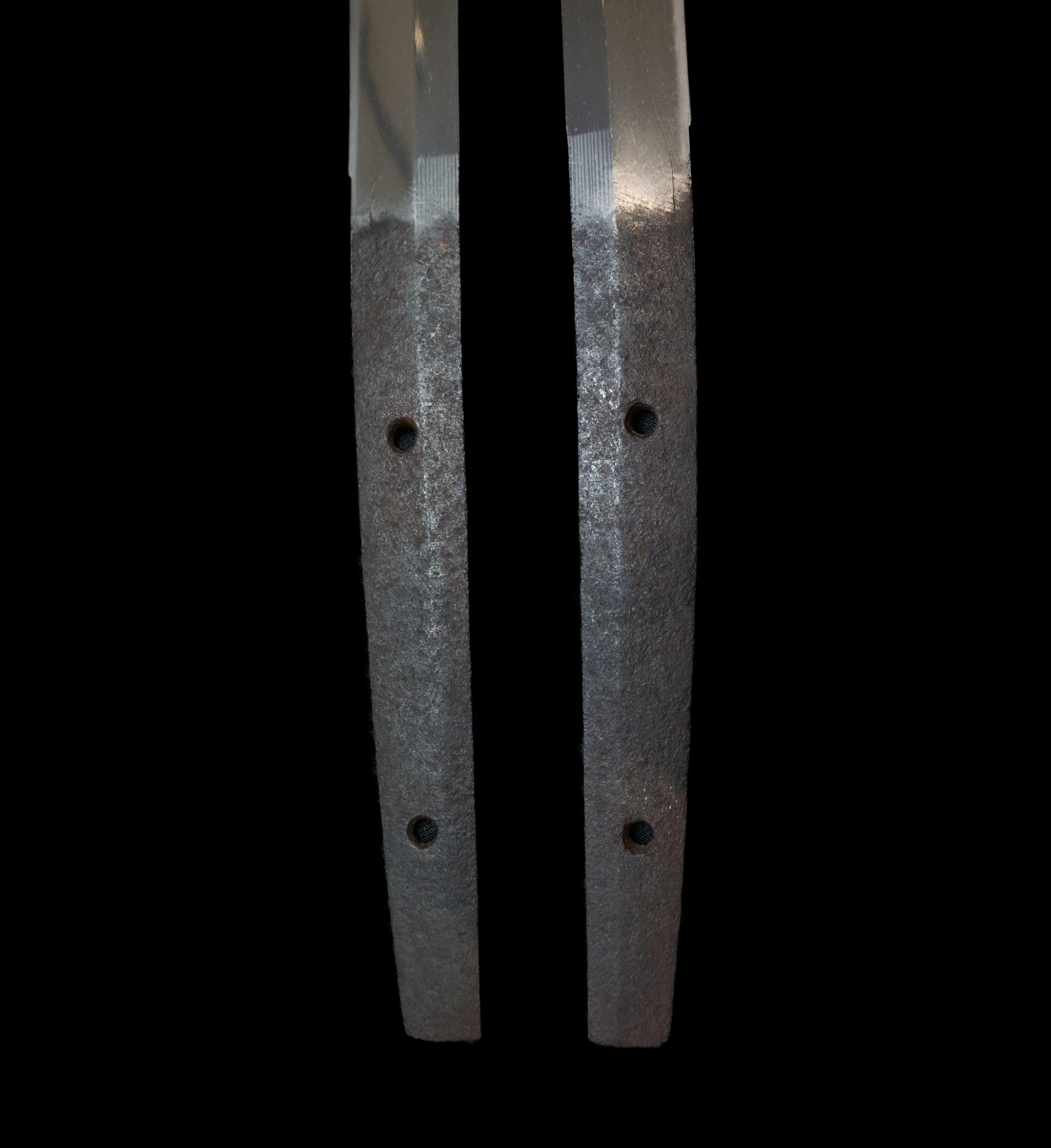
Mumei Ryumon Katana
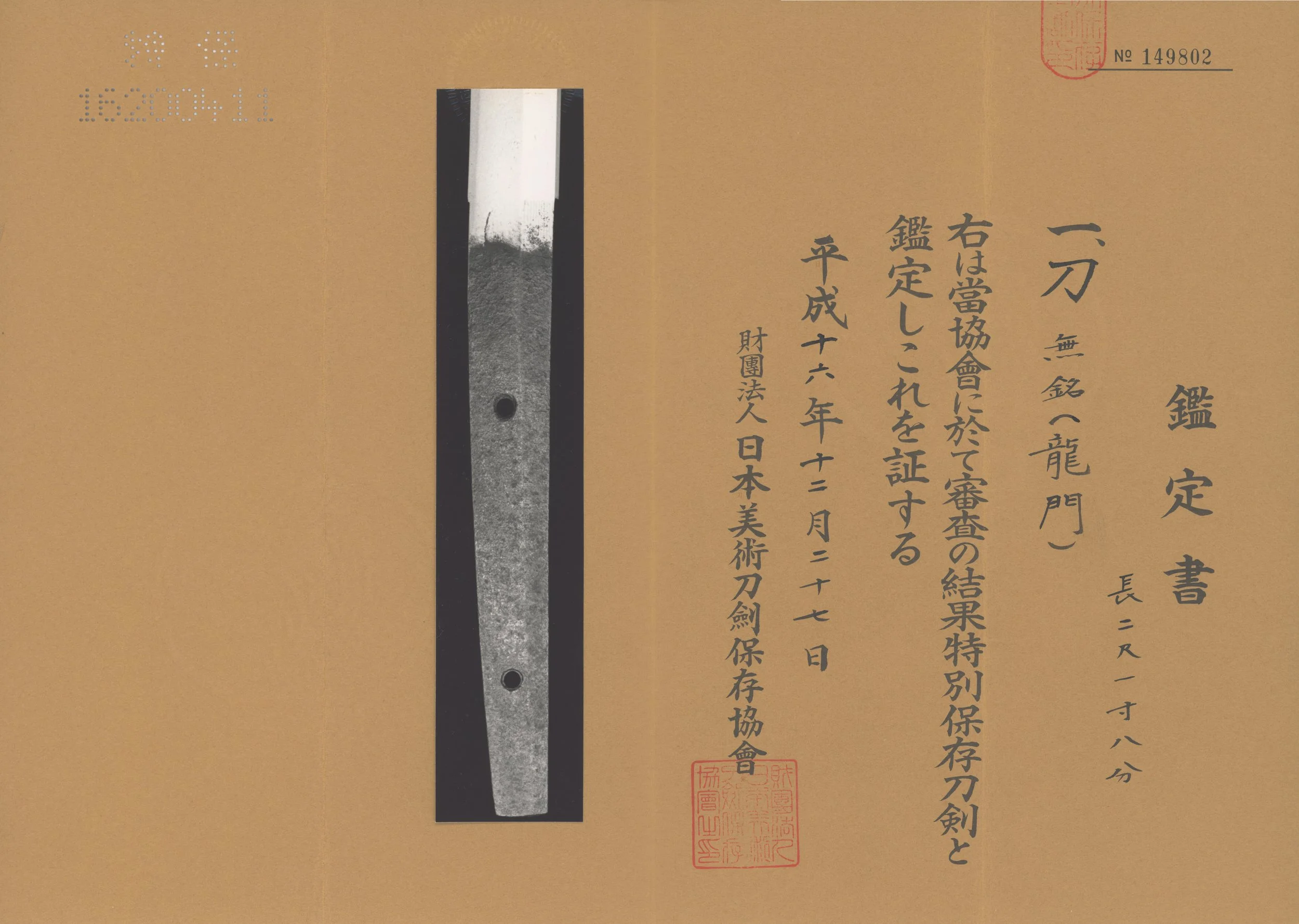
無名 龍門 刀
Item TKC006
Period:Koto - Late Kamakura
Designation: Tokubetsu Hozon (Katana) & Hozon (Menuki)
Mei (Signature): Mumei Attributed to Ryumon
無銘(龍門)Nakago - 17cm
Mekugiana - 2 holes
Nagasa - 66.4cm
Sori - 1.2cm
Motohaba - 2.5cm
Sakihaba - 1.4cm
Kissaki - 2.3cm
Motokasane: 0.63cm
¥ 1,000,000
(Consignment)
Yamato Ryumon School Katana - Late Kamakura Period - Yamato Tradition
This blade is attributed to the Ryumon school (龍門), one of the distinguished lineages of the Yamato tradition active during the late Kamakura period, approximately 700 years ago. The Ryumon group is understood to have emerged as a branch of the Senjuin school, which was closely connected to Tōdaiji temple in Nara.
The Yamato region was home to the renowned Yamato Goha, the Five Great Schools of Yamato: Senjuin, Shikkake, Taima, Hōshō, and Tegai. These schools flourished from the Kamakura into the early Muromachi period and produced blades primarily for powerful temple institutions and warrior monks, who required reliable and functional weapons during times of political and military unrest.
Ryumon smiths are believed to have resided in what is now Nara Prefecture, and among the most noted names associated with the school is Ryumon Nobuyoshi. As an offshoot of Senjuin, the school inherited the strong, disciplined forging style characteristic of Yamato workmanship.
Blades of the Yamato tradition are especially valued for their refined jigane and disciplined suguha hamon. This example displays a clear and well-forged steel surface, together with a straight temper line that reflects the restrained elegance and functional focus for which Yamato swords are admired. The overall impression is one of classical strength and structural integrity, embodying the practical yet dignified spirit of Kamakura-period Yamato work.
The blade is accompanied by a very nice koshirae fitted with quality antique mounts. The menuki are papered, and it comes with a single gold foil habaki.