Sasshū Ju Kiyosada Wakizashi
薩州住清貞 脇差
Item TK035
Period: Shinshinto - Late Edo Period
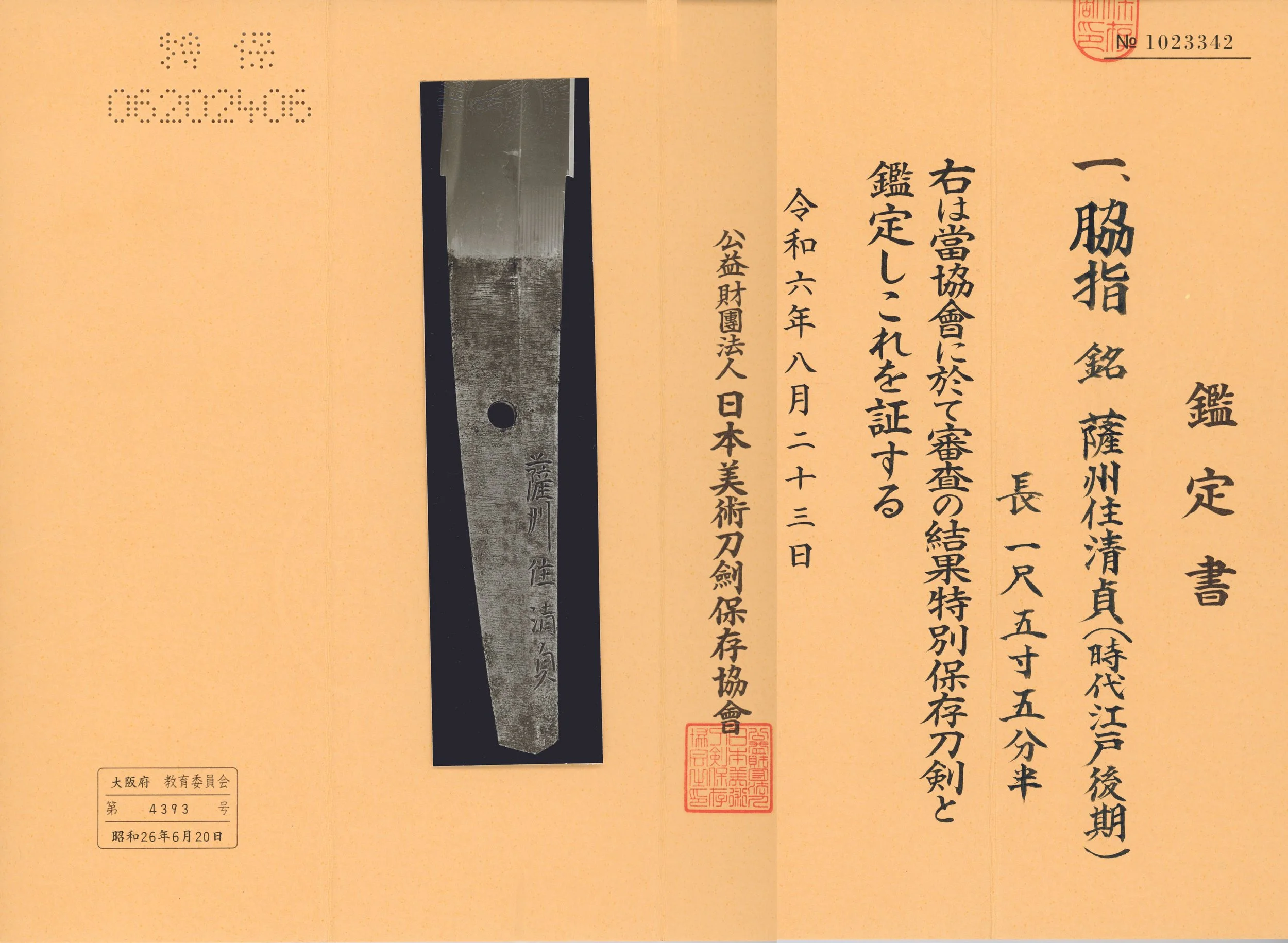
Mei (Signature): 薩州住清貞 Sasshū Ju Kiyosada
Designation: Tokubetsu Hozon
Nakago - 15.5cm - Ubu - One Mekugi-ana
Nagasa - 47cm
Sori: - 0.4cm
Motohaba - 3.4cm
Sakihaba - 2.9cm
Kissaki - 8.2cm
Motokasane - 0.55cm
SOLD
Powerfully shaped Satsuma Wakizashi
Sasshū-jū Kiyosada (薩州住清貞) was a swordsmith working in Satsuma Province (modern-day Kagoshima) during the late Edo period. This blade clearly reflects the characteristics associated with the Satsuma tradition, a region known for producing robust, practical swords with a strong emphasis on functionality and durability. Satsuma blades are often distinguished by their powerful construction and distinctive forging style, developed to meet the needs of a martial culture.
This example exhibits the typical traits of a Satsuma blade, aligning well with the regional workmanship and reinforcing its attribution to a Satsuma smith.
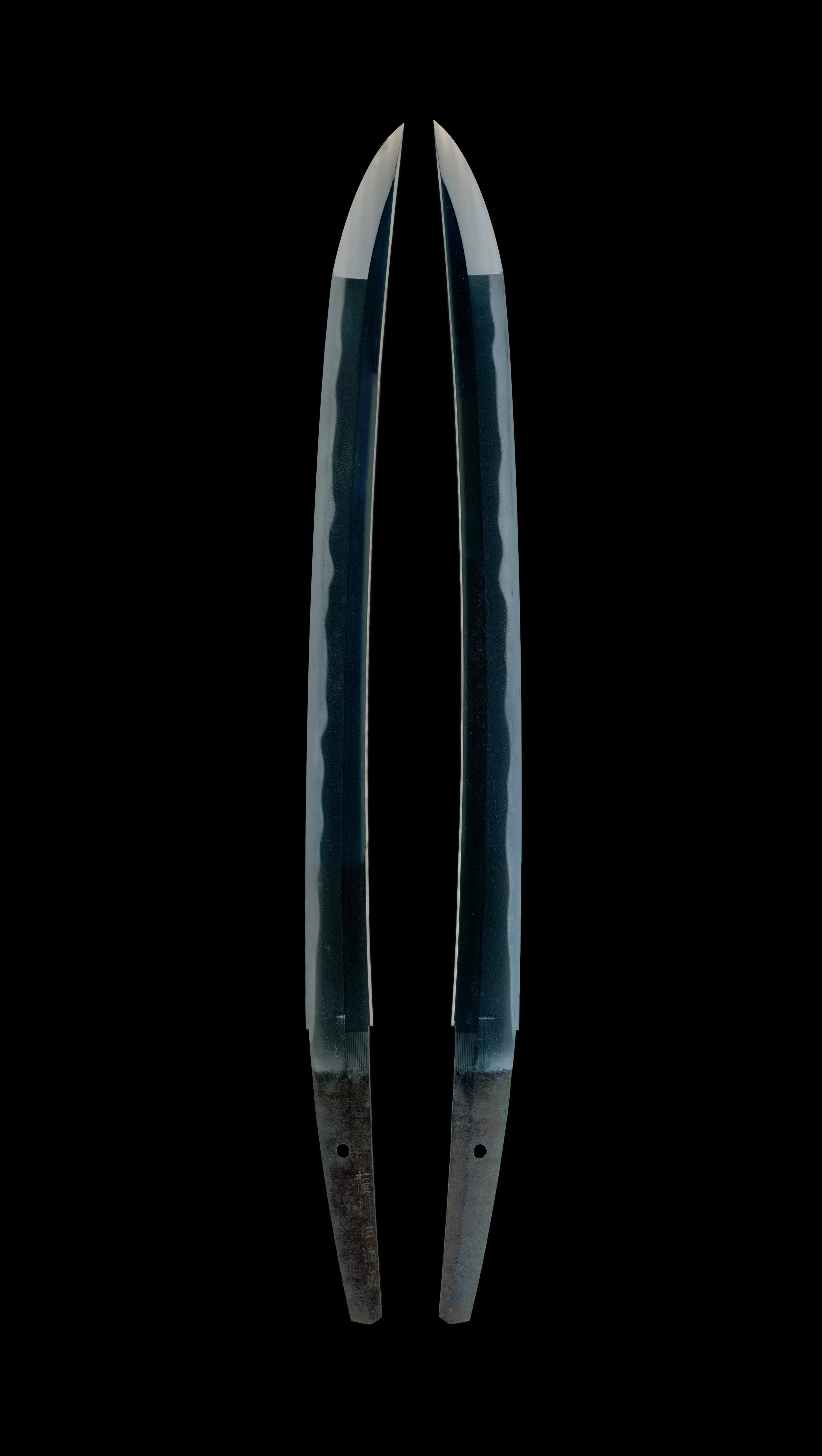
This blade is constructed in shinogi-zukuri with an iori-mune, presenting a dynamic and powerful overall profile. The mihaba is wide at approximately 3.4 cm, with minimal taper towards the kissaki, giving the blade a strong, forward presence. The proportions are reminiscent of Nanbokuchō-period styles, a deliberate revival often seen in late Edo period workmanship, where smiths sought to emulate the bold and expansive forms of earlier Koto blades.
The kissaki is a large and commanding O-kissaki, measuring approximately 8.2cm, further reinforcing this Nanbokuchō-inspired sugata.
The jihada consists of a well-forged ko-itame with some itame nagare, displaying a dense and active surface. Notably, there are prominent imozuru (芋蔓) running along the ji, a characteristic feature often associated with Satsuma blades, appearing as flowing, vine-like linear activity within the steel. This is complemented by abundant chikei.
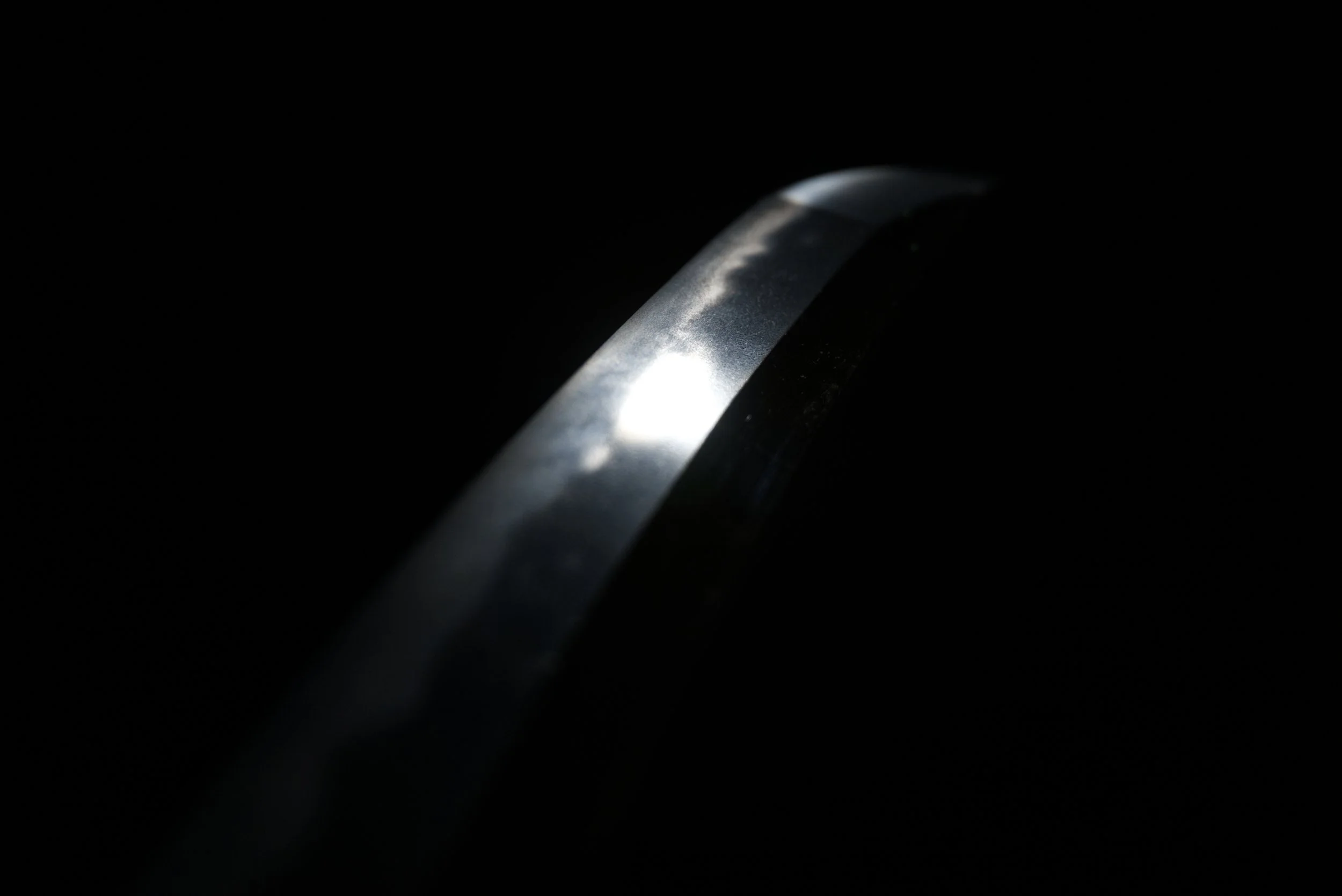
The hamon is a chū-notare, executed in nie-deki, with coarse ara-nie that is both robust and expressive. This nie activity extends into the ji, enhancing the overall sense of power in the blade. Within the hamon, kinsuji can be observed striking through.
This is a highly representative piece of Satsuma Workmanship. We highly reccomend it.
Comes in Shirasaya with Silver Foil Habaki.
Ara-nie
Imozuru
O-Kissaki