Bishu Osafune Arimitsu Katana
備州長船在光 刀
Item TKC003
Period:Koto - Muromachi period around Meiou era (1492)
Designation: Tokubetsu Hozon
Mei (Signature): Bishu Osafune Arimitsu (1st generation)
備州長船在光
1st Year of Meiou 8th Month (August 1492)
明応元年八月日Nakago - 15.5cm
Mekugiana - 3 holes
Nagasa - 64.24cm
Sori - 1.8cm
Motohaba - 2.84cm
Sakihaba - 1.84cm
Kissaki - 2.8cm
Motokasane: 0.63cm
SOLD
A Muromachi-Period Bizen Katate-Uchi Katana
Bishū Osafune Arimitsu (備州長船有光) was a Bizen swordsmith active from the Bunmei to Meiō eras of the Muromachi period, working within the prestigious Osafune tradition. Arimitsu is recognized as a capable late-Muromachi smith whose work reflects the transition from earlier elegant forms to practical battlefield swords made for real combat. This katana is attributed to the first generation and dates to around the Meiō era (c. 1492).
The blade displays a typical late-Muromachi sugata with a regular length and deep koshi-zori, forged as a katate-uchi katana, a form developed for effective one-handed use. Katate-uchi swords are characterized by slightly shorter length, deeper curvature, and forward balance, allowing faster handling and greater control when used alongside armor or in close-quarters combat.
The jigane is particularly attractive, forged in a well-refined mix of ko-itame and mikume hada, tightly packed and bright, with fine ji-nie evenly distributed throughout. Clear utsuri is present, a classical Bizen feature that adds depth and elegance to the steel. The hamon is a wide suguha in nie-deki with a deep nioiguchi, displaying lively internal activity such as sunagashi and kinsuji, providing contrast and movement within the calm straight temperline.
This is a strong and honest example of a late-Muromachi Bizen katana, combining practical one-handed combat design with refined jigane and classical Osafune characteristics, making it an appealing piece for collectors seeking a historically authentic battlefield sword with genuine aesthetic quality.
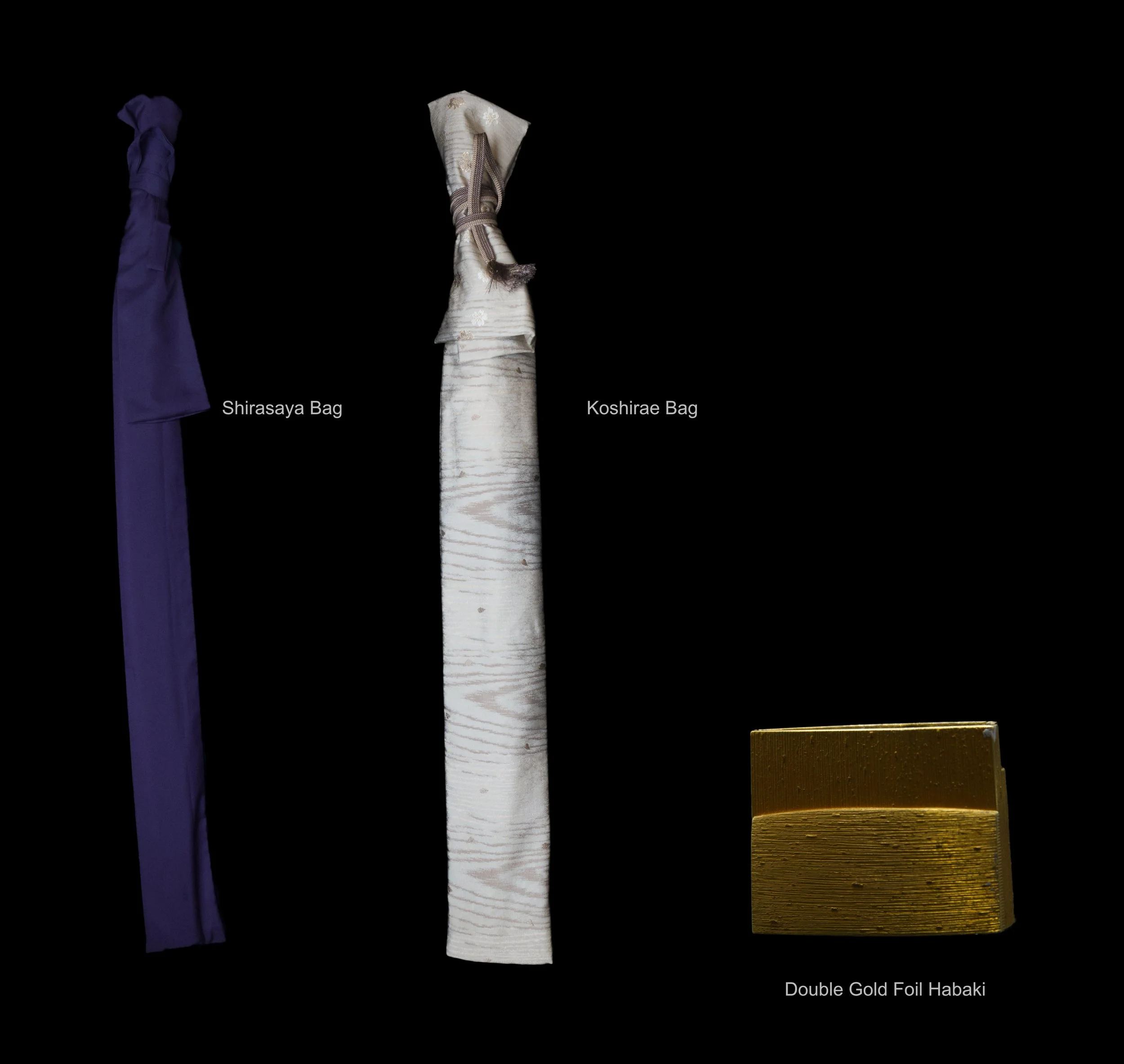
The katana is accompanied by a refined han-tachi koshirae, combining classical elegance with restrained warrior taste. The shakudō tsuba is decorated with a family crest in gold inlay, echoed in the shakudō ishimeji fuchi-kashira where the same crest is finely engraved. The menuki are formed in shakudō with a carved dragon motif, adding subtle dynamism to the mounting. The saya is finished in deep black roiro lacquer, complemented by a shakudō ishimeji kojiri.